Classification of Aluminum Discs and Their Engineering Applications
Aluminum discs (also known as aluminum circles) are one of the most fundamental semi-finished materials in aluminum fabrication. They serve as the primary raw material for a wide range of aluminum products, including cookware, industrial containers, mechanical components, automotive parts, and aerospace structures.
Due to the diversity of downstream applications, aluminum discs are manufactured and classified based on material composition, production process, end-use requirements, and surface treatment. Each classification reflects specific engineering considerations related to formability, strength, durability, and surface performance.
This article provides a structured, engineering-oriented overview of the main classification systems used in the aluminum disc industry.
1. Classification by Material Composition
1.1 Pure Aluminum Discs
Pure aluminum discs generally refer to materials with an aluminum content of 99.0% or higher. Common grades include 1050, 1060, 1070, and 1100.
Key material characteristics include:
- Excellent thermal and electrical conductivity
- High ductility and elongation
- Low forming resistance, suitable for deep drawing and spinning
- Good corrosion resistance provided by the natural oxide layer
Typical applications of pure aluminum discs include:
- Cookware bodies and bases
- Household appliance components
- Heat dissipation parts for electronics
- Products requiring complex forming but moderate mechanical strength
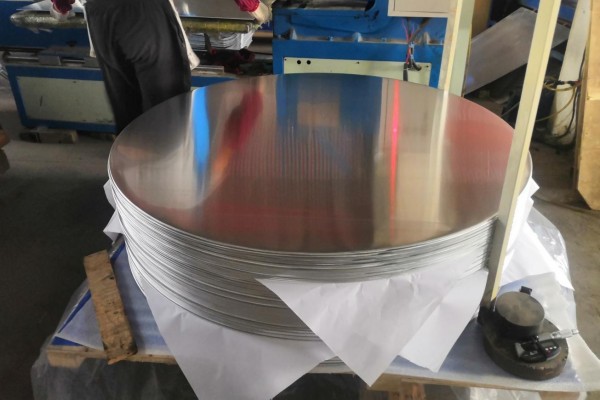 aluminium sheet circle
1.2 Aluminum Alloy Discs
Aluminum alloy discs are produced by adding alloying elements such as manganese (Mn), magnesium (Mg), silicon (Si), or copper (Cu) to aluminum. Common grades include 3003, 3004, 5052, and 6061.
Compared with pure aluminum, alloy discs offer:
- Higher tensile and yield strength
- Improved wear resistance and fatigue performance
- Better dimensional stability after forming
- Enhanced performance under demanding service conditions
Typical applications include:
- Industrial containers and structural parts
- Automotive components
- Mechanical equipment parts
- Applications requiring higher strength and durability
2. Classification by Production Process
2.1 Hot-Rolled Aluminum Discs
Hot-rolled aluminum discs are produced by rolling aluminum slabs at elevated temperatures, followed by blanking or spinning into circular shapes.
Technical characteristics:
- Uniform internal microstructure
- Low residual stress
- Excellent plasticity and forming stability
- Reduced risk of cracking during deep drawing
Hot-rolled discs are commonly used for:
- Deep-drawn or multi-step spinning products
- Large-diameter cookware
- Thick-gauge industrial aluminum products
2.2 Cold-Rolled Aluminum Discs
Cold-rolled aluminum discs are manufactured by rolling aluminum sheets at room temperature, followed by precision cutting.
Key features include:
- Higher surface flatness and dimensional accuracy
- Increased hardness and strength
- Suitable for thin-gauge and precision applications
Typical uses:
- Precision mechanical components
- Decorative aluminum products
- Applications with strict dimensional tolerances
3. Classification by Application Type
3.1 Decorative Aluminum Discs
Decorative aluminum discs focus primarily on surface appearance and corrosion resistance. Engineering requirements usually include:
- Clean and uniform surface quality
- Compatibility with anodizing or coating processes
- Stable appearance over time
Common applications:
- Architectural decoration components
- Home décor products
- Lighting reflectors and decorative covers
3.2 Industrial Aluminum Discs
Industrial aluminum discs prioritize mechanical performance and reliability, including:
- Tensile strength and fatigue resistance
- Structural integrity after forming
- Long-term dimensional stability
They are widely used in:
- Machinery and equipment components
- Automotive and transportation systems
- Aerospace and industrial container applications
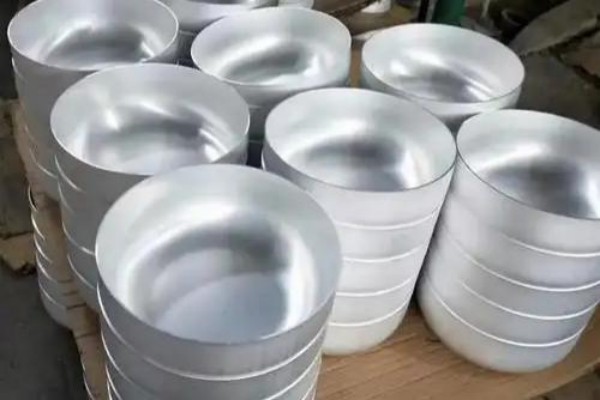 aluminium pot
4. Classification by Surface Treatment
4.1 Anodized Aluminum Discs
Anodized aluminum discs undergo an electrochemical process that forms a dense oxide layer on the surface, significantly improving:
- Surface hardness
- Corrosion resistance
- Wear resistance and surface consistency
Typical applications include:
- High-end cookware
- Decorative and functional components
- Products with extended service life requirements
4.2 Coated and Painted Aluminum Discs
Coated aluminum discs are treated with organic or functional coatings to achieve:
- Enhanced chemical resistance
- Improved weather resistance
- Customized color or functional surfaces
Common applications:
- Outdoor aluminum components
- Industrial protective structures
- Aluminum products used in aggressive environments
5. Engineering Selection Considerations
From an engineering perspective, there is no universal aluminum disc suitable for all applications. Proper material selection should be based on a comprehensive evaluation of:
- Forming method (deep drawing, spinning, stamping)
- Required balance between strength and ductility
- Surface treatment and finishing requirements
- Service environment and expected product lifetime
- Cost control and production consistency
With ongoing advancements in aluminum processing technology and increasing specialization of downstream applications, aluminum disc classification continues to evolve. A clear understanding of these classification systems is essential for manufacturers aiming to ensure stable product performance, reduced production risk, and improved overall manufacturing yield.

