Vergleichende Anwendungsanalyse von 1060 Aluminiumscheiben vs 1100 Aluminiumscheiben in der modernen Fertigung
1. Einführung
Aluminiumscheiben, auch als Aluminiumkreise oder Ronden bezeichnet, bleiben grundlegende Halbzeuge für die Herstellung von Kochgeschirr, Elektrogehäuse, Druckbehälterkomponenten, und Tiefziehverpackungen. Zu den kommerziell reinen Aluminiumsorten, 1060 Aluminiumscheiben Und 1100 Aluminiumscheiben dominieren aufgrund ihrer hohen Formbarkeit die weltweite Nachfrage, Korrosionsbeständigkeit, und breite Verarbeitungsanpassungsfähigkeit. Trotz ihrer Ähnlichkeit als Teil der Aluminiumfamilie der 1xxx-Serie, ihre Mikrostruktur, Verunreinigungszusammensetzung, und nachgelagertes Verhalten unterscheiden sich erheblich – was zu Folgendem führt: ausgeprägte Anwendungseignung in allen Fertigungsindustrien.
Da leichte Materialien weiterhin Stahl in Kochgeschirr und Konsumgütern ersetzen, Verständnis der nuancierten Unterschiede zwischen 1060 Und 1100 Legierungen werden für Ingenieure, die die Pressleistung optimieren möchten, von entscheidender Bedeutung, Ausschussrate reduzieren, und die Zuverlässigkeit des Endprodukts verbessern. Dieser Artikel führt einen umfassenden technischen Vergleich durch – einschließlich der chemischen Zusammensetzung, mechanische Eigenschaften, Tiefziehleistung, Anforderungen an die Oberflächenqualität, thermisches Verhalten, und spezifische Anwendungsbereiche. Durch datengesteuerte Analysen und detaillierte Fertigungsfallstudien, Wir klären, wie Hersteller wählen sollten 1060 Und 1100 basierend auf Prozessanforderungen, Produktgeometrie, Produktionseffizienz, und Kostenüberlegungen.

2. Überblick über 1060 Aluminiumscheiben
1060 Aluminium gehört zur Kategorie der handelsüblich reinen Aluminiumlegierungen 99.6% Al. Mit extrem niedrigem Verunreinigungsgehalt, Es bietet eine außergewöhnliche elektrische Leitfähigkeit und hohe Duktilität, daher besonders geeignet für:
- Tiefziehen
- Spinnen
- Biegen
- Stempeln
- Polier- und Eloxierungsanwendungen
Es wird häufig in Kochgeschirr verwendet (Töpfe, Pfannen, Wasserkocher), Reflektoren, und Elektronik.
Tisch 1. Hauptmerkmale von 1060 Aluminiumscheiben
| Eigenschaftskategorie |
Beschreibung |
| Reinheit |
99.6% Aluminium (sehr hoch) |
| Mechanisches Verhalten |
Sehr weich, ausgezeichnete Duktilität, geringe Streckgrenze |
| Deep Draw-Fähigkeit |
Hervorragend; Ideal für große Verformungen |
| Hitzebeständigkeit |
Gut für Kochgeschirr mit niedriger bis mittlerer Temperatur |
| Korrosionsbeständigkeit |
Hoch, insbesondere gegenüber Wasser und milden Chemikalien |
| Kosten |
Niedriger als 1100 |
| Gemeinsame Gemüter |
O, H12, H14, H18 |
3. Überblick über 1100 Aluminiumscheiben
1100 Aluminium enthält 99.0% Aluminium, mit etwas höheren Verunreinigungen – hauptsächlich 0.05–0,20 % Kupfer, Dies verbessert die Festigkeit, ohne die Korrosionsleistung zu beeinträchtigen. Gegenüber 1060, 1100 Angebote:
- Höhere Zugfestigkeit
- Bessere Ermüdungsbeständigkeit
- Leicht reduzierte Formbarkeit
- Höhere Wärmeleitfähigkeit als einige legierte Sorten
Diese Eigenschaften machen 1100 geeignet für:
- Industriecontainer
- Chemische Ausrüstung
- Komponenten des Wärmetauschers
- Hochdruckkochgeschirr und Strukturgehäuse
Tisch 2. Hauptmerkmale von 1100 Aluminiumscheiben
| Eigenschaftskategorie |
Beschreibung |
| Reinheit |
99.0% Aluminium |
| Mechanisches Verhalten |
Stärker als 1060, mäßige Duktilität |
| Deep Draw-Fähigkeit |
Gut, aber weniger als 1060 |
| Ermüdungsbeständigkeit |
Besser als 1060 |
| Stärke |
Höher aufgrund der Anwesenheit von Cu |
| Gemeinsame Gemüter |
O, H14, H16, H18 |
| Ideale Einsatzmöglichkeiten |
Druckbehälter, Industriekochgeschirr, Chemikalientanks |
4. Vergleich der chemischen Zusammensetzung
Obwohl beide zur 1xxx-Serie gehören, Die Nebenelemente bestimmen das Prozess- und Anwendungsverhalten. Das Vorhandensein von Kupfer in 1100 ist das Hauptunterscheidungsmerkmal, sorgt für verbesserte Festigkeit und Ermüdungsbeständigkeit.
Tisch 3. Chemische Zusammensetzung (Typische Werte)
| Legierung |
Al (%) |
Cu (%) |
Und (%) |
Fe (%) |
Mn (%) |
Zn (%) |
Andere |
| 1060 |
99.6 |
≤0,05 |
≤0,25 |
≤0,35 |
0 |
0 |
≤0,03 |
| 1100 |
99.0 |
0.05–0,20 |
≤0,95 |
≤0,95 |
≤0,05 |
≤0,10 |
≤0,15 |
Wichtige Erkenntnisse:
Der 0.05–0,20 % Kupfer Inhalt in 1100 erhöht die Festigkeit und Druckfestigkeit erheblich, Dadurch ist es für industrielle und strukturelle Anwendungen geeignet 1060 kann sich zu leicht verformen.
5. Vergleich der mechanischen Eigenschaften
Das mechanische Verhalten beeinflusst direkt die Leistung der Scheibe beim Stempeln, Spinnen, und Tiefziehoperationen.
Tisch 4. Vergleich der mechanischen Eigenschaften (Typisches O-Temperament)
| Eigentum |
1060-O |
1100-O |
| Zugfestigkeit (MPa) |
55–95 |
70–120 |
| Streckgrenze (MPa) |
15–35 |
25–60 |
| Verlängerung (%) |
30–45 |
25–35 |
| Härte (HB) |
17–25 |
19–30 |
Wichtige Beobachtungen:
- 1060 hat eine überlegene Duktilität, Dadurch eignet es sich besser zum Tiefziehen von Kochgeschirr mit großer Verformung (z.B., Töpfe, Kochgeschirr in Beckenform).
- 1100 ist stärker, Ideal für Industriekaschierungen, Hochleistungskochgeschirr, und drucktragende Bauteile.
6. Tiefzieh- und Spinnleistung
In diesem Abschnitt werden die Auswirkungen auf die Verarbeitung in der Praxis behandelt.
6.1 Tiefziehverhalten
- 1060 Aluminiumscheiben Aufgrund ihrer Weichheit und hohen Dehnung eignen sie sich besonders gut für das Einzel- und Mehrschrittziehen.
- 1100 Aluminiumscheiben kann auch tiefgezogen werden, Aufgrund der höheren Festigkeit und des größeren Reibungswiderstands nimmt jedoch der Werkzeugverschleiß zu.
Tisch 5. Leistungsbewertung Tiefziehen
| Legierung |
Einzelner tiefer Zug |
Mehrstufiges Tiefziehen |
Rissgefahr |
Typische Anwendungen |
| 1060 |
Exzellent |
Exzellent |
Sehr niedrig |
Töpfe, Pfannen, Beleuchtungsreflektoren |
| 1100 |
Gut |
Mäßig |
Niedrig bis mittel |
Industrielles Kochgeschirr, Chemikalienbehälter |

7. Kompatibilität der Oberflächenbehandlung
Beide Legierungen reagieren währenddessen unterschiedlich:
- Eloxieren
- Polieren
- Beschichtung
- Radierung
Polierleistung
- 1060 erreicht ein spiegelähnliche Oberfläche aufgrund extrem hoher Reinheit.
- 1100 lässt sich gut polieren, kann aber aufgrund des Kupfergehalts leichte Farbtonabweichungen aufweisen.
Anodisierungsverhalten
- 1060 erzeugt gleichmäßigere Oxidschichten, Ideal für reflektierendes Kochgeschirr.
- 1100 ergibt eine härtere eloxierte Oberfläche, jedoch mit etwas dunklerer Färbung.
8. Kosten und Marktverfügbarkeit
Markteinblicke
1060 Aufgrund ihrer weit verbreiteten Verwendung in Kochgeschirr und Beleuchtung weisen Aluminiumscheiben weltweit höhere Produktionsmengen auf, was sie etwas günstiger macht.
Tisch 6. Kostenvergleich (Ca. Branchenkennzahlen)
| Legierung |
Relativer Preis |
Marktverfügbarkeit |
Globale Nachfrage |
| 1060 |
Niedrig |
Sehr hoch |
Sehr hoch |
| 1100 |
Medium |
Hoch |
Hoch |
9. Unterschiede bei der Anwendungseignung
Dies ist der wichtigste Teil für Ingenieure bei der Wahl zwischen den beiden Legierungen.
9.1 Anwendungen Ideal für 1060 Aluminiumscheiben
- Standard-Haushaltskochgeschirr
- Kesselkörper
- Flexible Lichtreflektoren
- Lebensmittelbehälter tiefziehen
- Lüfterblätter
- Aluminiumschilder
- Industriegehäuse mit geringer Festigkeit
9.2 Anwendungen Ideal für 1100 Aluminiumscheiben
- Hochdruckkochgeschirr
- Chemische Lagertanks
- Rohrisolierungsmäntel
- Industrielle Wärmetauscher
- Mehrschichtiger Kochgeschirrboden
- Hochtemperatur-Industriereflektoren
- Hitzebeständige Verpackungsmaterialien
Tisch 7. Anwendungsempfehlungsmatrix
| Anwendungstyp |
1060 Empfehlung |
1100 Empfehlung |
| Haushaltskochgeschirr |
★★★★★ |
★★★ |
| Industrielles Kochgeschirr |
★★★ |
★★★★★ |
| Chemikalienbehälter |
★★ |
★★★★★ |
| Reflektoren |
★★★★★ |
★★★ |
| Lebensmittelverpackungen im Tiefziehverfahren |
★★★★★ |
★★★ |
| Hochdruckbehälter |
★★ |
★★★★★ |
| Spinnintensive Bauteile |
★★★★★ |
★★★ |
10. Wärmeleitfähigkeit und Wärmeverteilung
Beide Legierungen weisen eine hervorragende Wärmeleitfähigkeit auf, Bei wärmeempfindlichen Anwendungen sind jedoch geringfügige Unterschiede von Bedeutung.
Thermische Eigenschaften
- 1060 sorgt für eine äußerst gleichmäßige Wärmeverteilung – ideal zum gleichmäßigen Erhitzen von Kochgeschirr.
- 1100 bietet eine etwas geringere thermische Gleichmäßigkeit, aber eine bessere mechanische Stabilität bei Temperaturschwankungen.
Tisch 8. Vergleich der thermischen Eigenschaften
| Eigentum |
1060 |
1100 |
| Wärmeleitfähigkeit (W/m·K) |
234 |
222 |
| Wärmekapazität |
Hoch |
Hoch |
| Wärmeverformungsbeständigkeit |
Mäßig |
Höher |
11. Formbarkeit, Kaltverfestigungsverhalten, und Verarbeitung von Antworten
Verstehen wie 1060 Und 1100 Die Reaktion von Aluminiumscheiben während mechanischer Vorgänge ist für Hersteller, die eine hohe Umformeffizienz anstreben, von entscheidender Bedeutung, niedrige Ausschussrate, und konsistente Produktgeometrie. Die Formungsmechanismen, Kaltverfestigungseigenschaften, und die Dehnungsempfindlichkeit variieren erheblich zwischen beiden Legierungen.
11.1 Kaltverfestigungseigenschaften
Aluminiumlegierungen verstärken sich bei der Kaltumformung, da sich die Versetzungen vervielfachen, Verbesserung der Härte, aber Verringerung der Duktilität. Der Grad der Kaltverfestigung unterscheidet die Legierungen:
Tisch 9. Vergleich der Kaltverfestigung
| Legierung |
Kaltverfestigungsrate |
Weichheitserhaltung |
Eignung für mehrere Zeichenschritte |
| 1060 |
Niedrig |
Hoch |
Exzellent |
| 1100 |
Medium |
Mäßig |
Gut, aber mehr Werkzeugverschleiß |
Analyse:
- 1060Die Kaltverfestigungsrate ist gering, Das heißt, auch nach erheblicher Verformung, es behält seine Duktilität und wird nicht spröde.
- 1100 Aufgrund seines Kupfergehalts härtet es schneller aus, Verbessert die Festigkeit, erfordert jedoch ein Zwischenglühen für das mehrstufige Tiefziehen.
11.2 Empfindlichkeit der Dehnungsrate
Die Empfindlichkeit der Dehnungsgeschwindigkeit steuert, wie die Legierung unter schnellen bzw. langsame Verformung.
- 1060 Aluminium zeigt eine stabile Reaktion bei unterschiedlichen Dehnungsraten, Ermöglicht ein schnelles Stempeln ohne das Risiko einer lokalen Ausdünnung.
- 1100 Aluminium schneidet bei langsamer besser ab, kontrollierte Ziehgeschwindigkeiten, bei denen die höhere Kaltverfestigung für die strukturelle Integrität genutzt werden kann.
Deshalb 1060 ist ideal für automatisierte Hochgeschwindigkeits-Kochgeschirr-Stanzlinien, während 1100 wird bei industriellen Tankumformvorgängen bevorzugt wo die Ziehtiefe mäßig ist, aber die strukturelle Festigkeit entscheidend ist.
12. Glühverhalten und Temperverträglichkeit
Durch Glühen wird die Legierung nach der Kaltumformung weicher, stellt die Duktilität wieder her, und stabilisiert die Kornstruktur. Um die Leistung zu maximieren, müssen Verarbeitungsingenieure die richtige Härte auswählen.
12.1 Glüheigenschaften
Tisch 10. Glühreaktion
| Legierung |
Volle Glühtemperatur |
Haltezeit |
Gleichmäßige Korngröße |
Duktilität nach dem Glühen |
| 1060 |
350–410°C |
1–2 Stunden |
Sehr hoch |
Exzellent |
| 1100 |
350–430°C |
1–3 Stunden |
Hoch |
Sehr gut |
Wichtige Anmerkungen:
- 1100 erfordert aufgrund des kupferbedingten Rekristallisationsverhaltens einen etwas größeren Temperaturbereich und eine längere Haltezeit.
- 1060 erreicht gleichmäßig, feine Körner, die die Tiefziehfähigkeit verbessern.
12.2 In der Fertigung übliche Härtegrade
Tisch 11. Gemeinsame Temperamente und ihre Anwendungen
| Temperament |
1060 Anwendungen |
1100 Anwendungen |
| O |
Tiefziehbares Kochgeschirr, Reflektoren |
Druckkochgeschirr, Chemikalientanks |
| H12 |
Mittlere Zugkomponenten |
Strukturgehäuse |
| H14 |
Spinnprodukte |
Mittelstarke Lebensmittelbehälter |
| H18 |
Zeichen, Namensschilder |
Industrielle Isoliermäntel |
Das Tempern hat großen Einfluss auf die Produktauswahl. Zum Beispiel:
- Eine 1060-O-Scheibe ist ideal für einen Kesselkörper, der mehrere Ziehvorgänge erfordert.
- Eine 1100-H14-Scheibe eignet sich besser für industrielle Hitzeschilde, die eine mäßige strukturelle Steifigkeit erfordern.

13. Anforderungen an Oberflächenqualität und Reflexionsvermögen
Die Oberflächenbeschaffenheit beeinflusst sowohl die Ästhetik als auch die Leistung, vor allem bei Kochgeschirr, Beleuchtungsreflektoren, und dekorative Anwendungen.
13.1 Reflexionsleistung
Tisch 12. Unterschiede im Reflexionsvermögen
| Legierung |
Poliertes Reflexionsvermögen |
Eloxiertes Reflexionsvermögen |
Beste Verwendung |
| 1060 |
Sehr hoch |
Sehr hoch |
Beleuchtung, Innenausstattung von Kochgeschirr |
| 1100 |
Hoch |
Mäßig |
Industrielle Reflektoren, Gehäuse |
Warum 1060 schneidet besser ab:
Ultrahohe Aluminiumreinheit reduziert Mikrodefekte, Ermöglicht Hochglanzpolieren.
13.2 Oberflächenrauheit nach dem Prägen
Tisch 13. Oberflächenrauheit (Ra) Nach dem Formen
| Legierung |
Single Draw Ra (µm) |
Multi-Draw Ra (µm) |
Ra drehen (µm) |
| 1060 |
0.25–0,35 |
0.30–0,45 |
0.25–0,30 |
| 1100 |
0.30–0,45 |
0.35–0,55 |
0.28–0,40 |
Niedrigere Ra-Werte korrelieren mit:
- Bessere Beschichtungshaftung
- Höheres Reflexionsvermögen
- Reduzierte Reibung in den Innenflächen des Kochgeschirrs
1060 Daher zeichnet es sich durch hochwertiges Kochgeschirr und Beleuchtung aus.
14. Stärke, Ermüdungsbeständigkeit, und strukturelles Verhalten
Bei Anwendungen mit zyklischer Belastung ist die Ermüdungsfestigkeit ein entscheidender Faktor, mechanische Vibration, oder Temperaturwechsel.
14.1 Stärkeunterschied erklärt
1100Die leichte Kupferzugabe nimmt zu:
- Zugfestigkeit
- Streckgrenze
- Ermüdungsbeständigkeit
Dadurch ist es besser geeignet für:
- Schnellkochtöpfe
- Deckel für Industrietanks
- Tragende Gehäuse
Tisch 14. Vergleich der strukturellen Leistung
| Leistungskategorie |
1060 |
1100 |
| Statische Belastungsfestigkeit |
Medium |
Hoch |
| Vibrationsermüdung |
Medium |
Hoch |
| Thermische Ermüdung |
Medium |
Hoch |
| Schlagfestigkeit |
Hoch |
Medium |
15. Korrosionsverhalten und Chemikalienbeständigkeit
Beide Legierungen sind gut korrosionsbeständig, Unterschiede treten jedoch in bestimmten Umgebungen auf.
15.1 Allgemeine Korrosionsleistung
- 1060: Hervorragende Wasserbeständigkeit, Dampf, organische Säuren
- 1100: Auch ausgezeichnet, mit leicht verringerter Beständigkeit in chloridreichen Umgebungen aufgrund der Anwesenheit von Cu
Tisch 15. Korrosionseignung
| Anwendungsumgebung |
1060 Eignung |
1100 Eignung |
| Neutrales Wasser |
★★★★★ |
★★★★★ |
| Lebensmittelsäuren |
★★★★★ |
★★★★ |
| Chloride |
★★★★ |
★★★ |
| Industriechemikalien |
★★★ |
★★★★★ |
| Atmosphärische Exposition |
★★★★★ |
★★★★★ |
16. Hochtemperaturverhalten und Temperaturwechsel
16.1 Vergleich der Hitzebeständigkeit
1060 Behält eine hervorragende Wärmeleitfähigkeit bei, kann sich jedoch aufgrund der Weichheit bei wiederholten Hochtemperaturzyklen verformen.
1100, größere Kraft besitzen, Hält die Form besser darunter:
- Hohe Flammentemperaturen
- Wärmegradienten
- Schnelle Heiz-Kühl-Zyklen
Aus diesem Grund entscheiden sich Hersteller oft für industrielles Kochgeschirr 1100 für Schnellkochtopfdeckel beim Auswählen 1060 für Kesselkörper.
17. Schweißen, Hartlöten, Beitritt, und Beschichtungsverhalten
Hersteller müssen die Kompatibilität mit Verbindungstechniken berücksichtigen.
17.1 Schweißbarkeit
Beide Legierungen lassen sich gut schweißen:
- WIG
- MICH
- Widerstandsschweißen
Jedoch:
- 1060 erzeugt sauberere Schweißzonen
- 1100 sorgt aufgrund der kupferinduzierten Festigkeitssteigerung für stärkere Schweißnähte
Tisch 16. Schweißverhalten
| Eigentum |
1060 |
1100 |
| Sauberkeit der Schweißnähte |
Exzellent |
Gut |
| Schweißfestigkeit |
Medium |
Hoch |
| Formbarkeit nach dem Schweißen |
Exzellent |
Mäßig |

18. Leistung in der Kochgeschirrherstellung (Tiefgründige Analyse)
Kochgeschirr bleibt weltweit der Sektor mit dem größten Verbrauch von Aluminiumscheiben.
18.1 Warum 1060 Dominiert Haushaltskochgeschirr
Zu den Gründen gehören::
- Die extrem hohe Dehnung verringert das Risiko von Rissen
- Glatte Oberfläche, ideal zum Polieren oder Beschichten
- Eine hohe Wärmeleitfähigkeit sorgt für eine gleichmäßige Erwärmung
- Niedrigere Kosten verbessern die Wettbewerbsfähigkeit
- Ideal für große Verformungen in Töpfen und Pfannen
18.2 Warum 1100 Wird häufig in Industrie- oder Hochdruckkochgeschirr verwendet
Hersteller wählen 1100 Wann:
- Die Festigkeitsanforderungen übersteigen die Kapazität des 1060
- Kochgeschirr braucht Ermüdungsfestigkeit (Druckbehälter)
- In industriellen Umgebungen treten mehrere thermische Zyklen auf
- Unter Last ist die Dimensionsstabilität von entscheidender Bedeutung
19. Industrielle Anwendungen: Chemisch, HVAC, und Strukturell
19.1 Anwendungen zur Lagerung von Chemikalien
1100 Aluminiumscheiben werden bevorzugt:
- Endkappen für Chemikalientanks
- Gasdeckel
- Isolierummantelung
- HVAC-Flanschscheiben
Das hinzugefügte Kupfer verbessert die strukturelle Integrität, ohne die Korrosionsbeständigkeit drastisch zu verringern.
19.2 HVAC- und Wärmetauscherkomponenten
Aufgrund der thermischen Eigenschaften von Aluminium sind beide Legierungen geeignet, Aber:
- 1060 wird dort eingesetzt, wo es auf Reflexionsfähigkeit und Formbarkeit ankommt
- 1100 wird dort eingesetzt, wo es auf Festigkeit und Vibrationsermüdung ankommt
20. Beleuchtung, Reflektor, und dekorative Anwendungen
20.1 Reflektorfertigung
Beleuchtungsreflektoren erfordern:
- Hohes Reflexionsvermögen
- Glatte Oberfläche
- Hervorragende Fähigkeit zur Spinnbildung
Hier ist 1060 übertrifft überwältigend.
Tisch 17. Bewertung des Reflektormaterials
| Leistungskategorie |
1060 Bewertung |
1100 Bewertung |
| Polieren |
★★★★★ |
★★★★ |
| Oberflächenhelligkeit |
★★★★★ |
★★★ |
| Spinformbarkeit |
★★★★★ |
★★★★ |
| Gewichtsoptimierung |
★★★★★ |
★★★★★ |
21. Nachhaltigkeit, Recyclingfähigkeit, und Umweltaspekte
Beide Legierungen sind in hohem Maße recycelbar, mit mehr als 90% Recyclingfähigkeitsrate nach der End-of-Life-Verarbeitung.
Jedoch:
- 1060 Ist einfacher zu recyceln aufgrund weniger Legierungselemente.
- 1100 erfordert etwas raffinierter aufgrund von Kupfer, ergibt aber stärkere Recyclingprodukte.
22. Fallstudien aus der Praxis (Herstellungsbeispiele)
Fallstudie 1: Kochgeschirrfabrik in Vietnam
Ein großer Kochgeschirrhersteller wechselte von:
- 1100 für Kesselkörper → 1060
Grund:
- Wechseln zu 1060 reduzierte Rissbildung beim Tiefziehen ab 3.2% Zu 0.4%
- Erhöhte Produktionsgeschwindigkeit
- Verbesserte Spiegelpolierqualität
Fallstudie 2: Marke für industrielle Druckbehälter in der Türkei
Gewechselt von:
- 1060 Zu 1100 für industrielle Herddeckel
Ergebnis:
- Stärke erhöht um 18%
- Lebensdauer des Schiffes um verlängert 22%
- Die Einhaltung der Druckbehälternormen wurde verbessert
Eigenschaften des Aluminiumkreises:
Aluminiumkreis ist für viele Märkte geeignet, inklusive Kochgeschirr, Automobil- und Beleuchtungsindustrie, usw., dank guter Produkteigenschaften:
- Geringe Anisotropie, was das Tiefziehen erleichtert
- Starke mechanische Eigenschaften
- Hohe und homogene Wärmeverteilung
- Emaillierbar, mit PTFE überzogen (oder andere), eloxiert
- Gutes Reflexionsvermögen
- Hohes Verhältnis von Festigkeit zu Gewicht
- Haltbarkeit und Korrosionsbeständigkeit
Aluminiumkreisprozess
Barren/Vorlegierungen — Schmelzofen – Warmhalteofen — D.C. Zauberer — Platte —- Scalper — Warmwalzwerk – Kaltwalzwerk – Stanzen – Glühofen — Endkontrolle – Verpackung — Lieferung
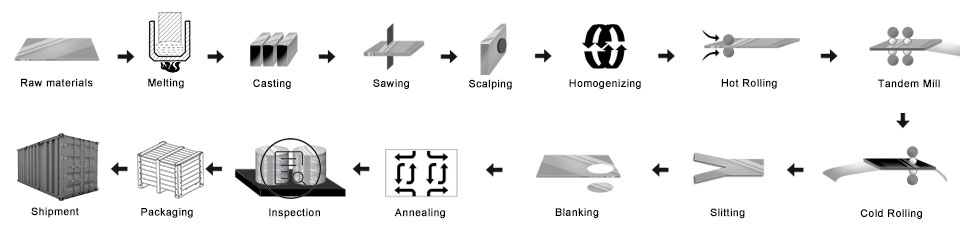
- Bereiten Sie die Vorlegierungen vor
- Schmelzofen: Geben Sie die Legierungen in den Schmelzofen
- Gleichstromguss-Aluminiumbarren: Um den Mutterbarren herzustellen
- Fräsen Sie den Aluminiumbarren: um die Oberfläche und die Seite glatt zu machen
- Heizofen
- Warmwalzwerk: machte die Mutterspule
- Kaltwalzwerk: Die Mutterspule wurde in der Dicke gewalzt, die Sie kaufen möchten
- Stanzvorgang: Werden Sie zu der Größe, die Sie wollen
- Glühofen: die Stimmung ändern
- Endkontrolle
- Verpackung: Holzkiste oder Holzpalette
- Lieferung
Qualitätskontrolle
Sicherheit Die nachstehende Prüfung wird in der Produktion durchgeführt.
- A. Strahlenerkennung—RT;
- B. Ultraschallprüfung—UT;
- C. Magnetpulverprüfung-MT;
- D. Penetrationstests-PT;
- e. Wirbelstrom-Fehlererkennung-ET
1) Seien Sie frei von Ölflecken, Delle, Aufnahme, Kratzer, Fleck, Oxidverfärbung, Pausen, Korrosion, Rollspuren, Schmutzstreifen, und andere Mängel, die die Nutzung beeinträchtigen.
2) Oberfläche ohne schwarze Linie, sauber geschnitten, periodischer Fleck, Mängel beim Walzendruck, wie andere GKO-interne Kontrollstandards.
Verpackung mit Aluminiumscheiben:
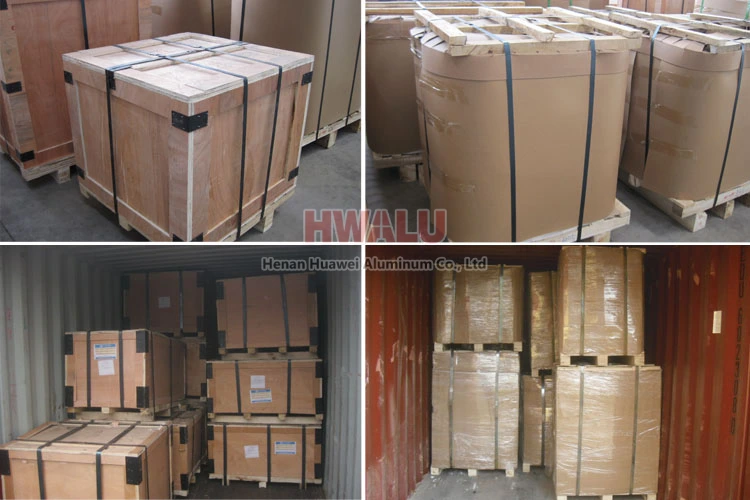
Aluminiumkreise können nach Exportstandards verpackt werden, Mit braunem Papier und Plastikfolie abdecken. Endlich, Das Aluminium Round wird auf einer Holzpalette/Holzkiste befestigt.
- Stellen Sie die Trockner neben den Aluminiumkreis, Halten Sie die Produkte trocken und sauber.
- Verwenden Sie sauberes Plastikpapier, Packen Sie den Aluminiumkreis ein, Halten Sie eine gute Abdichtung.
- Verwenden Sie das Schlangenlederpapier, Packen Sie die Oberfläche des Plastikpapiers ein, Halten Sie eine gute Abdichtung.
- Nächste, Es gibt zwei Arten der Verpackung: Eine Möglichkeit ist die Verpackung auf Holzpaletten, Verwenden Sie das krustige Papier, um die Oberfläche zu verpacken; Eine andere Möglichkeit ist die Verpackung in Holzkisten, Verwenden Sie die Holzkiste, um die Oberfläche zu verpacken.
- Endlich, Legen Sie das Stahlband auf die Oberfläche der Holzkiste, Halten Sie die Holzkiste fest und sicher.
Aluminiumkreis aus Henan Huawei Aluminium. den Exportstandard erfüllen. Kunststofffolie und braunes Papier können je nach Kundenwunsch abgedeckt werden. Was mehr ist, Zum Schutz der Produkte vor Beschädigungen während der Lieferung wird eine Holzkiste oder eine Holzpalette verwendet. Es gibt zwei Arten von Verpackungen, die Auge zur Wand oder Auge zum Himmel sind. Kunden können aus Bequemlichkeit zwischen beiden Optionen wählen. Allgemein gesprochen, es gibt 2 Tonnen in einem Paket, und laden 18-22 Tonnen im 1×20′-Container, Und 20-24 Tonnen im 1×40′-Container.
Warum sollten Sie sich für uns entscheiden??
Um mit der Zeit zu gehen, HWALU führt weiterhin modernste Ausrüstung und Technik ein, um seine Wettbewerbsfähigkeit zu verbessern. Halten Sie sich stets an die Geschäftsphilosophie, dass Qualität im Mittelpunkt steht und der Kunde an erster Stelle steht, um die Produkte der Aluminium-Disc-Circle-Serie in höchster Qualität in alle Teile der Welt zu liefern. Mehr …