Análise Comparativa de Aplicação de 1060 Discos de alumínio vs. 1100 Discos de alumínio na fabricação moderna
1. Introdução
Discos de alumínio, também chamados de círculos de alumínio ou espaços em branco redondos, permanecem materiais semiacabados fundamentais na fabricação de utensílios de cozinha, caixas elétricas, componentes do vaso de pressão, e embalagens profundas. Entre os tipos de alumínio comercialmente puro, 1060 discos de alumínio e 1100 discos de alumínio dominam a demanda global devido à sua alta formabilidade, resistência à corrosão, e ampla adaptabilidade de processamento. Apesar de sua semelhança como parte da família de alumínio da série 1xxx, sua microestrutura, composição de impurezas, e o comportamento downstream diferem significativamente - resultando em adequação de aplicação distinta em indústrias de manufatura.
À medida que os materiais leves continuam a substituir o aço em utensílios de cozinha e produtos de consumo, compreender as diferenças sutis entre 1060 e 1100 ligas torna-se crítica para engenheiros que desejam otimizar o desempenho da prensa, reduzir a taxa de sucata, e melhorar a confiabilidade do produto final. Este artigo conduz uma comparação técnica abrangente – incluindo a composição química, propriedades mecânicas, desempenho de tração profunda, requisitos de qualidade de superfície, comportamento térmico, e campos de aplicação específicos. Através de análises baseadas em dados e estudos de caso de fabricação detalhados, esclarecemos como os fabricantes devem selecionar entre 1060 e 1100 com base nas demandas do processo, geometria do produto, eficiência de produção, e considerações de custo.

2. Visão geral de 1060 Discos de alumínio
1060 o alumínio pertence à categoria de alumínio comercialmente puro contendo 99.6% Al. Com teor de impurezas ultrabaixo, oferece condutividade elétrica excepcional e alta ductilidade, tornando-o especialmente adequado para:
- Desenho profundo
- Fiação
- Dobrando
- Estampagem
- Aplicações de polimento e anodização
É amplamente utilizado em panelas (potes, panelas, chaleiras), refletores, e eletrônica.
Mesa 1. Principais características de 1060 Discos de alumínio
| Categoria de propriedade |
Descrição |
| Pureza |
99.6% alumínio (muito alto) |
| Comportamento Mecânico |
Muito macio, excelente ductilidade, baixa resistência ao escoamento |
| Capacidade de desenho profundo |
Fora do comum; ideal para grandes deformações |
| Resistência ao Calor |
Bom para panelas de baixa a média temperatura |
| Resistência à corrosão |
Alto, especialmente para água e produtos químicos suaves |
| Custo |
Menor que 1100 |
| Temperamentos Comuns |
Ó, H12, H14, H18 |
3. Visão geral de 1100 Discos de alumínio
1100 alumínio contém 99.0% alumínio, com impurezas ligeiramente mais altas - principalmente 0.05–0,20% cobre, que melhora a resistência sem degradar o desempenho contra corrosão. Comparado com 1060, 1100 ofertas:
- Maior resistência à tração
- Melhor resistência à fadiga
- Formabilidade ligeiramente reduzida
- Maior condutividade térmica do que alguns tipos de liga
Essas características fazem 1100 adequado para:
- Contentores industriais
- Equipamento químico
- Componentes do trocador de calor
- Panelas de alta pressão e caixas estruturais
Mesa 2. Principais características de 1100 Discos de alumínio
| Categoria de propriedade |
Descrição |
| Pureza |
99.0% alumínio |
| Comportamento Mecânico |
Mais forte que 1060, ductilidade moderada |
| Capacidade de desenho profundo |
Bom, mas menos que 1060 |
| Resistência à fadiga |
Melhor que 1060 |
| Força |
Maior devido à presença de Cu |
| Temperamentos Comuns |
Ó, H14, H16, H18 |
| Usos ideais |
Vasos de pressão, panelas industriais, tanques químicos |
4. Comparação de composição química
Apesar de ambos pertencerem à série 1xxx, os elementos menores determinam o comportamento do processo e do aplicativo. A presença de cobre em 1100 é o principal diferencial, proporcionando maior resistência e resistência à fadiga.
Mesa 3. Composição Química (Valores Típicos)
| Liga |
Al (%) |
Cu (%) |
E (%) |
Fé (%) |
Mn (%) |
Zn (%) |
Outros |
| 1060 |
99.6 |
≤0,05 |
≤0,25 |
≤0,35 |
0 |
0 |
≤0,03 |
| 1100 |
99.0 |
0.05–0,20 |
≤0,95 |
≤0,95 |
≤0,05 |
≤0,10 |
≤0,15 |
Visão principal:
O 0.05–0,20% cobre conteúdo em 1100 aumenta significativamente a força e a resistência à pressão, tornando-o adequado para aplicações industriais e estruturais onde 1060 pode deformar-se muito facilmente.
5. Comparação de propriedades mecânicas
O comportamento mecânico influencia diretamente o desempenho do disco na estampagem, fiação, e operações de estampagem profunda.
Mesa 4. Comparação de propriedades mecânicas (Temperamento O típico)
| Propriedade |
1060-Ó |
1100-Ó |
| Resistência à tracção (MPa) |
55–95 |
70–120 |
| Força de rendimento (MPa) |
15–35 |
25–60 |
| Alongamento (%) |
30–45 |
25–35 |
| Dureza (HB) |
17–25 |
19–30 |
Principais observações:
- 1060 tem ductilidade superior, tornando-o mais adequado para panelas de estampagem profunda com grande deformação (por exemplo, potes, panelas tipo bacia).
- 1100 é mais forte, ideal para laminações industriais, panelas resistentes, e componentes que suportam pressão.
6. Desempenho de desenho profundo e fiação
Esta seção cobre implicações de processamento no mundo real.
6.1 Comportamento de desenho profundo
- 1060 discos de alumínio funcionam excepcionalmente bem em desenho único e em várias etapas devido à sua suavidade e alto alongamento.
- 1100 discos de alumínio também pode ser profundamente desenhado, mas o desgaste das ferramentas aumenta devido à maior resistência e maior resistência ao atrito.
Mesa 5. Classificação de desempenho de estampagem profunda
| Liga |
Draw profundo único |
Desenho profundo em várias etapas |
Risco de rachaduras |
Aplicações Típicas |
| 1060 |
Excelente |
Excelente |
Muito baixo |
Potes, panelas, refletores de iluminação |
| 1100 |
Bom |
Moderado |
Baixo a Médio |
Panelas industriais, recipientes químicos |

7. Compatibilidade com tratamento de superfície
Ambas as ligas respondem de maneira diferente durante:
- Anodizando
- Polimento
- Revestimento
- Gravura
Desempenho de polimento
- 1060 alcança um superfície espelhada devido à pureza extremamente alta.
- 1100 dá um bom polimento, mas pode apresentar pequenas variações de tom devido ao teor de cobre.
Comportamento de Anodização
- 1060 produz camadas de óxido mais uniformes, ideal para panelas reflexivas.
- 1100 dá uma superfície anodizada mais dura, mas com coloração ligeiramente mais escura.
8. Custo e disponibilidade de mercado
Informações de mercado
1060 os discos de alumínio têm maiores volumes de produção globalmente devido ao seu uso generalizado em utensílios de cozinha e iluminação, tornando-os um pouco mais baratos.
Mesa 6. Comparação de custos (Aprox.. Índices da indústria)
| Liga |
Preço relativo |
Disponibilidade de mercado |
Demanda Global |
| 1060 |
Baixo |
Muito alto |
Muito alto |
| 1100 |
Médio |
Alto |
Alto |
9. Diferenças de adequação de aplicativos
Esta é a parte mais importante para os engenheiros que selecionam entre as duas ligas.
9.1 Aplicações ideais para 1060 Discos de alumínio
- Utensílios domésticos padrão
- Corpos de chaleira
- Refletores de iluminação flexíveis
- Recipientes profundos para alimentos
- Pás do ventilador
- Sinais de alumínio
- Carcaças industriais de baixa resistência
9.2 Aplicações ideais para 1100 Discos de alumínio
- Panelas de alta pressão
- Tanques de armazenamento de produtos químicos
- Jaquetas de isolamento de tubos
- Trocadores de calor industriais
- Fundos de panelas multicamadas
- Refletores industriais de alta temperatura
- Materiais de embalagem resistentes ao calor
Mesa 7. Matriz de recomendação de aplicativos
| Tipo de aplicativo |
1060 Recomendação |
1100 Recomendação |
| Utensílios de cozinha domésticos |
★★★★★ |
★★★ |
| Panelas industriais |
★★★ |
★★★★★ |
| Recipientes químicos |
★★ |
★★★★★ |
| Refletores |
★★★★★ |
★★★ |
| Embalagens profundas para alimentos |
★★★★★ |
★★★ |
| Vasos de alta pressão |
★★ |
★★★★★ |
| Componentes de fiação intensiva |
★★★★★ |
★★★ |
10. Condutividade Térmica e Distribuição de Calor
Ambas as ligas apresentam excelente condutividade térmica, mas pequenas diferenças são importantes em aplicações sensíveis ao calor.
Características térmicas
- 1060 fornece distribuição de calor altamente uniforme - ideal para panelas com aquecimento uniforme.
- 1100 oferece uniformidade térmica ligeiramente inferior, mas melhor estabilidade mecânica sob flutuações de temperatura.
Mesa 8. Comparação de propriedades térmicas
| Propriedade |
1060 |
1100 |
| Condutividade Térmica (S/m·K) |
234 |
222 |
| Capacidade de calor |
Alto |
Alto |
| Resistência à deformação térmica |
Moderado |
Mais alto |
11. Formabilidade, Comportamento de endurecimento no trabalho, e resposta de processamento
Entendendo como 1060 e 1100 a reação dos discos de alumínio durante operações mecânicas é essencial para fabricantes que buscam alta eficiência de conformação, baixa taxa de sucata, e geometria de produto consistente. Os mecanismos de formação, características de endurecimento, e a taxa de sensibilidade à deformação variam significativamente entre ambas as ligas.
11.1 Características de endurecimento por trabalho
As ligas de alumínio fortalecem durante o trabalho a frio à medida que as discordâncias se multiplicam, melhorando a dureza, mas reduzindo a ductilidade. O grau de endurecimento por trabalho diferencia as ligas:
Mesa 9. Comparação de endurecimento de trabalho
| Liga |
Taxa de endurecimento de trabalho |
Retenção de suavidade |
Adequação para múltiplas etapas de desenho |
| 1060 |
Baixo |
Alto |
Excelente |
| 1100 |
Médio |
Moderado |
Bom, mas mais desgaste da ferramenta |
Análise:
- 1060a taxa de endurecimento do trabalho é baixa, o que significa que mesmo após deformação substancial, retém ductilidade e não se torna quebradiço.
- 1100 o trabalho endurece mais rapidamente devido ao seu teor de cobre, melhorando a resistência, mas exigindo recozimento intermediário para estampagem profunda em vários estágios.
11.2 Sensibilidade à Taxa de Deformação
A sensibilidade da taxa de deformação controla como a liga responde sob condições rápidas vs.. deformação lenta.
- 1060 alumínio exibe uma resposta estável em taxas de deformação variadas, permitindo estampagem rápida sem risco de desbaste localizado.
- 1100 alumínio funciona melhor em velocidades mais lentas, velocidades de estiramento controladas onde seu maior endurecimento pode ser aproveitado para integridade estrutural.
É por isso 1060 é ideal para linhas automatizadas de estampagem de utensílios de cozinha de alta velocidade, enquanto 1100 é preferido em operações de formação de tanques industriais onde a profundidade de estiramento é moderada, mas a resistência estrutural é crítica.
12. Comportamento de recozimento e compatibilidade de têmpera
O recozimento suaviza a liga após trabalho a frio, restaura a ductilidade, e estabiliza a estrutura do grão. Os engenheiros de processamento devem selecionar a têmpera correta para maximizar o desempenho.
12.1 Características de recozimento
Mesa 10. Resposta de recozimento
| Liga |
Temperatura de recozimento total |
Tempo de espera |
Uniformidade de tamanho de grão |
Ductilidade Pós-Recozimento |
| 1060 |
350–410ºC |
1–2 horas |
Muito alto |
Excelente |
| 1100 |
350–430ºC |
1–3 horas |
Alto |
Muito bom |
Notas principais:
- 1100 requer uma faixa de temperatura um pouco mais ampla e um tempo de retenção mais longo devido ao comportamento de recristalização relacionado ao cobre.
- 1060 atinge uniforme, grãos finos que melhoram a capacidade de estampagem profunda.
12.2 Temperamentos comuns usados na fabricação
Mesa 11. Temperamentos comuns e suas aplicações
| Temperamento |
1060 Aplicativos |
1100 Aplicativos |
| Ó |
Panelas profundas, refletores |
Panelas de pressão, tanques químicos |
| H12 |
Componentes de tração média |
Carcaças estruturais |
| H14 |
Produtos giratórios |
Recipientes para alimentos de resistência média |
| H18 |
Sinais, placas de identificação |
Jaquetas de isolamento industrial |
A têmpera influencia muito a seleção do produto. Por exemplo:
- Um disco 1060-O é ideal para um corpo de chaleira que requer múltiplas operações de trefilação.
- Um disco 1100-H14 é melhor para escudos térmicos industriais que necessitam de rigidez estrutural moderada.

13. Requisitos de qualidade de superfície e refletividade
O acabamento da superfície afeta a estética e o desempenho, especialmente em panelas, refletores de iluminação, e aplicações decorativas.
13.1 Desempenho de refletividade
Mesa 12. Diferenças de refletividade
| Liga |
Reflexividade Polida |
Refletividade anodizada |
Melhor uso |
| 1060 |
Muito alto |
Muito alto |
Iluminação, interiores de panelas |
| 1100 |
Alto |
Moderado |
Refletores industriais, alojamentos |
Por que 1060 tem melhor desempenho:
A pureza ultra-alta do alumínio reduz microdefeitos, permitindo polimento de nível espelhado.
13.2 Rugosidade da superfície após estampagem
Mesa 13. Rugosidade Superficial (Rá) Depois de formar
| Liga |
Sorteio Único Ra (µm) |
Ra multi-sorteio (µm) |
Girando Rá (µm) |
| 1060 |
0.25–0,35 |
0.30–0,45 |
0.25–0,30 |
| 1100 |
0.30–0,45 |
0.35–0,55 |
0.28–0,40 |
Valores mais baixos de Ra se correlacionam com:
- Melhor adesão do revestimento
- Maior refletividade
- Fricção reduzida nas superfícies interiores dos utensílios de cozinha
1060 portanto, é excelente em utensílios de cozinha e iluminação premium.
14. Força, Resistência à fadiga, e Comportamento Estrutural
A resistência à fadiga é um fator crítico em aplicações que envolvem cargas cíclicas, vibração mecânica, ou ciclagem térmica.
14.1 Diferença de força explicada
1100a ligeira adição de cobre aumenta:
- Resistência à tracção
- Força de rendimento
- Resistência à fadiga
Isto o torna mais adequado para:
- Panelas de pressão
- Tampas de tanques industriais
- Carcaças portantes
Mesa 14. Comparação de desempenho estrutural
| Categoria de desempenho |
1060 |
1100 |
| Resistência à carga estática |
Médio |
Alto |
| Fadiga vibratória |
Médio |
Alto |
| Fadiga Térmica |
Médio |
Alto |
| Resistência ao Impacto |
Alto |
Médio |
15. Comportamento de corrosão e resistência química
Ambas as ligas resistem bem à corrosão, mas diferenças surgem em ambientes específicos.
15.1 Desempenho geral de corrosão
- 1060: Excelente resistência à água, vapor, ácidos orgânicos
- 1100: Também excelente, com resistência ligeiramente reduzida em ambientes com alto teor de cloreto devido à presença de Cu
Mesa 15. Adequação à corrosão
| Ambiente de aplicação |
1060 Adequação |
1100 Adequação |
| Água neutra |
★★★★★ |
★★★★★ |
| Ácidos alimentares |
★★★★★ |
★★★★ |
| Cloretos |
★★★★ |
★★★ |
| Produtos químicos industriais |
★★★ |
★★★★★ |
| Exposição atmosférica |
★★★★★ |
★★★★★ |
16. Comportamento em altas temperaturas e ciclagem térmica
16.1 Comparação de resistência ao calor
1060 mantém excelente condutividade térmica, mas pode deformar-se sob repetidos ciclos de alta temperatura devido à suavidade.
1100, possuindo maior força, mantém melhor a forma sob:
- Altas temperaturas de chama
- Gradientes térmicos
- Ciclos rápidos de aquecimento-resfriamento
É por isso que os fabricantes de utensílios de cozinha industriais costumam escolher 1100 para tampas de panela de pressão ao selecionar 1060 para corpos de chaleira.
17. Soldagem, Brasagem, Juntando-se, e comportamento do revestimento
Os fabricantes devem considerar a compatibilidade com as técnicas de união.
17.1 Soldabilidade
Ambas as ligas são fáceis de soldar usando:
- TIG
- MEU
- Soldagem por resistência
No entanto:
- 1060 produz zonas de solda mais limpas
- 1100 fornece soldas mais fortes devido ao ganho de resistência induzido pelo cobre
Mesa 16. Comportamento de Soldagem
| Propriedade |
1060 |
1100 |
| Limpeza de solda |
Excelente |
Bom |
| Resistência da solda |
Médio |
Alto |
| Formabilidade Pós-Soldagem |
Excelente |
Moderado |

18. Desempenho na fabricação de panelas (Análise Profunda)
Panelas continuam sendo o maior setor de consumo de discos de alumínio em todo o mundo.
18.1 Por que 1060 Domina utensílios domésticos
As razões incluem:
- O alongamento ultra-alto reduz o risco de rachaduras
- Superfície lisa ideal para polimento ou revestimento
- A alta condutividade térmica garante um aquecimento uniforme
- Custo mais baixo melhora a competitividade
- Ideal para grandes deformações em tachos e panelas
18.2 Por que 1100 É popular em panelas industriais ou de alta pressão
Os fabricantes escolhem 1100 quando:
- Os requisitos de resistência excedem a capacidade de 1060
- Panelas precisam de resistência à fadiga (vasos de pressão)
- Vários ciclos térmicos ocorrem em ambientes industriais
- A estabilidade dimensional é crítica sob carga
19. Aplicações Industriais: Químico, AVAC, e Estrutural
19.1 Aplicações de armazenamento químico
1100 discos de alumínio são preferidos para:
- Tampas finais de tanques químicos
- Tampas de gás
- Revestimento de isolamento
- Discos de flange HVAC
O cobre adicionado melhora a integridade estrutural sem reduzir drasticamente a resistência à corrosão.
19.2 Componentes de HVAC e trocador de calor
As propriedades térmicas do alumínio tornam ambas as ligas adequadas, mas:
- 1060 é usado onde a refletividade e a formabilidade são importantes
- 1100 é usado onde a resistência e a fadiga por vibração são fundamentais
20. Iluminação, Refletor, e aplicações decorativas
20.1 Produção de refletores
Os refletores de iluminação exigem:
- Alta refletividade
- Superfície lisa
- Excelente capacidade de formação de spin
É aqui que 1060 se destaca esmagadoramente.
Mesa 17. Classificação do material refletor
| Categoria de desempenho |
1060 Avaliação |
1100 Avaliação |
| Polimento |
★★★★★ |
★★★★ |
| Brilho de superfície |
★★★★★ |
★★★ |
| Formabilidade de rotação |
★★★★★ |
★★★★ |
| Otimização de Peso |
★★★★★ |
★★★★★ |
21. Sustentabilidade, Reciclabilidade, e considerações ambientais
Ambas as ligas são altamente recicláveis, com mais de 90% taxa de reciclabilidade após processamento em fim de vida.
No entanto:
- 1060 é mais fácil de reciclar devido a menos elementos de liga.
- 1100 requer um pouco mais refinado devido ao cobre, mas produz produtos reciclados mais fortes.
22. Estudos de caso do mundo real (Exemplos de fabricação)
Estudo de caso 1: Fábrica de panelas no Vietnã
Um grande fabricante de utensílios de cozinha fez a transição de:
- 1100 para corpos de chaleira → 1060
Razão:
- Mudando para 1060 taxa de fissuração reduzida durante a estampagem profunda de 3.2% para 0.4%
- Maior velocidade de produção
- Melhor qualidade de polimento de espelho
Estudo de caso 2: Marca de vaso de pressão industrial na Turquia
Mudou de:
- 1060 para 1100 para tampas de fogão industrial
Resultado:
- Força aumentada em 18%
- Vida útil da embarcação estendida em 22%
- Conformidade com as normas de vasos de pressão melhorada
Propriedades do círculo de alumínio:
O círculo de alumínio é adequado para muitos mercados, incluindo panelas, indústrias automotiva e de iluminação, etc., graças às boas características do produto:
- Baixa anisotropia, o que facilita o desenho profundo
- Propriedades mecânicas fortes
- Difusão de calor alta e homogênea
- Capacidade de ser esmaltado, coberto por PTFE (ou outros), anodizado
- Boa refletividade
- Alta relação resistência-peso
- Durabilidade e resistência à corrosão
Processo de Círculos de Alumínio
Lingotes/Ligas Mestres — Forno de fusão – Forno de retenção — DC. Rodízio — Laje —- Escalpador — Laminador a Quente – Laminador a Frio – Puncionamento – Forno de Recozimento — Inspeção Final – Embalagem — Entrega
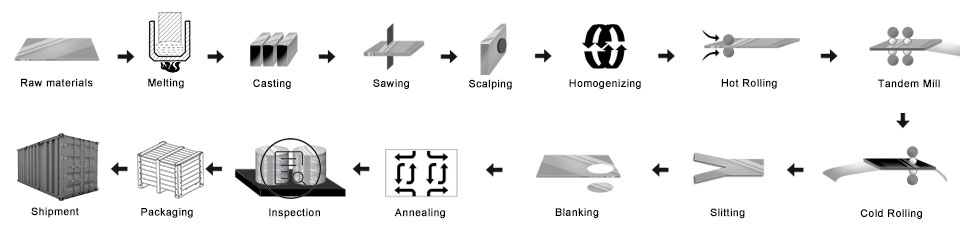
- Prepare as ligas mestres
- Forno de fusão: coloque as ligas no forno de fusão
- Lingote de alumínio fundido DC: Para fazer o lingote mãe
- Fresar o lingote de alumínio: para tornar a superfície e o lado lisos
- Forno de aquecimento
- Laminador a quente: fez a bobina mãe
- Laminador a frio: a bobina mãe foi enrolada conforme a espessura que você deseja comprar
- Processo de perfuração: torne-se do tamanho que você deseja
- Forno de recozimento: mudar o temperamento
- Inspeção final
- Embalagem: caixa de madeira ou palete de madeira
- Entrega
Controle de qualidade
Garantia Abaixo a inspeção será feita na produção.
- um. detecção de raios—TR;
- b. testes ultrassônicos—UT;
- c. Teste de Partículas Magnéticas-MT;
- d. testes de penetração-PT;
- e. detecção de falhas por correntes parasitas-ET
1) Esteja livre de manchas de óleo, Dente, Inclusão, Arranhões, Mancha, Descoloração Óxida, Pausas, Corrosão, Marcas de rolo, Listras de sujeira, e outros defeitos que interferirão no uso.
2) Superfície sem linha preta, limpo, mancha periódica, defeitos de impressão em rolo, como outros padrões de controle interno da gko.
Embalagem de discos de alumínio:
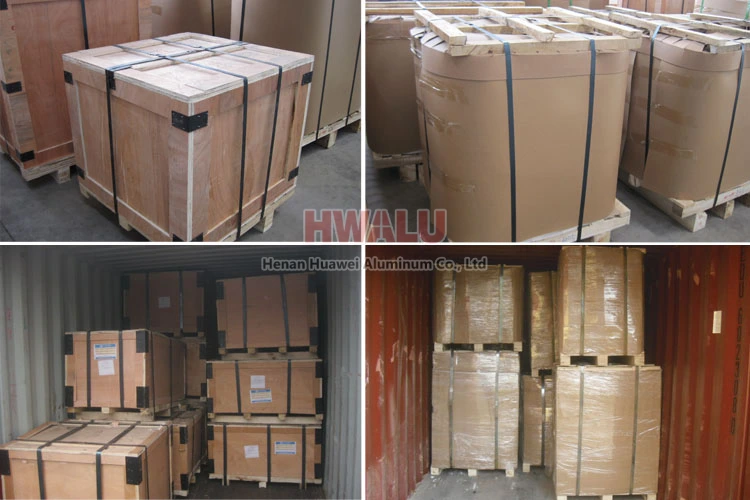
Os círculos de alumínio podem ser embalados de acordo com os padrões de exportação, cobrindo com papel pardo e filme plástico. Finalmente, a Rodada de Alumínio é fixada em um palete de madeira/caixa de madeira.
- Coloque os secadores ao lado do círculo de alumínio, mantenha os produtos secos e limpos.
- Use papel plástico limpo, embale o círculo de alumínio, mantenha uma boa vedação.
- Use o papel de pele de cobra, embale a superfície do papel plástico, mantenha uma boa vedação.
- Próximo, existem duas formas de embalagem: Uma maneira é a embalagem de paletes de madeira, usando o papel crocante embalando a superfície; Outra forma é a embalagem em caixa de madeira, usando a caixa de madeira embalando a superfície.
- Finalmente, coloque a correia de aço na superfície da caixa de madeira, mantendo a solidez e segurança da caixa de madeira.
Círculo de alumínio de Henan Huawei Alumínio. atender ao padrão de exportação. Filme plástico e papel pardo podem ser cobertos de acordo com as necessidades dos clientes. Além do mais, uma caixa de madeira ou palete de madeira é adotada para proteger os produtos contra danos durante a entrega. Existem dois tipos de embalagens, que estão de olho na parede ou de olho no céu. Os clientes podem escolher qualquer um deles para sua conveniência. De um modo geral, há 2 toneladas em um pacote, e carregando 18-22 toneladas em contêiner 1×20′, e 20-24 toneladas em contêiner 1×40′.
Por que nos escolher?
Para acompanhar os tempos, A HWALU continua introduzindo equipamentos e técnicas de última geração para melhorar sua competitividade. Sempre siga a filosofia empresarial de qualidade como centro e cliente em primeiro lugar, fornecer produtos da série de círculo de disco de alumínio da mais alta qualidade para todas as partes do mundo. Mais …