Comprendre la sélection de température pour la fabrication d'ustensiles de cuisine: Comment Ô, H12, et les trempes circulaires en aluminium H14 influencent les performances et le rôle du recuit
1. Introduction
L'industrie mondiale des ustensiles de cuisine s'appuie de plus en plus sur les cercles en aluminium comme matériau de formation du noyau en raison de leur excellente conductivité thermique., force modérée, formabilité, et faible densité. Alors que les ustensiles de cuisine évoluent vers des appareils plus économes en énergie, léger, et des conceptions durables, les fabricants doivent prendre des décisions éclairées concernant état d'humeur de cercles d'aluminium utilisés en emboutissage, filage, emboutissage profond, et procédés d'extrusion par impact.
Choisir entre Ô tempérament (recuit), H12 (¼ dur), et H14 (½ dur) n'est pas seulement une question de résistance mécanique - cela affecte:
- Comportement de formage lors de l'emboutissage profond et du formage par essorage
- Dureté finale et rigidité de la batterie de cuisine
- Résistance aux fissures lors de déformations élevées
- Qualité de surface et réponse à l'anodisation
- Stabilité dimensionnelle lors des processus ultérieurs
- Rendement de production et coût d’outillage
En plus, le processus de recuit, qu'elle soit partielle, intermédiaire, ou recuit complet, détermine la structure du grain, consistance mécanique, niveaux de stress résiduel, et la qualité du produit final.
Cet article approfondit cercle en aluminium sélection de température pour les ustensiles de cuisine, explorer comment les différents états se comportent dans des environnements de fabrication réels et comment les techniques de recuit façonnent les performances mécaniques. Il fournit une analyse complète orientée ingénierie pour les fabricants, transformateurs de matériaux, et créateurs d'ustensiles de cuisine.

2. Aperçu des trempes circulaires en aluminium pour ustensiles de cuisine
Les trempes en aluminium représentent des combinaisons d’écrouissage, recuit, et traitement mécanique contrôlé. Pour la fabrication d'ustensiles de cuisine, les conditions de trempe les plus couramment utilisées comprennent:
2.1 Ô tempérament (Recuit doux)
- Entièrement recuit pour obtenir une douceur maximale
- Résistance mécanique la plus faible
- Allongement et formabilité les plus élevés
- Structure du grain entièrement recristallisée
- Idéal pour emboutissage profond, filage, et ustensiles de cuisine à haute déformation
2.2 H12 Tempérament (Quart de dureté durci)
- Produit par laminage à froid contrôlé
- Force moyenne
- Allongement modéré
- Bon équilibre entre rigidité et formabilité
- Souvent utilisé dans dessin superficiel, casseroles de profondeur moyenne, couvercles, et disques
2.3 H14 Tempérament (Durci à moitié dur)
- Augmentation de l’écrouissage sans recuit complet
- Résistance supérieure
- Ductilité inférieure
- Convient pour batterie de cuisine à faible déformation, tel que:
- Plaques de cuisson peu profondes
- Couvercles plats
- Plaques pressées
- Composants nécessitant une meilleure rigidité que O et H12
Ces différences de température déterminent directement la capacité de fabrication et les performances d'utilisation finale des ustensiles de cuisine..
3. Comparaison des propriétés mécaniques de O, H12, et cercles en aluminium H14
Le tableau ci-dessous fournit des valeurs mécaniques généralisées pour 1050, 1060, ou 3003 cercles en aluminium largement utilisés dans la production d'ustensiles de cuisine. (Les valeurs peuvent varier selon le fournisseur mais restent cohérentes dans le sens directionnel.)
| Caractère |
Résistance à la traction (MPa) |
Limite d'élasticité (MPa) |
Élongation (%) |
Formabilité |
Utilisation typique |
| Ô |
60–95 |
20–35 |
30–45 |
Excellent (Emboutissage profond) |
Pots, bouilloires, casseroles profondes |
| H12 |
85–120 |
70–95 |
18–30 |
Bien |
Casseroles, ustensiles de cuisine peu profonds, couvercles |
| H14 |
120–150 |
95–130 |
9–18 |
Modéré à faible |
Plateaux, articles de boulangerie, pièces moulées à la presse |
À retenir:
Plus le tempérament est bas (Ô), plus la ductilité est élevée, ce qui le rend adapté au formage lourd. Des tempéraments plus élevés (H12, H14) privilégier la rigidité et la rétention de forme plutôt que la capacité de déformation.
4. Comment sélectionner la bonne température pour différents types d'ustensiles de cuisine
Cette section fournit une analyse technique approfondie basée sur les conditions de fabrication réelles.
4.1 Sélection de température pour les ustensiles de cuisine à emboutissage profond
L'emboutissage est le processus d'ustensile de cuisine le plus gourmand en déformation, surtout pour les articles tels que:
- Marmites
- Pots à soupe
- Revêtements pour autocuiseurs
- Bouilloires
- Grands bols
- Casseroles
Tempérament recommandé: Ô tempérament
Raisonnement:
- Un allongement élevé empêche les fissures
L'emboutissage profond peut réduire l'épaisseur de 35 à 50 % dans les cas extrêmes. Seule la trempe O fournit suffisamment de douceur au grain pour survivre à une telle déformation.
- Amincissement uniforme des murs
La microstructure entièrement recuite améliore l'écoulement du métal au niveau du rayon de la matrice.
- Charge de formage inférieure
L'état O réduit les besoins en tonnage de la machine et prolonge la durée de vie des outils.
- Idéal pour l'emboutissage profond en plusieurs étapes
La plupart des ustensiles de cuisine profonds nécessitent 2 à 5 étapes de dessin; O tempérament gère cela de manière fiable.
Conclusion:
Lorsque les ratios de tirage dépassent 2.0, O le tempérament est obligatoire.
4.2 Sélection de température pour les ustensiles de cuisine formés par rotation
Formage par rotation (manuel ou CNC) produit des ustensiles de cuisine tels que:
- Coquilles de wok
- Poêles rondes
- Coquilles de cuiseur vapeur
- Marmites
Tempérament recommandé: O ou matériau partiellement recuit
Pourquoi:
- La filature nécessite une ductilité et une résistance élevées aux contraintes de rotation.
- Un amincissement localisé est inévitable; le matériau doit résister aux contraintes de traction et de compression.
- Trop dur (H14) entraîne des fissures sur les bords et une mauvaise aptitude au filage.
- Le H12 peut fonctionner pour le spinning léger mais n’est pas idéal pour les géométries complexes.
Résultat:
La trempe O reste la plus adaptée au formage par essorage de haute précision.

4.3 Sélection de température pour les ustensiles de cuisine à tirage peu profond
Les ustensiles de cuisine peu profonds comprennent:
- Poêles à frire
- Sauté pans
- Couvercles peu profonds
- Bols de profondeur moyenne
Meilleur caractère: H12
Pourquoi H12 fonctionne bien:
- Une rigidité plus élevée maintient la forme des ustensiles de cuisine après le formage.
- Une ductilité adéquate permet un étirage peu profond sans fissuration.
- Meilleure stabilité dimensionnelle lors des processus de détourage et de rivetage.
4.4 Sélection de la température pour les ustensiles de cuisine formés à la presse ou estampés
Le formage à la presse est utilisé pour:
- Plaques de cuisson
- Assiettes de service
- Moules à tarte
- Couvre-plats
- Composants d'ustensiles de cuisine plats
Ceux-ci nécessitent une rigidité de forme plutôt qu’une déformation élevée.
Meilleur caractère: H14
Caractéristiques adaptées au procédé:
- Une rigidité élevée empêche la déformation
- A suffisamment de force pour maintenir la planéité
- Meilleure résistance aux rayures et à l'usure
- Convient pour l'estampage en une seule étape
Avertissement:
Ne convient pas aux ustensiles de cuisine profonds ou moyens.
5. Le rôle du recuit dans la production de cercles en aluminium
Le recuit est un processus métallurgique critique affectant presque toutes les propriétés mécaniques des cercles en aluminium.. Comprendre les variables de recuit est essentiel pour contrôler la qualité finale des ustensiles de cuisine.
5.1 Qu'est-ce que le recuit?
Le recuit est un traitement thermique contrôlé utilisé pour:
- Éliminer le stress interne
- Restaurer la ductilité
- Agrandir ou affiner la structure du grain
- Améliorer la cohérence de la surface
- Préparer le matériau pour le formage profond
Température de recuit typique: 350–450°C
Temps de maintien typique: 60–180 minutes, en fonction de l'alliage et de l'épaisseur.
5.2 Types de recuit utilisés dans la fabrication de cercles en aluminium
UN. Recuit complet (Ô tempérament)
- Réinitialise les propriétés mécaniques
- Produit la condition la plus douce
- Utilisé pour l'emboutissage profond et le filage
B. Recuit intermédiaire
- Appliqué entre les étapes de laminage ou d'étirage
- Contrôle le taux de durcissement
- Empêche les fissures lors du formage en plusieurs étapes
C. Recuit partiel
- Adoucit le matériau mais ne recristallise pas complètement
- Produit des états entre O et H12
- Équilibre la formabilité et la résistance
D. Recuit de stabilisation
- Élimine les contraintes résiduelles accumulées lors du laminage à froid
- Améliore la stabilité dimensionnelle
- Critique pour les ustensiles de cuisine soumis à une utilisation à haute température (200°C+)
5.3 Effets du recuit sur les performances du cercle en aluminium
5.3.1 Structure des grains
Le recuit complet aboutit à:
- Équiaxe, grains uniformes
- Ductilité améliorée
- Capacité d'emboutissage profonde améliorée
- Réduction des défauts de surface de la peau d'orange
Un recuit insuffisant produit:
- Granulométrie mixte
- Allongement inférieur
- Risque de fissuration
5.3.2 Soulagement du stress résiduel
Le stress résiduel peut avoir un impact:
- Précision de formage
- Répartition de l'épaisseur des ustensiles de cuisine
- Déformation lors de l'estampage
- Usure des outils
Le recuit supprime les contraintes internes accumulées lors du laminage.
5.3.3 Qualité de surface et réponse à l'anodisation
Un bon recuit assure:
- Surface lisse sans bandes
- Meilleure cohérence de la couleur d'anodisation
- Risque réduit de piqûres
- Risque moindre d’« oreilles » lors de l’emboutissage profond
5.3.4 Cohérence mécanique
Avec recuit contrôlé:
- La variation de dureté à travers les cercles tombe en dessous de ±5 HB
- Le tonnage tiré devient prévisible
- Le rendement de production augmente
- La fréquence de réglage des outils diminue
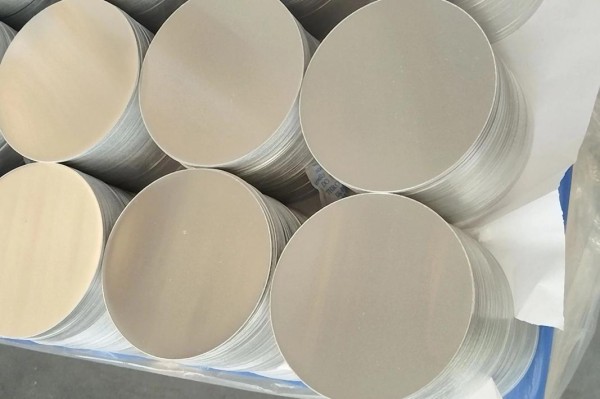
6. En comparant O, H12, et H14 dans la production d'ustensiles de cuisine pratiques
Vous trouverez ci-dessous une matrice complète correspondant au type d'ustensile de cuisine avec des conditions de trempe et de recuit appropriées..
| Type d'ustensile de cuisine |
humeur recommandée |
Pourquoi ça marche |
Recuit nécessaire |
| Pots profonds |
Ô |
Ductilité maximale |
Recuit complet |
| Woks |
Ô |
Nécessaire pour la rotation |
Recuit complet/partiel |
| Pot intérieur de l'autocuiseur |
Ô |
Emboutissage profond en plusieurs étapes |
Recuit complet |
| Poêles à frire |
H12 |
Equilibre entre dureté et formage |
Partielle ou intermédiaire |
| Couvercles |
H12 / H14 |
Cela dépend de la profondeur |
Recuit partiel |
| Plaques de cuisson |
H14 |
Haute rigidité |
Pas de recuit après laminage H14 |
| Plats fins |
H14 |
Précision de la forme |
Trempé uniquement |
7. Influence métallurgique du recuit sur le comportement de formage
7.1 Amélioration de la ductilité
Les grains recuits augmentent l'allongement de 30%–60%, critique pour le formage profond.
7.2 Réinitialisation du durcissement du travail
Sans recuit, les cercles en aluminium accumulent des contraintes pendant le laminage → conduisant à une dureté accrue et à des fissures précoces lors de l'emboutissage.
7.3 Contrôle de la texture des grains
Le recuit réduit la texture de roulement (composants en laiton et en cuivre) et améliore l'isotropie.
Cela réduit:
- Taux d'écoute
- Déchirure au rayon de la matrice
- Ondulation de la surface
8. Études de cas: Comment la sélection de la température affecte la qualité des ustensiles de cuisine
8.1 Étude de cas 1: Problème de fissuration profonde du pot
Un fabricant a utilisé Cercles aluminium H12 produire des marmites profondes. Lors de la deuxième étape d'emboutissage, des fissures sont apparues.
Cause première: ductilité insuffisante
Bonne solution: passer à Ô tempérament + recuit complet
8.2 Étude de cas 2: Déformation dans les plaques de cuisson
Une usine a utilisé la trempe O pour les plaques à pâtisserie, entraînant une mauvaise rigidité et une ondulation post-formage.
Bonne solution: passer à Tempérament H14
8.3 Étude de cas 3: Fissures des bords tournants dans la production de woks
L'utilisation de cercles H14 a conduit à une division des bords sous la force de rotation.
Bonne solution: O revenu avec courbe de recuit contrôlée
9. Pourquoi la précision de la courbe de recuit est importante
Les usines modernes de cercles d'aluminium utilisent des fours de recuit à atmosphère contrôlée avec régulation par ordinateur:
- Taux de chauffage
- Temps de maintien
- Taux de refroidissement
Un recuit incorrect peut provoquer:
- Surchauffe (prolifération de céréales)
- Sous-recuit (dureté excessive)
- Mauvaise brillance de la surface
- Propriétés mécaniques non uniformes
10. Courbes de recuit recommandées pour différentes applications
10.1 Pour l'emboutissage profond (Batterie de cuisine O-temper)
- 350–410°C
- Tenir 1 à 2 heures
- Refroidissement lent
- But: maximiser la douceur
10.2 Pour les ustensiles de cuisine peu profonds (H12)
- 260–330°C
- Tenez 30 à 90 minutes
- Recristallisation partielle
- Équilibre dureté et ductilité
10.3 Pour plaques à tamponner/cuisson (H14)
- Aucun recuit nécessaire (état mécanique uniquement)

11. Tendances futures en matière de sélection de trempe et de technologie de recuit
11.1 Fours contrôlés par l'IA
- Recuit prédictif basé sur l'épaisseur de l'alliage
11.2 Recuit à très haute uniformité
- Réduit les dégradés de grains
11.3 Conception de tempérament personnalisée
- Températures hybrides entre O et H12 pour des performances optimisées des ustensiles de cuisine
12. Conclusion
La sélection de la bonne température de cercle en aluminium est essentielle pour une production efficace d'ustensiles de cuisine.
Résumé des meilleurs choix:
- Emboutissage et filage: Ô tempérament
- Batterie de cuisine de profondeur moyenne: H12
- Pièces plates ou peu profondes: H14
Le thème principal de l’article :cercle en aluminium sélection de température pour les ustensiles de cuisine—joue un rôle décisif dans la garantie de la qualité des produits, consistance mécanique, formant la stabilité, et rendement de fabrication.
Un recuit approprié améliore:
- Ductilité
- Soulagement du stress
- Qualité des surfaces
- Uniformité des grains
- Performances d'emboutissage
La combinaison d'un choix de température correct et d'un recuit précis est ce qui permet aux fabricants d'ustensiles de cuisine de produire des ustensiles de cuisine durables., attractif, des produits sans défaut avec des performances constantes.
Propriétés du cercle en aluminium:
Le cercle en aluminium convient à de nombreux marchés, y compris les ustensiles de cuisine, industries de l'automobile et de l'éclairage, etc., grâce aux bonnes caractéristiques du produit:
- Faible anisotropie, ce qui facilite l'emboutissage profond
- Fortes propriétés mécaniques
- Diffusion thermique élevée et homogène
- Possibilité d'être émaillé, recouvert de PTFE (ou d'autres), anodisé
- Bonne réflectivité
- Rapport résistance/poids élevé
- Durabilité et résistance à la corrosion
Processus de cercles en aluminium
Lingots/alliages maîtres — Four de fusion – Four de maintien — DC. Roulette — Dalle —- Scalpeur — Laminoir à chaud – Laminoir à froid – Poinçonnage – Four de recuit — Inspection finale – Emballage — Livraison
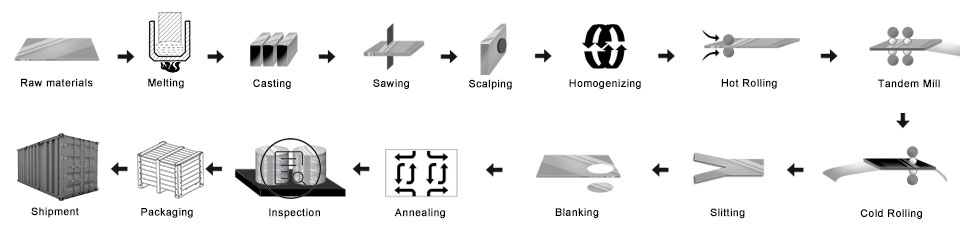
- Préparer les alliages maîtres
- Four de fusion: mettre les alliages dans le four de fusion
- Lingot d'aluminium moulé D.C.: Pour fabriquer le lingot mère
- Broyer le lingot d'aluminium: pour rendre la surface et le côté lisses
- Four de chauffage
- Laminoir à chaud: fait la bobine mère
- Laminoir à froid: la bobine mère a été roulée selon l'épaisseur que vous souhaitez acheter
- Processus de poinçonnage: deviens la taille que tu veux
- Four de recuit: changer d'humeur
- Inspection finale
- Emballage: caisse en bois ou palette en bois
- Livraison
Contrôle de qualité
Assurance L'inspection ci-dessous sera effectuée dans la production.
- un. détection de rayons—RT;
- b. test par ultrasons—Utah;
- c. Test de particules magnétiques-MT;
- d. tests d'intrusion-PT;
- e. détection de défauts par courants de Foucault-ET
1) Soyez exempt de taches d'huile, Bosse, Inclusion, Rayures, Tache, Décoloration d'oxyde, Pauses, Corrosion, Marques de rouleau, Traces de saleté, et autres défauts qui gêneront l'utilisation.
2) Surface sans ligne noire, coupe nette, tache périodique, défauts d'impression au rouleau, comme d'autres normes de contrôle interne de gko.
Emballage de disques en aluminium:
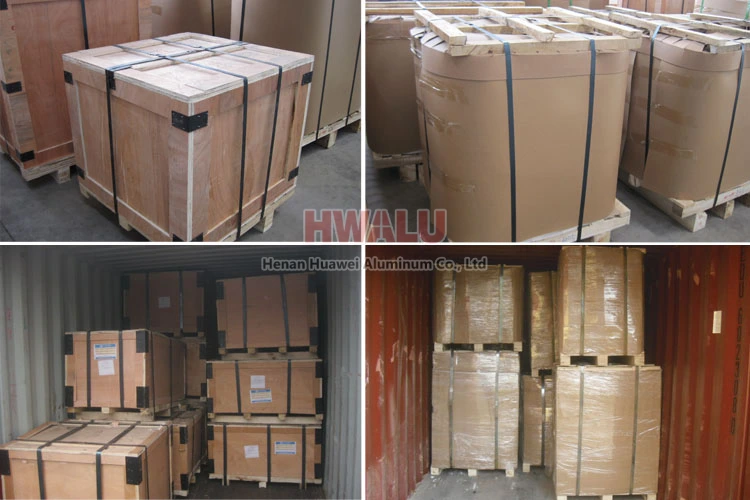
Les cercles en aluminium peuvent être emballés selon les normes d'exportation, recouvrir de papier kraft et de film plastique. Enfin, le rond en aluminium est fixé sur une palette en bois/caisse en bois.
- Placer le côté séchoir du cercle en aluminium, garder les produits secs et propres.
- Utilisez du papier plastique propre, emballer le cercle en aluminium, garder une bonne étanchéité.
- Utilisez le papier peau de serpent, emballer la surface du papier plastique, garder une bonne étanchéité.
- Suivant, il y a deux façons d'emballer: L’emballage de palettes en bois est une solution, en utilisant le papier croustillant emballant la surface; Une autre façon est l'emballage dans des caisses en bois, en utilisant la caisse en bois emballant la surface.
- Enfin, poser la ceinture en acier sur la surface de la caisse en bois, garder la solidité et la sécurité de la boîte en bois.
Cercle en aluminium de Henan Huawei Aluminium. répondre à la norme d'exportation. Le film plastique et le papier brun peuvent être recouverts selon les besoins des clients. De plus, une caisse en bois ou une palette en bois est adoptée pour protéger les produits contre les dommages lors de la livraison. Il existe deux types d'emballage, qui sont les yeux contre le mur ou les yeux vers le ciel. Les clients peuvent choisir l'un ou l'autre pour leur commodité. En général, il y a 2 tonnes dans un seul colis, et chargement 18-22 tonnes dans un conteneur 1×20′, et 20-24 tonnes dans un conteneur 1×40′.
Pourquoi nous choisir?
Pour évoluer avec son temps, HWALU continue d'introduire des équipements et des techniques de pointe pour améliorer sa compétitivité. Adhérez toujours à la philosophie d'entreprise de la qualité en tant que centre et client d'abord, fournir des produits de la série de cercles de disques en aluminium de la plus haute qualité dans toutes les régions du monde. Plus …

