Compreendendo a seleção de temperamento para fabricação de panelas: Como ó, H12, e as têmperas circulares de alumínio H14 influenciam o desempenho e a função do recozimento
1. Introdução
A indústria global de utensílios de cozinha depende cada vez mais dos círculos de alumínio como material formador de núcleo devido à sua excelente condutividade térmica, força moderada, conformabilidade, e baixa densidade. À medida que os utensílios de cozinha mudam para sistemas mais eficientes em termos energéticos, leve, e designs duráveis, os fabricantes devem tomar decisões informadas sobre o condição de temperamento de círculos de alumínio usados em estamparia, fiação, desenho profundo, e processos de extrusão de impacto.
Escolhendo entre Ó temperamento (recozido), H12 (¼ difícil), e H14 (½ duro) não é apenas uma questão de resistência mecânica - afeta:
- Comportamento de formação durante estampagem profunda e formação de rotação
- Dureza final e rigidez da panela
- Resistência à fissuração durante alta deformação
- Qualidade de superfície e resposta de anodização
- Estabilidade dimensional durante processos subsequentes
- Rendimento de produção e custo de ferramentas
Adicionalmente, o processo de recozimento, seja parcial, intermediário, ou recozimento completo, determina a estrutura do grão, consistência mecânica, níveis de estresse residual, e qualidade do produto final.
Este artigo se aprofunda círculo de alumínio seleção de temperatura para panelas, explorando como diferentes têmperas se comportam em ambientes reais de fabricação e como as técnicas de recozimento moldam o desempenho mecânico. Ele fornece uma análise completa orientada para engenharia para fabricantes, processadores de materiais, e designers de utensílios de cozinha.

2. Visão geral de têmperas circulares de alumínio para panelas
As têmperas de alumínio representam combinações de endurecimento por deformação, recozimento, e processamento mecânico controlado. Para fabricação de panelas, as condições de temperamento mais comumente usadas incluem:
2.1 Ó temperamento (Recozido Suavemente)
- Totalmente recozido para alcançar máxima suavidade
- Menor resistência mecânica
- Maior alongamento e conformabilidade
- Estrutura do grão totalmente recristalizada
- Ideal para desenho profundo, fiação, e panelas de alta deformação
2.2 Temperamento H12 (Tensão Quarter-Hard Endurecida)
- Produzido através de laminação a frio controlada
- Força média
- Alongamento moderado
- Bom equilíbrio entre rigidez e conformabilidade
- Frequentemente usado em desenho raso, panelas de profundidade média, tampas, e discos
2.3 Temperamento H14 (Tensão Meio Dura Endurecida)
- Maior endurecimento por deformação sem recozimento completo
- Maior resistência
- Ductilidade inferior
- Adequado para panelas de baixa deformação, como:
- Bandejas rasas
- Tampas planas
- Placas formadas por prensa
- Componentes que requerem melhor rigidez que O e H12
Essas diferenças de temperamento determinam diretamente a capacidade de fabricação e o desempenho de uso final das panelas.
3. Comparação de propriedades mecânicas de O, H12, e círculos de alumínio H14
A tabela abaixo fornece valores mecânicos generalizados para 1050, 1060, ou 3003 círculos de alumínio amplamente utilizados na produção de panelas. (Os valores podem variar de acordo com o fornecedor, mas permanecem direcionalmente consistentes.)
| Temperamento |
Resistência à tracção (MPa) |
Força de rendimento (MPa) |
Alongamento (%) |
Formabilidade |
Uso típico |
| Ó |
60–95 |
20–35 |
30–45 |
Excelente (Desenho profundo) |
Potes, chaleiras, panelas profundas |
| H12 |
85–120 |
70–95 |
18–30 |
Bom |
Panelas, panelas rasas, tampas |
| H14 |
120–150 |
95–130 |
9–18 |
Moderado a baixo |
Bandejas, produtos de panificação, peças moldadas por pressão |
Conclusão importante:
Quanto mais baixo o temperamento (Ó), quanto maior a ductilidade, tornando-o adequado para conformação pesada. Temperamentos mais elevados (H12, H14) priorizar a rigidez e a retenção da forma em vez da capacidade de deformação.
4. Como selecionar o temperamento certo para diferentes tipos de panelas
Esta seção fornece uma análise de engenharia profunda com base nas condições reais de fabricação.
4.1 Seleção de temperamento para panelas profundas
A estampagem profunda é o processo de panelas que mais exige deformação, especialmente para itens como:
- Estoques
- Panelas de sopa
- Forros para panela de pressão
- Chaleiras
- Tigelas grandes
- Caçarolas
Temperamento recomendado: Ó temperamento
Raciocínio:
- Alto alongamento evita rachaduras
A estampagem profunda pode reduzir a espessura em 35–50% em casos extremos. Somente a têmpera O fornece maciez de grão suficiente para sobreviver a tal deformação.
- Desbaste uniforme de parede
A microestrutura totalmente recozida melhora o fluxo do metal no raio da matriz.
- Carga de formação inferior
A têmpera O reduz os requisitos de tonelagem da máquina e prolonga a vida útil das ferramentas.
- Melhor para desenho profundo em vários estágios
A maioria das panelas profundas requer de 2 a 5 etapas de desenho; O temperamento lida com isso de forma confiável.
Conclusão:
Quando as proporções de desenho excedem 2.0, Ó temperamento é obrigatório.
4.2 Seleção de temperamento para panelas rotativas
Formação de rotação (manual ou CNC) produz utensílios de cozinha como:
- Conchas Wok
- Frigideiras redondas
- Conchas de vapor
- Panelas
Temperamento recomendado: O ou material parcialmente recozido
Por que:
- A fiação requer alta ductilidade e resistência à tensão rotacional.
- O desbaste localizado é inevitável; o material deve suportar tensões de tração e compressão.
- Muito difícil (H14) leva a rachaduras nas bordas e baixa capacidade de rotação.
- H12 pode funcionar para fiação leve, mas não é ideal para geometria complexa.
Resultado:
A têmpera O continua sendo a mais adequada para conformação por rotação de alta precisão.

4.3 Seleção de temperamento para panelas rasas
Panelas rasas incluem:
- Frigideiras
- Acompanhamentos fritos
- Tampas rasas
- Tigelas de profundidade média
Melhor temperamento: H12
Por que o H12 funciona bem:
- Maior rigidez mantém a forma da panela após a formação.
- A ductilidade adequada suporta trefilação superficial sem fissuras.
- Melhor estabilidade dimensional durante processos de corte e rebitagem.
4.4 Seleção de têmpera para panelas prensadas ou estampadas
A conformação por prensa é usada para:
- Bandejas para assar
- Pratos de servir
- Latas de torta
- Capas de prato
- Componentes de panelas planas
Estes exigem rigidez de forma em vez de alta deformação.
Melhor temperamento: H14
Características correspondentes ao processo:
- Alta rigidez evita empenamento
- Tem força suficiente para manter o nivelamento
- Melhor resistência a arranhões e desgaste
- Adequado para estampagem de etapa única
Aviso:
Não é adequado para panelas profundas ou médias.
5. O papel do recozimento na produção de círculos de alumínio
O recozimento é um processo metalúrgico crítico que afeta quase todas as propriedades mecânicas dos círculos de alumínio. Compreender as variáveis de recozimento é essencial para controlar a qualidade final da panela.
5.1 O que é recozimento?
O recozimento é um tratamento térmico controlado utilizado para:
- Elimine o estresse interno
- Restaurar ductilidade
- Amplie ou refine a estrutura dos grãos
- Melhorar a consistência da superfície
- Preparar material para conformação profunda
Temperatura de recozimento típica: 350–450ºC
Tempo de espera típico: 60–180 minutos, dependendo da liga e espessura.
5.2 Tipos de recozimento usados na fabricação de círculos de alumínio
UM. Recozimento Completo (Ó temperamento)
- Redefine propriedades mecânicas
- Produz a condição mais suave
- Usado para estampagem profunda e fiação
B. Recozimento Intermediário
- Aplicado entre as etapas de laminação ou trefilação
- Controla a taxa de endurecimento
- Evita rachaduras na conformação em vários estágios
C. Recozimento Parcial
- Amolece o material, mas não recristaliza totalmente
- Produz têmperas entre O e H12
- Equilibra conformabilidade e resistência
D. Recozimento de Estabilização
- Elimina a tensão residual acumulada na laminação a frio
- Melhora a estabilidade dimensional
- Crítico para utensílios de cozinha que são submetidos a uso em altas temperaturas (200°C+)
5.3 Efeitos do recozimento no desempenho do círculo de alumínio
5.3.1 Estrutura de grãos
O recozimento completo resulta em:
- Equiaxial, grãos uniformes
- Ductilidade melhorada
- Capacidade aprimorada de estampagem profunda
- Defeitos superficiais de casca de laranja reduzidos
Recozimento insuficiente produz:
- Tamanhos de grãos mistos
- Alongamento inferior
- Risco de rachaduras
5.3.2 Alívio do estresse residual
O estresse residual pode impactar:
- Precisão de formação
- Distribuição da espessura das panelas
- Deformação durante a estampagem
- Desgaste da ferramenta
O recozimento remove as tensões internas acumuladas durante a laminação.
5.3.3 Qualidade de superfície e resposta à anodização
Um bom recozimento garante:
- Superfície lisa sem faixas
- Melhor consistência de cor de anodização
- Risco reduzido de furos
- Menor risco de “orelhas” durante a estampagem profunda
5.3.4 Consistência Mecânica
Com recozimento controlado:
- A variação da dureza entre os círculos cai abaixo de ±5 HB
- A tonelagem de desenho torna-se previsível
- O rendimento da produção aumenta
- A frequência de ajuste da ferramenta diminui
6. Comparando O, H12, e H14 em Produção Prática de Panelas
Abaixo está um tipo de panela de correspondência de matriz abrangente com condições adequadas de têmpera e recozimento.
| Tipo de panela |
Temperamento recomendado |
Por que funciona |
Recozimento necessário |
| Panelas profundas |
Ó |
Ductilidade máxima |
Recozimento completo |
| Woks |
Ó |
Necessário para girar |
Recozimento total/parcial |
| Panela interna de panela de pressão |
Ó |
Desenho profundo em várias etapas |
Recozimento completo |
| Frigideiras |
H12 |
Equilíbrio entre dureza e conformação |
Parcial ou intermediário |
| Tampas |
H12 / H14 |
Depende da profundidade |
Recozimento parcial |
| Bandejas para assar |
H14 |
Alta rigidez |
Sem recozimento após laminação H14 |
| Pratos finos |
H14 |
Precisão de forma |
Apenas endurecido por deformação |
7. Influência Metalúrgica do Recozimento no Comportamento de Conformação
7.1 Melhoria da ductilidade
Os grãos recozidos aumentam o alongamento em 30%–60%, crítico para formação profunda.
7.2 Redefinição de endurecimento do trabalho
Sem recozimento, os círculos de alumínio acumulam tensão durante a laminação → levando ao aumento da dureza e rachaduras precoces durante a estampagem.
7.3 Controle de textura de grãos
O recozimento reduz a textura do rolamento (componentes de latão e cobre) e aumenta a isotropia.
Isso reduz:
- Taxa de ganho
- Rasgando no raio da matriz
- Ondulação da superfície
8. Estudos de caso: Como a seleção do temperamento afeta a qualidade das panelas
8.1 Estudo de caso 1: Problema de rachadura profunda
Um fabricante usou Círculos de alumínio H12 para produzir panelas de sopa fundas. Durante a segunda fase de deep draw, apareceram rachaduras.
Causa raiz: ductilidade insuficiente
Solução correta: mudar para Ó temperamento + recozimento completo
8.2 Estudo de caso 2: Deformação em assadeiras
Uma fábrica usou têmpera O para assadeiras, resultando em baixa rigidez e ondulação pós-forma.
Solução correta: mudar para Temperamento H14
8.3 Estudo de caso 3: Fissuras nas bordas giratórias na produção de Wok
O uso de círculos H14 levou à divisão da borda sob força giratória.
Solução correta: Têmpera O com curva de recozimento controlada
9. Por que a precisão da curva de recozimento é importante
As modernas usinas circulares de alumínio usam fornos de recozimento com atmosfera controlada e regulados por computador.:
- Taxa de aquecimento
- Tempo de espera
- Taxa de resfriamento
O recozimento incorreto pode causar:
- Queima excessiva (crescimento excessivo de grãos)
- Sub-recozimento (excesso de dureza)
- Pouco brilho superficial
- Propriedades mecânicas não uniformes
10. Curvas de recozimento recomendadas para diferentes aplicações
10.1 Para desenho profundo (Panelas temperadas)
- 350–410ºC
- Espere de 1 a 2 horas
- Resfriamento lento
- Meta: maximizar a suavidade
10.2 Para panelas rasas (H12)
- 260–330ºC
- Segure 30–90 minutos
- Recristalização parcial
- Equilibre dureza e ductilidade
10.3 Para estampar/assar bandejas (H14)
- Não é necessário recozimento (apenas têmpera mecânica)

11. Tendências Futuras em Seleção de Têmpera e Tecnologia de Recozimento
11.1 Fornos controlados por IA
- Recozimento preditivo baseado na espessura da liga
11.2 Recozimento de uniformidade ultra-alta
- Reduz gradientes de grãos
11.3 Design de têmpera personalizado
- Têmperas híbridas entre O e H12 para desempenho otimizado das panelas
12. Conclusão
Selecionar a têmpera correta do círculo de alumínio é essencial para a produção eficiente de panelas.
Resumo das melhores escolhas:
- Estampagem profunda e fiação: Ó temperamento
- Panelas de profundidade média: H12
- Partes planas ou rasas: H14
O tema central do artigo—círculo de alumínio seleção de temperatura para panelas—desempenha um papel decisivo na garantia da qualidade do produto, consistência mecânica, formando estabilidade, e rendimento de fabricação.
O recozimento adequado melhora:
- Ductilidade
- Alívio do estresse
- Qualidade de superfície
- Uniformidade de grãos
- Desempenho profundo
A combinação da escolha correta da têmpera e do recozimento preciso é o que permite aos fabricantes de utensílios de cozinha produzir produtos duráveis, atraente, produtos sem defeitos com desempenho consistente.
Propriedades do círculo de alumínio:
O círculo de alumínio é adequado para muitos mercados, incluindo panelas, indústrias automotiva e de iluminação, etc., graças às boas características do produto:
- Baixa anisotropia, o que facilita o desenho profundo
- Propriedades mecânicas fortes
- Difusão de calor alta e homogênea
- Capacidade de ser esmaltado, coberto por PTFE (ou outros), anodizado
- Boa refletividade
- Alta relação resistência-peso
- Durabilidade e resistência à corrosão
Processo de Círculos de Alumínio
Lingotes/Ligas Mestres — Forno de fusão – Forno de retenção — DC. Rodízio — Laje —- Escalpador — Laminador a Quente – Laminador a Frio – Puncionamento – Forno de Recozimento — Inspeção Final – Embalagem — Entrega
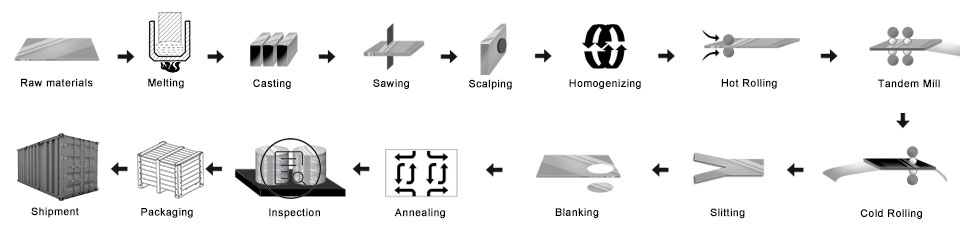
- Prepare as ligas mestres
- Forno de fusão: coloque as ligas no forno de fusão
- Lingote de alumínio fundido DC: Para fazer o lingote mãe
- Fresar o lingote de alumínio: para tornar a superfície e o lado lisos
- Forno de aquecimento
- Laminador a quente: fez a bobina mãe
- Laminador a frio: a bobina mãe foi enrolada conforme a espessura que você deseja comprar
- Processo de perfuração: torne-se do tamanho que você deseja
- Forno de recozimento: mudar o temperamento
- Inspeção final
- Embalagem: caixa de madeira ou palete de madeira
- Entrega
Controle de qualidade
Garantia Abaixo a inspeção será feita na produção.
- um. detecção de raios—TR;
- b. testes ultrassônicos—UT;
- c. Teste de Partículas Magnéticas-MT;
- d. testes de penetração-PT;
- e. detecção de falhas por correntes parasitas-ET
1) Esteja livre de manchas de óleo, Dente, Inclusão, Arranhões, Mancha, Descoloração Óxida, Pausas, Corrosão, Marcas de rolo, Listras de sujeira, e outros defeitos que interferirão no uso.
2) Superfície sem linha preta, limpo, mancha periódica, defeitos de impressão em rolo, como outros padrões de controle interno da gko.
Embalagem de discos de alumínio:
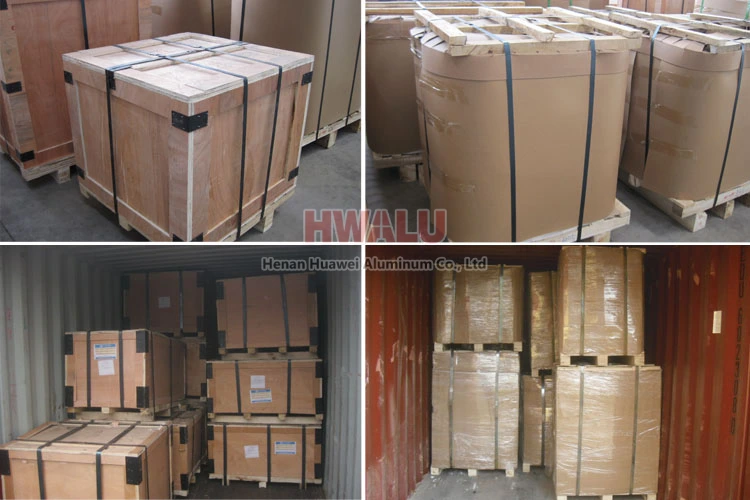
Os círculos de alumínio podem ser embalados de acordo com os padrões de exportação, cobrindo com papel pardo e filme plástico. Finalmente, a Rodada de Alumínio é fixada em um palete de madeira/caixa de madeira.
- Coloque os secadores ao lado do círculo de alumínio, mantenha os produtos secos e limpos.
- Use papel plástico limpo, embale o círculo de alumínio, mantenha uma boa vedação.
- Use o papel de pele de cobra, embale a superfície do papel plástico, mantenha uma boa vedação.
- Próximo, existem duas formas de embalagem: Uma maneira é a embalagem de paletes de madeira, usando o papel crocante embalando a superfície; Outra forma é a embalagem em caixa de madeira, usando a caixa de madeira embalando a superfície.
- Finalmente, coloque a correia de aço na superfície da caixa de madeira, mantendo a solidez e segurança da caixa de madeira.
Círculo de alumínio de Henan Huawei Alumínio. atender ao padrão de exportação. Filme plástico e papel pardo podem ser cobertos de acordo com as necessidades dos clientes. Além do mais, uma caixa de madeira ou palete de madeira é adotada para proteger os produtos contra danos durante a entrega. Existem dois tipos de embalagens, que estão de olho na parede ou de olho no céu. Os clientes podem escolher qualquer um deles para sua conveniência. De um modo geral, há 2 toneladas em um pacote, e carregando 18-22 toneladas em contêiner 1×20′, e 20-24 toneladas em contêiner 1×40′.
Por que nos escolher?
Para acompanhar os tempos, A HWALU continua introduzindo equipamentos e técnicas de última geração para melhorar sua competitividade. Sempre siga a filosofia empresarial de qualidade como centro e cliente em primeiro lugar, fornecer produtos da série de círculo de disco de alumínio da mais alta qualidade para todas as partes do mundo. Mais …

