Hot Rolled Aluminum Disc for Cookware: The Foundational Material from Metallurgy to Premium Cookware
At the heart of modern cookware manufacturing, the hot rolled aluminum disc plays an indispensable role. This circular aluminum material, processed through high-temperature rolling and possessing a specific microstructure, is the starting point for producing everything from everyday woks to professional-grade pressure cookers. Compared to ordinary cold-rolled materials, its uniform recrystallized structure, extremely low residual stress, and superior deep-drawing performance directly determine the final cookware’s heat distribution uniformity, forming success rate, and service life. This article provides an in-depth analysis of the technical core, manufacturing processes, and selection logic for hot rolled aluminum discs.
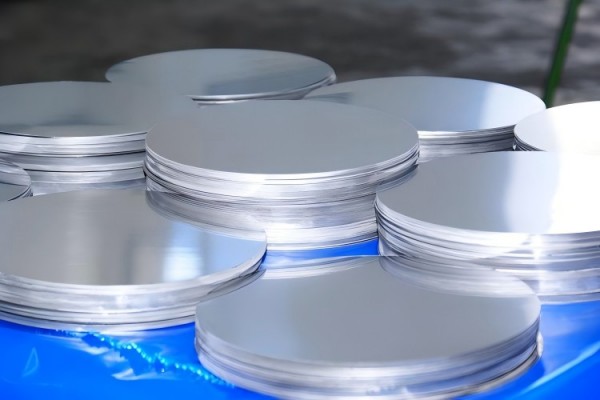 aluminium sheet circle
1. Scientific Definition: Why the Hot Rolling Process is Critical for Cookware
The Hot Rolled Aluminum Disc for Cookware is not simply a cut piece of aluminum. It is produced by rolling an aluminum ingot through multiple passes above its recrystallization temperature (typically >300°C), followed by annealing, finishing, and blanking/punching into a circle. The core value of this process lies in the material “genetics” it imparts:
- Uniform Equiaxed Grains: Hot rolling and subsequent annealing cause the aluminum to form a uniform, fine-grained equiaxed structure, eliminating the dendritic segregation of the as-cast structure. This grants the material isotropy—consistent deep-drawing deformation capability in all directions—which is key to uniform stretching of the cookware and avoiding “earing” or cracking.
- Extremely Low Residual Stress: Plastic deformation at high temperatures allows internal stresses to fully release. In contrast, cold-rolled materials retain high residual stress, which can be released during subsequent deep-drawing or upon heating in use, potentially causing warping.
- Excellent Formability Indices: Higher elongation and a higher Limiting Drawing Ratio (LDR) enable the manufacture of deep, complex-shaped pots (like Chinese woks) in a single draw, significantly boosting production efficiency and material utilization.
2. Alloy Selection: Precise Formulations Balancing Performance and Cost
Cookware aluminum discs primarily use 1xxx (commercially pure) and 3xxx (Al-Mn) series alloys. The choice depends on performance priorities.
| Alloy Grade |
Core Composition & Characteristics |
Key Performance Advantages |
Typical Cookware Applications |
| AA1050 |
Al ≥ 99.5%, commercially pure aluminum. |
Excellent thermal conductivity (~230 W/m·K), high cost-effectiveness, good corrosion resistance. |
Stock pots, steamers, simple woks with lower strength requirements; an economical choice for basic cookware. |
| AA1060 |
Al ≥ 99.6%, slightly purer than 1050. |
Superior formability while maintaining good thermal conductivity; stable deep-drawing performance. |
Saucepans, medium pots requiring moderate draws, and cookware demanding high-quality anodized surfaces. |
| AA3003 |
Contains ~1.2% Mn; the most common non-heat-treatable alloy. |
Strength is >20% higher than 1xxx series, combined with good formability, weldability, and corrosion resistance. Manganese addition refines grain structure. |
Non-stick cookware body, base material for clad bottoms, pressure cookers. Its higher strength better supports non-stick coatings and resists scratching. |
| AA3004/3104 |
Adds ~1% Mg to the 3003 base for even higher strength. |
Higher work hardening rate and strength, suitable for lighter-weight cookware or applications requiring high rigidity. |
High-performance deep-drawn cookware, lightweight outdoor cookware. |
Selection Advice: For optimal thermal conductivity and cost, choose 1050. For better formability, choose 1060. For non-stick cookware or higher structural strength, 3003 is essential.
 Aluminum pot
3. The Complete Manufacturing Chain: How Quality is Forged
The birth of a premium aluminum disc is a union of metallurgical science and precision control.
- Casting & Homogenization: High-purity primary aluminum and master alloys are precisely proportioned in a melting furnace. The cast slab undergoes homogenization heat treatment to eliminate compositional segregation, laying a uniform microstructural foundation for subsequent hot rolling.
- Hot Rolling (Core Process): The slab, heated to 400-500°C, is rolled to the target thickness (e.g., 2-6mm) on a multi-stand hot rolling mill. This process involves dynamic recrystallization, breaking down the cast structure to form uniform, fine grains.
- Cold Rolling & Intermediate Annealing: To achieve tighter thickness tolerances and a smoother surface, the hot-rolled coil is often finish-rolled via cold rolling. For thicker gauges, the “hot-rolled and annealed” condition may be supplied directly. Key control points include rolling oil cleanliness and roll surface precision to prevent surface defects.
- Continuous Annealing: The cold-rolled aluminum coil passes through a continuous annealing furnace where temperature and time are precisely controlled to achieve full recrystallization and the O-temper (fully soft) condition, offering maximum elongation ideal for deep-drawing.
- Precision Blanking/Punching: High-precision, high-tonnage hydraulic presses paired with sharp, precisely gapped dies punch the aluminum sheet into discs. Burr height must be controlled to a minimum (e.g., <0.05mm).
- Final Inspection & Packaging: 100% inspection for surface quality (free of roll marks, oil stains, scratches), thickness, and diameter tolerance. Interleaving paper is used for layered packing to prevent transit scratches.
4. Core Advantage Analysis: Why Premium Cookware Manufacturers Insist on Hot Rolled Discs
- Unmatched Deep-Drawing Success Rate: Uniform grain structure and O-temper softness allow the material to flow evenly in the die, significantly reducing the risk of cracking, excessive thinning, or orange-peel texture on the pot’s sidewalls and corners, especially for products with a high depth-to-diameter ratio.
- Superior Heat Distribution Uniformity: Uniformity at the microstructural level directly translates to uniform thermal conductivity at the macro level. Cookware made from hot-rolled material achieves more even heat distribution on gas or induction burners, preventing localized hot spots that burn food.
- Stable Substrate for Surface Treatment: A clean, defect-free surface provides the perfect base for subsequent anodizing, hard-coat anodizing, or non-stick coating application, ensuring strong adhesion and long coating life.
- Excellent Welding & Cladding Compatibility: When used in clad bottoms (e.g., aluminum-stainless steel), hot-rolled aluminum discs exhibit better weldability and stronger bonding interfaces with other metals.
5. From Disc to Cookware: Key Application Processes
- Spinning: Used for making axisymmetric products like Chinese woks and Western saucepans. The disc is pressed by a roller against a spinning mandrel to gradually form the shape. Requires extremely high uniform elongation from the material.
- Deep Drawing/Stamping: Used for making saucepans, frying pans, pressure cooker inner pots. The disc is drawn into a die by a punch in one or multiple steps. Requires high n-value (work hardening exponent) and r-value (plastic strain ratio).
- Multi-Function Composite Forming: Modern cookware often combines stamping, spinning, curling, and more. The material must withstand complex strain paths.
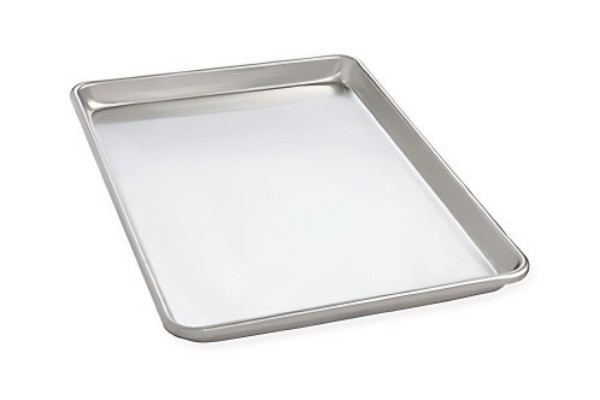 aluminium product
6. Supplier Evaluation: A Seven-Dimension Checklist Beyond Price
Selecting a supplier requires a systematic audit:
| Evaluation Dimension |
Key Questions & Technical Metrics |
| Metallurgical & Process Control |
How is hydrogen content and impurity controlled during melting? What is the controlled range for hot rolling’s finish temperature? Is the annealing curve (temp, time, cooling rate) optimized for different alloys? |
| Testing & Quality Assurance |
Is a Mill Test Certificate (with chemical composition, mechanical properties) provided per batch? Is metallographic examination capability available to assess grain size? What are the standards for surface roughness (Ra) and detection of internal/external defects? |
| Equipment & Capacity |
Hot mill width and temperature control precision? Press tonnage, precision, and die maintenance capability? Annealing furnace type (air float?) and temperature uniformity? |
| Customization & R&D |
Can non-standard sizes (special diameter/thickness) be provided? Can you assist in developing custom alloys or tempers with specific deep-draw performance? |
| Consistency & Traceability |
What is the performance variation range between batches? Is full-process traceability from ingot to disc implemented? |
| Cost & Logistics |
What is the Minimum Order Quantity (MOQ)? Can packaging ensure surface integrity after long-distance transport? Are lead times stable? |
| Sustainability |
Is recycled aluminum used? Data on energy/water consumption in production? What is the scrap recovery rate? |
7. Industry Forward Trends
- High-Performance Alloy R&D: Development of new cookware-specific alloys with higher strength while maintaining excellent formability and thermal conductivity, enabling lighter, more durable designs.
- Ultra-Precision Surface Technology: Achieving “zero-defect” mirror or hairline finishes directly through rolling and treatment processes, suitable for high-end anodizing without subsequent mechanical polishing.
- Digitalization & Smart Manufacturing: Utilizing IoT sensors and big data analytics to monitor and optimize hot rolling temperature, rolling force, and annealing parameters in real-time for stability in quality.
- Deepening Green Manufacturing: Increasing the proportion of recycled aluminum in premium cookware raw materials and optimizing processes to reduce carbon footprint.
Conclusion
A seemingly simple hot rolled aluminum disc is, in fact, the crystallization of material science, process engineering, and quality management. It defines the starting point of cookware manufacturing and largely predicts the performance ceiling of the final product. In an era where cookware manufacturing increasingly pursues efficiency, uniformity, and durability, a deep understanding and selection of genuinely high-quality hot rolled aluminum discs is the cornerstone upon which manufacturers build their core product competitiveness. This is not merely a raw material purchase; it is a strategic investment in a commitment to quality.

