High-Quality Aluminium Circle for Cookware: Ideal for Pots & Pans Manufacturing
Aluminium circle for cookware plays a decisive role in determining the forming performance, thermal efficiency, and long-term durability of pots and pans used in both household and commercial kitchens.
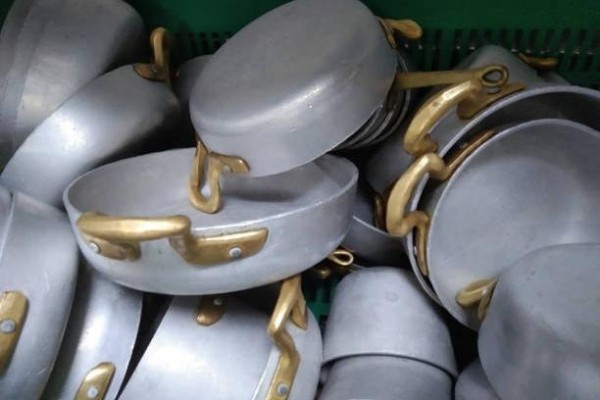 Aluminum round pot
1. Why Aluminium Circles Matter in Cookware Manufacturing
Cookware production is a forming-intensive process. Whether the final product is a frying pan, saucepan, pressure cooker, or stockpot, the base material must withstand deep drawing, spinning, and sometimes multi-step forming without cracking or excessive thinning.
Compared with steel or stainless steel, aluminium offers:
- Excellent thermal conductivity
- Lightweight structure
- Superior corrosion resistance
- High formability in annealed conditions
However, these advantages can only be fully realized when the aluminium circle itself meets strict metallurgical and dimensional standards.
2. Key Quality Requirements for Cookware Aluminium Circles
High-end cookware manufacturers focus on more than just alloy selection. True quality is the result of multiple controlled parameters.
Critical Quality Indicators
| Quality Parameter |
Recommended Standard |
Impact on Cookware |
| Alloy purity |
≥ 99.5% (1xxx) or optimized 3xxx |
Uniform forming |
| Grain structure |
Fine & equiaxed |
Prevents cracking |
| Thickness tolerance |
≤ ±0.05 mm |
Even heat distribution |
| Edge quality |
Burr-free |
Protects forming dies |
| Surface condition |
Oil-free, scratch-free |
Improves coating adhesion |
Failure to control any of these parameters often leads to high rejection rates during deep drawing or spinning.
 Newly manufactured aluminum round pot
3. Common Aluminium Alloys Used for Pots & Pans
Different cookware designs require different performance characteristics. Selecting the right alloy is essential.
| Alloy Grade |
Temper |
Typical Thickness (mm) |
Application |
| 1050 |
O |
0.8–3.0 |
Frying pans, lids |
| 1060 |
O |
1.0–4.0 |
Stockpots |
| 1100 |
O |
0.9–3.5 |
Sauce pans |
| 3003 |
O |
1.2–5.0 |
Deep-drawn cookware |
| 3004 |
O |
1.0–4.5 |
Pressure cookers |
Among these, 3003 aluminium circles are especially favored for deep drawing due to their balanced strength and ductility.
4. Manufacturing Process Behind High-Quality Circles
Producing cookware-grade circles is not a simple blanking operation. It involves a tightly controlled process chain:
- High-quality aluminium coil selection
- Precision rolling and annealing
- Grain size optimization
- High-accuracy circle cutting
- Surface cleaning and inspection
Each stage directly influences final forming performance. Poor annealing, for example, can result in uneven hardness that leads to tearing during drawing.
5. Real Production Case: Improving Deep Drawing Yield
A cookware factory producing medium-depth frying pans experienced frequent cracking at the cup wall during forming. After investigation, the root causes were identified as:
- Inconsistent grain size
- Edge micro-cracks from low-quality cutting
- Excessive thickness variation
By switching to higher-quality aluminium circles with controlled annealing and improved cutting precision, the manufacturer achieved:
- 55% reduction in forming defects
- 30% improvement in tool life
- More stable wall thickness distribution
This case highlights how raw material quality directly affects production efficiency and cost.
 Aluminum sheet cutting machine
6. Industry Reference: Henan Huawei Aluminum Co., Ltd
Henan Huawei Aluminum Co., Ltd is a professional aluminium material manufacturer with extensive experience supplying aluminium circles for cookware markets worldwide. The company focuses on cookware-grade alloys, strict grain control, and export-oriented quality standards.
Practical Success Example
For a Middle Eastern cookware brand, Henan Huawei Aluminum Co., Ltd provided customized 3003 O-temper circles designed for deep spinning. Through optimized annealing curves and edge quality control, the customer achieved:
- Smoother spinning without edge splitting
- Higher surface consistency for non-stick coating
- Improved production speed with fewer stoppages
This cooperation strengthened the brand’s competitiveness in high-volume cookware markets.
7. Comparison: Standard vs High-Quality Cookware Circles
| Evaluation Item |
Standard Circles |
High-Quality Circles |
| Grain uniformity |
Uneven |
Highly consistent |
| Edge condition |
Minor burrs |
Burr-free |
| Forming stability |
Variable |
Stable |
| Scrap rate |
6–10% |
<3% |
| Coating performance |
Inconsistent |
Excellent |
Although premium circles cost slightly more per ton, the overall manufacturing cost is often lower due to reduced scrap and rework.
8. Surface Quality and Coating Compatibility
Modern cookware often requires additional surface treatments such as:
- Non-stick coatings
- Hard anodizing
- Ceramic layers
High-quality aluminium circles ensure uniform coating thickness and better adhesion, reducing peeling or blistering during service life.
9. Dimensional Accuracy and Heat Performance
Uniform thickness is not only a forming requirement but also a thermal one. Cookware made from precision-controlled circles offers:
- Faster heat response
- Reduced hot spots
- More consistent cooking results
This is particularly important for induction-compatible cookware where base flatness and thickness directly affect efficiency.
10. Quality Control Standards in Export Markets
Cookware aluminium circles supplied to international markets must often comply with:
- EN standards (Europe)
- ASTM standards (North America)
- RoHS and food-contact regulations
Reliable suppliers integrate these requirements into raw material selection and process control.
 aluminium sheet circle
11. Common Questions (FAQ)
Q1: Which alloy is best for deep-drawn cookware?
3003 O-temper is widely preferred due to its excellent balance of strength and elongation.
Q2: Does surface finish affect non-stick coating quality?
Yes. A clean, defect-free surface improves coating adhesion and durability.
Q3: Are thicker circles always better?
Not necessarily. Thickness should match cookware design; excessive thickness increases cost and forming difficulty.
Q4: How important is grain size control?
Extremely important. Fine and uniform grains significantly reduce cracking risk during forming.
Q5: Can one supplier support multiple cookware designs?
Experienced manufacturers with strong process control can customize circles for different shapes and depths.
12. Future Trends in Cookware Aluminium Circles
The industry is moving toward:
- Higher consistency for automated forming lines
- Alloy optimization for energy-efficient cookware
- Tighter dimensional tolerances
- Greater focus on sustainability and recycling content
These trends further raise the importance of reliable, high-quality aluminium circles.
13. Conclusion
High-quality aluminium circles are the foundation of reliable cookware manufacturing. From alloy selection and grain control to cutting precision and surface quality, every detail influences forming performance and final product value.
By working with experienced suppliers such as Henan Huawei Aluminum Co., Ltd, cookware manufacturers can achieve stable production, lower defect rates, and stronger competitiveness in demanding global markets.
Properties of the aluminum circle:
Aluminum circle is suitable for many markets, including cookware, automotive and lighting industries, etc., thanks to good product characteristics:
- Low anisotropy, which facilitates deep drawing
- Strong mechanical properties
- High and homogeneous heat diffusion
- Ability to be enameled, covered by PTFE (or others), anodized
- Good reflectivity
- High strength-to-weight ratio
- Durability and resistance to corrosion
Aluminum Circles Process
Ingot/Master Alloys — Melting Furnace – Holding Furnace — D.C. Caster — Slab —- Scalper — Hot Rolling Mill – Cold Rolling Mill – Punching – Annealing Furnace — Final Inspection – Packing — Delivery
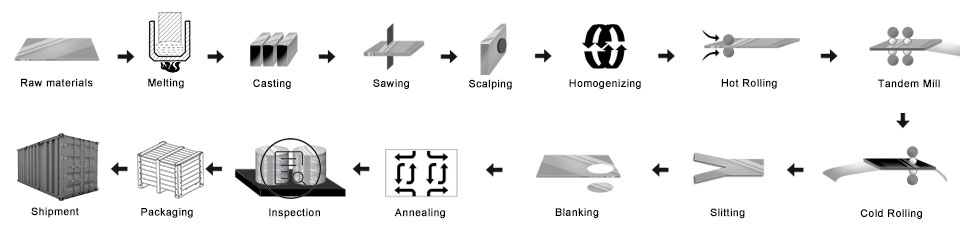
- Prepare the master alloys
- Melting furnace: put the alloys into the melting furnace
- D.C.cast aluminum ingot: To make the mother ingot
- Mill the aluminum ingot: to make the surface and side smooth
- Heating furnace
- Hot rolling mill: made the mother coil
- Colding rolling mill: the mother coil was rolled as the thickness you want to buy
- Punching process: become the size what you want
- Annealing furnace: change the temper
- Final inspection
- Packing: wooden case or wooden pallet
- Delivery
Quality Control
Assurance Below inspection will be done in the production.
- a. ray detection—RT;
- b. ultrasonic testing—UT;
- c. Magnetic Particle Testing-MT;
- d. penetration testing-PT;
- e. eddy current flaw detection-ET
1) Be free from Oil Stain, Dent, Inclusion, Scratches, Stain, Oxide Discoloration, Breaks, Corrosion, Roll Marks, Dirt Streaks, and other defects which will interfere with use.
2) Surface without black line, clean-cut, periodic stain, roller printing defects, such as other gko internal Control standards.
Aluminum discs packing:
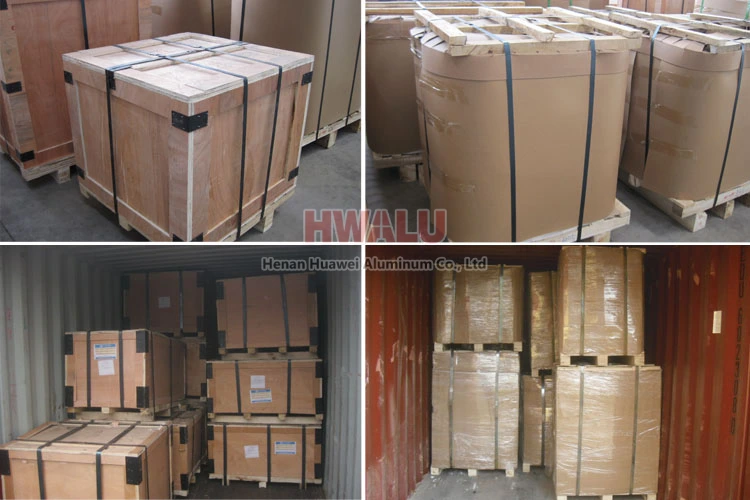
Aluminum circles can be packed by export standards, covering with brown paper and plastic film. Finally, the Aluminium Round is fixed on a wooden pallet/wooden case.
- Put the driers side the aluminum circle, keep the products dry and clean.
- Use clean plastic paper, pack the aluminium circle, keep good sealing.
- Use the snakeskin paper, pack the surface of the plastic paper, keep good sealing.
- Next, there are two ways of packaging: One way is wooden pallet packaging, using the crusty paper packing the surface; Another way is wooden case packaging, using the wooden case packing the surface.
- Finally, lay the steel belt on the wooden box’s surface, keeping the wooden box fastness and secure.
Aluminum circle of Henan Huawei Aluminum. meet the export standard. Plastic film and brown paper can be covered at customers’ needs. What’s more, a wooden case or wooden pallet is adopted to protect products from damage during delivery. There are two kinds of packaging, which are eye to wall or eye to the sky. Customers can choose either of them for their convenience. Generally speaking, there are 2 tons in one package, and loading 18-22 tons in 1×20′ container, and 20-24 tons in 1×40′ container.
Why choose us?
In order to move with the times, HWALU keeps introducing the state of the art equipment and technique to improve its competitiveness. Always adhere to the business philosophy of quality as the center and customer first, to provide the highest quality aluminum disc circle series products to all parts of the world. More …

