How to Choose the Right Thickness of Aluminum Circle for Frying Pan Production
Introduction
The selection of aluminum circle thickness is one of the most critical engineering decisions in frying pan production, directly influencing mechanical strength, forming behavior, heat transfer efficiency, service life, and overall cookware performance. Manufacturers must balance strength, thickness uniformity, hardness, and alloy temper to ensure stable forming during deep drawing or spinning, while maintaining the desired thermal responsiveness expected in modern cookware.
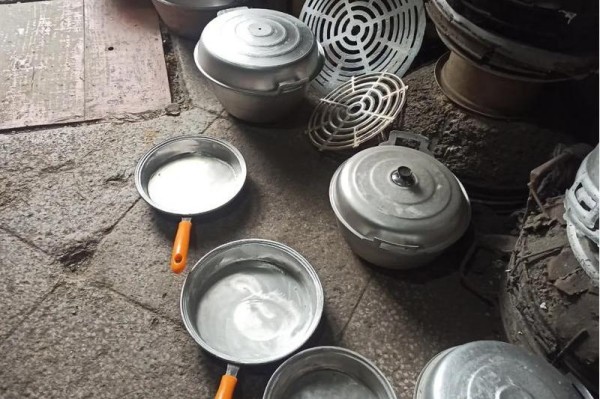 Types of aluminum pots
Why Aluminum Circle Thickness Matters in Frying Pan Manufacturing
Choosing the proper aluminum circle thickness determines the structural and functional quality of the final pan. Too thin, and the pan becomes prone to deformation and uneven heating; too thick, and it increases energy consumption and reduces process efficiency. High-performance pans often rely on precise thickness control between 2.5–5.0 mm depending on product grade, forming depth, diameter, and end-use scenario.
Material Behavior During Deep Drawing and Spinning
Forming performance is highly dependent on aluminum temper and gauge. During deep drawing:
- Thinner gauges (<2.5 mm) may wrinkle if the tensile strength is insufficient.
- Medium gauges (2.8–3.5 mm) provide the optimal balance for standard frying pans (24–28 cm).
- Thick gauges (4.0–5.0 mm) are preferred for premium heavy-base pans, including induction models.
Spinning requires higher ductility, which means thickness selection must match alloy states such as O, H12, or H14.
Table 1: Recommended Aluminum Circle Thickness by Frying Pan Size
| Frying Pan Diameter |
Common Thickness Range |
Typical Forming Method |
Notes |
| 18–20 cm |
2.0–2.5 mm |
Deep Drawing |
Lightweight pans; suitable for daily cooking |
| 22–24 cm |
2.5–3.2 mm |
Deep Drawing / Spinning |
Balanced rigidity and thermal performance |
| 26–28 cm |
3.0–4.0 mm |
Spinning |
Reduces base deformation under high heat |
| 30–32 cm |
4.0–5.0 mm |
Spinning / Heavy Press |
Used for premium heavy-duty frying pans |
Key Factors That Influence Thickness Selection
1. Alloy Grade
Most frying pans use:
- 1050 / 1060 for general cookware
- 3003 for stronger, corrosion-resistant mid-range pans
- 5052 for high-strength applications
Stronger alloys allow slightly thinner gauges while maintaining performance.
2. Pan Type
- Standard frying pans: 2.5–3.0 mm
- Wok-style pans: 3.0–3.5 mm (due to deeper forming)
- Induction pans: 3.5–5.0 mm (to support steel-cladding or bottom discs)
3. Final Surface Treatments
Hard-anodizing and non-stick coating processes require a predictable, uniform thickness to ensure stable thermal curing and surface integrity.
 Various types of aluminum pots
Heat Distribution and Structural Stability
The pan base must remain flat when subjected to thermal cycling. Thickness directly influences:
- Heat conductivity
- Warp resistance
- Lifetime durability
- Energy efficiency
Heat transfer simulations show that pans in the 3.0–3.8 mm range maintain the best balance between heating response and rigidity.
Table 2: Mechanical Performance by Aluminum Circle Thickness
| Thickness (mm) |
Yield Strength Implication |
Heat Distribution |
Warping Resistance |
Recommended Application |
| 2.0–2.5 |
Medium |
Fast heating |
Low |
Basic frying pans |
| 2.6–3.2 |
Medium-High |
Balanced |
Medium-High |
Standard cookware |
| 3.3–4.0 |
High |
Very uniform |
High |
Premium pans |
| 4.1–5.0 |
Extra High |
Excellent |
Very High |
Professional heavy-duty cookware |
Thickness vs. Alloy Performance – Comparison Table
| Property / Requirement |
Thinner Circles (2.0–2.8 mm) |
Medium Circles (2.9–3.8 mm) |
Thick Circles (3.9–5.0 mm) |
| Formability |
Excellent |
Very Good |
Moderate |
| Weight |
Light |
Medium |
Heavy |
| Cost |
Low |
Medium |
High |
| Heat Uniformity |
Medium |
High |
Very High |
| Warping Resistance |
Low |
Good |
Excellent |
| Suitability for Non-stick |
Good |
Excellent |
Excellent |
| Induction Compatibility |
Limited |
Good (with base disc) |
Very Good (clad structure) |
 Aluminum round sheet coated frying pan
Selecting the Ideal Thickness for Induction Frying Pans
Induction-compatible cookware often requires a thicker aluminum base to bond securely with stainless steel or ferromagnetic plates. Common configurations:
- 3-layer: Stainless Steel + Aluminum + Stainless Steel
- 5-layer: Steel + Aluminum + Aluminum Alloy + Aluminum + Steel
For such structures, aluminum layer thickness typically falls between 3.5–4.8 mm to maintain rigidity and bonding stability.
Manufacturing Considerations
1. Flatness Control
Precision sawing and multi-stage leveling are critical for ensuring flat frying pan bottoms.
2. Thickness Tolerance
A tolerance of ±0.05–0.10 mm is typical for high-grade pans.
3. Grain Structure
Uniform grain structure improves both deep-drawing performance and thermal diffusion.
 aluminium pot
FAQ – Common Questions About Aluminum Circle Thickness Selection
1. What is the best aluminum circle thickness for a standard 26 cm frying pan?
Usually 3.0–3.5 mm provides the best balance between strength and heating performance.
2. Does thicker aluminum always mean better quality?
Not necessarily. It must match the alloy, forming process, and cookware design. Excessive thickness increases weight and cost without meaningful performance improvements.
3. Can thinner aluminum circles be used for non-stick pans?
Yes. Non-stick pans often use 2.5–3.0 mm circles, but quality brands still prefer slightly thicker material to avoid long-term warping.
4. Why is thickness uniformity critical?
Uneven thickness can cause coating defects, inconsistent heating, and warping during forming.
5. What thickness is recommended for professional induction frying pans?
Typically 3.8–5.0 mm, especially when using composite bases.
Conclusion
Selecting the ideal aluminum circle thickness for frying pan production requires comprehensive evaluation of alloy strength, process requirements, thermal performance, tooling capability, and desired product grade. By understanding how thickness impacts forming behavior and end-use performance, cookware manufacturers can achieve optimal durability, efficiency, and heating quality in their final products.
Properties of the aluminum circle:
Aluminum circle is suitable for many markets, including cookware, automotive and lighting industries, etc., thanks to good product characteristics:
- Low anisotropy, which facilitates deep drawing
- Strong mechanical properties
- High and homogeneous heat diffusion
- Ability to be enameled, covered by PTFE (or others), anodized
- Good reflectivity
- High strength-to-weight ratio
- Durability and resistance to corrosion
Aluminum Circles Process
Ingot/Master Alloys — Melting Furnace – Holding Furnace — D.C. Caster — Slab —- Scalper — Hot Rolling Mill – Cold Rolling Mill – Punching – Annealing Furnace — Final Inspection – Packing — Delivery
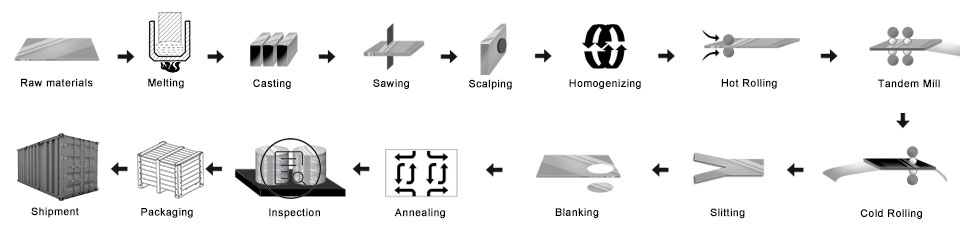
- Prepare the master alloys
- Melting furnace: put the alloys into the melting furnace
- D.C.cast aluminum ingot: To make the mother ingot
- Mill the aluminum ingot: to make the surface and side smooth
- Heating furnace
- Hot rolling mill: made the mother coil
- Colding rolling mill: the mother coil was rolled as the thickness you want to buy
- Punching process: become the size what you want
- Annealing furnace: change the temper
- Final inspection
- Packing: wooden case or wooden pallet
- Delivery
Quality Control
Assurance Below inspection will be done in the production.
- a. ray detection—RT;
- b. ultrasonic testing—UT;
- c. Magnetic Particle Testing-MT;
- d. penetration testing-PT;
- e. eddy current flaw detection-ET
1) Be free from Oil Stain, Dent, Inclusion, Scratches, Stain, Oxide Discoloration, Breaks, Corrosion, Roll Marks, Dirt Streaks, and other defects which will interfere with use.
2) Surface without black line, clean-cut, periodic stain, roller printing defects, such as other gko internal Control standards.
Aluminum discs packing:
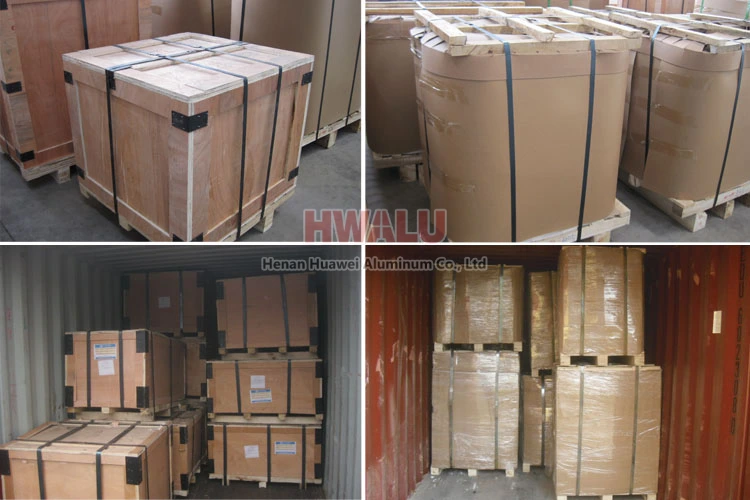
Aluminum circles can be packed by export standards, covering with brown paper and plastic film. Finally, the Aluminium Round is fixed on a wooden pallet/wooden case.
- Put the driers side the aluminum circle, keep the products dry and clean.
- Use clean plastic paper, pack the aluminium circle, keep good sealing.
- Use the snakeskin paper, pack the surface of the plastic paper, keep good sealing.
- Next, there are two ways of packaging: One way is wooden pallet packaging, using the crusty paper packing the surface; Another way is wooden case packaging, using the wooden case packing the surface.
- Finally, lay the steel belt on the wooden box’s surface, keeping the wooden box fastness and secure.
Aluminum circle of Henan Huawei Aluminum. meet the export standard. Plastic film and brown paper can be covered at customers’ needs. What’s more, a wooden case or wooden pallet is adopted to protect products from damage during delivery. There are two kinds of packaging, which are eye to wall or eye to the sky. Customers can choose either of them for their convenience. Generally speaking, there are 2 tons in one package, and loading 18-22 tons in 1×20′ container, and 20-24 tons in 1×40′ container.
Why choose us?
In order to move with the times, HWALU keeps introducing the state of the art equipment and technique to improve its competitiveness. Always adhere to the business philosophy of quality as the center and customer first, to provide the highest quality aluminum disc circle series products to all parts of the world. More …

