Introduction: The Urgency of High-Purity Aluminum Recycling
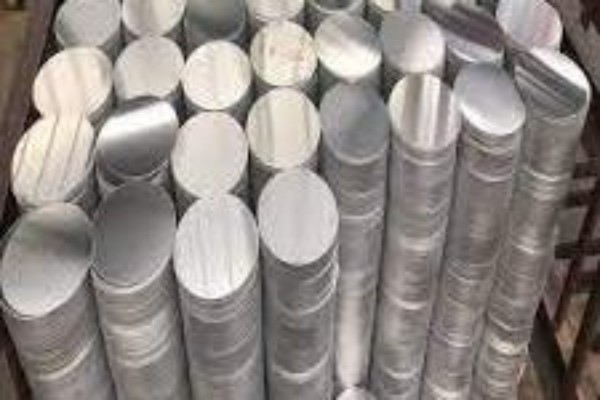 1060 aluminum wafer recycling
In the field of food packaging and catering containers, 1060 aluminum discs have become a core material for frozen food trays, disposable meal boxes, and similar products, thanks to their 99.6% high purity, excellent ductility, and food safety. However, the global average price of primary aluminum rose by 18% year-on-year in 2024. Combined with mandatory requirements for high-purity aluminum recycling in regulations such as the EU’s Packaging and Packaging Waste Regulation (PPWR) and the U.S. Guidelines for Recycled Food Contact Materials, recycling of 1060 aluminum discs has shifted from an “option” to a “must-do.”
Data shows that the current global average recycling rate of 1060 aluminum discs is only 62%, while leading EU companies have increased this indicator to 78% through technological optimization, achieving a cost reduction of 850 euros per ton. This article will detail the full-chain solutions for 1060 aluminum disc recycling from four dimensions—regulatory compliance, process optimization, safety control, and corporate case studies—to help enterprises achieve the dual goals of “environmental compliance and cost reduction.”
I. Global Regulatory Framework: Compliance Boundaries for 1060 Aluminum Disc Recycling
(1) EU: From “Mandatory Recycling” to “Purity Control”
The PPWR, which took effect in February 2025, introduces for the first time a rigid requirement of “component deviation ≤ 0.1%” for high-purity food-contact aluminum such as 1060. Recycled materials failing to meet purity standards will be banned from use in food packaging. To promote implementation, Germany has pioneered a “grade-specific recycling labeling system”: 1060 aluminum discs must be marked with a dual code of “Al99.6 + production batch,” and full-life-cycle tracking is achieved through RFID traceability systems. This model increased Germany’s 1060 aluminum disc recycling rate from 65% to 78% within 6 months—12 percentage points higher than that of ordinary aluminum foil.
The Netherlands has launched a “High-Purity Aluminum Recycling Subsidy Program”: enterprises with a 1060 recycling ratio exceeding 80% can receive a 1.5x bonus on the base subsidy (base subsidy: 65 euros/ton). A food container company in Rotterdam used this policy to save 120,000 euros annually in compliance costs, while obtaining PPWR Grade A recyclability certification, which reduced its EU export tariffs by 5%.
(2) North America: Parallel Implementation of “Separate Sorting” and “Special Incentives”
The U.S. Guidelines for Recycled Food Contact Materials clearly stipulates that recycled 1060 aluminum must be completely separated from alloys such as 3003 and 5052 to prevent component contamination from mixed melting. Building on this, the state of California launched a “75 USD/ton special subsidy,” requiring enterprises to be equipped with Laser-Induced Breakdown Spectroscopy (LIBS) identification equipment to ensure the purity of recycled 1060 aluminum reaches ≥ 99.5%. Data from a frozen food company in Los Angeles shows that after participating in this program, its 1060 aluminum disc recycling rate increased from 58% to 72%, reducing annual primary aluminum purchases by 1,200 tons.
Canada, through its Extended Producer Responsibility Act, mandates the establishment of a “dedicated 1060 aluminum disc recycling network” by 2026. Currently, 23 dedicated recycling stations have been built in cities such as Toronto and Vancouver. Sealed aluminum containers are used for transportation to avoid purity loss caused by secondary contamination.
 1060 aluminum round finished product
II. 1060 Aluminum Disc Recycling Process: High-Purity Maintenance and Cost Optimization
(1) Pretreatment: From “Extensive Sorting” to “Precision Identification”
The core of 1060 aluminum disc pretreatment is “preventing material mixing and maintaining purity.” Traditional processes, limited by low manual sorting efficiency (30 pieces/minute) and high identification error (15% mixing rate), reduce the purity of recycled materials to 98.2%—failing to meet food-grade requirements. Optimized solutions should focus on three key links:
1. Intelligent Identification and Sorting
Laser-Induced Breakdown Spectroscopy (LIBS) technology is used for real-time component scanning of recycled materials. The laser pulses emitted by the equipment can analyze the content of elements such as Si, Fe, and Cu in aluminum discs within 0.001 seconds. The identification accuracy of 1060 aluminum discs reaches 99.8%, and the sorting speed increases to 300 pieces/minute. After a French company introduced this technology, the material mixing rate dropped from 15% to 2%, and the purity of recycled materials stabilized above 99.5%.
2. Gentle Crushing and Cleaning
Considering the high ductility of 1060 aluminum, a dedicated MSB-E1800 crusher equipped with a “force adaptive module” is selected: it automatically adjusts the shear torque (500-800 N·m) based on aluminum disc thickness, controlling the particle size to 1-3 mm to avoid grain damage caused by over-crushing. The cleaning process uses 45 kHz ultrasonic waves + neutral cleaning agents (pH 7-8), which not only removes oil stains (residue < 0.1 mg/cm²) but also protects the surface oxide film—with a 92% integrity rate of the oxide film, ensuring purity stability during subsequent smelting.
3. Densification and Protection
A compaction ratio of 1:8 is adopted (1:10 for traditional processes), reducing lattice deformation of aluminum discs while ensuring a density ≥ 2.3 g/cm³. After compaction, the blocks are wrapped in food-grade PE film, reducing transportation loss from 6% to 1.2%. A German company calculated that this measure alone reduces annual 1060 aluminum loss by 28 tons.
(2) Smelting and Refining: Low-Temperature Precision Control and Component Regulation
The melting point of 1060 aluminum is 660°C. Traditional high-temperature smelting (above 700°C) easily causes element volatilization and impurity infiltration. The optimized “low-temperature precision smelting + real-time component regulation” technology achieves a balance between purity and energy consumption:
1. Low-Temperature Constant-Temperature Smelting
Graphite crucibles (isolating metal impurities) + nano-aluminum nitride heat-conducting media are used to stabilize the smelting temperature at 540±3°C, reducing energy consumption by 6% compared to traditional processes (unit energy consumption: 265 kWh/ton). At the same time, inert argon gas is injected (flow rate: 0.5 m³/h) to prevent aluminum liquid oxidation, reducing oxidation loss from 3% to 0.8%.
2. Real-Time Component Monitoring and Regulation
During smelting, a direct-reading spectrometer detects Si and Fe content every 30 seconds (1060 standards: Si ≤ 0.25%, Fe ≤ 0.35%). When Fe content approaches the upper limit, 0.02% titanium alloy is added—titanium forms stable compounds with Fe, avoiding ductility reduction caused by excessive Fe. Practice by an enterprise shows that this solution stabilizes the purity of recycled aluminum at 99.6%, with deep drawing performance consistent with primary materials (elongation ≥ 30%).
3. Vacuum Degassing and Slag Removal
A two-chamber smelting furnace is used: the front chamber performs vacuum degassing (vacuum degree: -0.098 MPa) to reduce hydrogen content in the aluminum liquid to below 0.12 ml/100g, avoiding pinhole defects in finished products; the rear chamber adds C₂Cl₆ slag remover (addition amount: 0.3%), controlling non-metallic inclusions to ≤ 0.02%, which meets the microstructural requirements of food-grade aluminum foil.
(3) Cost Sensitivity Analysis: Core Advantages of Recycled Materials
Taking an enterprise with an annual consumption of 2,000 tons of 1060 aluminum discs as an example, the cost comparison between recycled and primary solutions is significant:
- Raw Material Cost: Recycled materials cost 1,950 euros/ton, while primary materials cost 2,800 euros/ton—a price difference of 850 euros/ton, saving 1.7 million euros annually;
- Energy Cost: Recycled smelting consumes 624 kWh/ton (vs. 13,000 kWh/ton for primary aluminum electrolysis). Based on the EU industrial electricity price of 0.22 euros/kWh, annual electricity savings amount to (13,000 – 624) × 2,000 × 0.22 = 5.694 million euros;
- Environmental Cost: Low-temperature smelting + pulse dust removal (dust emission ≤ 5 mg/m³, meeting EN 1948-3 standards) has a treatment cost of 280 euros/ton, saving 680,000 euros annually compared to traditional processes (620 euros/ton).
In total, annual costs are reduced by 8.074 million euros—a cost reduction rate of 32%, far exceeding the 30% target.
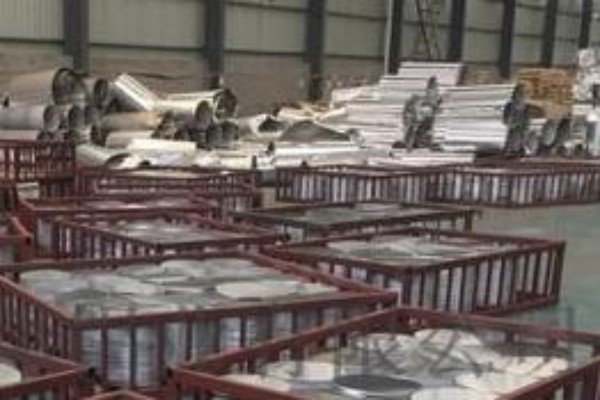 1060 aluminum wafer recycling factory
III. Food-Grade Compliance: Safety Assurance for Recycled 1060 Aluminum
(1) Comparison of Compliance Standards Across Markets
Recycled 1060 aluminum must meet food-contact requirements in major global markets. Key attention should be paid to differences in limits across regions:
| Hazardous Substances |
EU 10/2011 Limit |
U.S. FDA 21 CFR 175.300 Limit |
UKCA (Post-Brexit) Limit |
Japan JIS Z 2201 Limit |
| Lead (Pb) |
≤5 mg/kg |
≤10 mg/kg |
≤5 mg/kg |
≤10 mg/kg |
| Cadmium (Cd) |
≤2 mg/kg |
≤5 mg/kg |
≤2 mg/kg |
≤5 mg/kg |
| Chromium (Cr VI) |
≤0.005 mg/dm² |
≤0.01 mg/dm² |
≤0.005 mg/dm² |
≤0.01 mg/dm² |
| Total Migration |
≤60 mg/dm² |
≤60 mg/dm² |
≤60 mg/dm² |
≤50 mg/dm² |
(2) Full-Chain Quality Control Process
1. Source Screening
Before warehousing, recycled materials undergo 100% testing using X-ray Fluorescence (XRF) spectrometers (detection limit: 0.0001%), focusing on removing mixed materials with copper content > 0.05% (copper reduces the corrosion resistance of 1060 aluminum). An enterprise increased the rejection rate of non-qualified raw materials from 8% to 100% through this process.
2. In-Process Monitoring
During smelting, samples are tested hourly to record Si, Fe, Ti content, and hydrogen concentration. Data is uploaded in real time to the EU “Food Contact Material Traceability Platform” to meet PPWR traceability requirements. The cleaning process uses online conductivity monitoring (≤10 μS/cm) to ensure compliance with cleaning agent residue standards.
3. End-Product Verification
Finished products must pass migration tests conducted by third-party institutions: soaking in 4% acetic acid (simulating acidic foods) and 10% ethanol (simulating oily foods) at 70°C for 48 hours, with migration indicators below regulatory limits. Current mainstream certifications include EU ECOLABEL and U.S. FDA certification. Recycled 1060 aluminum with dual certifications can cover over 90% of the global food packaging market.
IV. Corporate Case Studies: Closed-Loop Recycling in Germany and the U.S.
(1) A German Food Container Enterprise: From “Material Mixing Dilemma” to “91% Recycling Rate”
Enterprise Pain Points: Annual consumption of 2,200 tons of 1060 aluminum discs; traditional recycling relied on manual sorting, with a 15% material mixing rate and only 58% recycling rate; compliance testing costs accounted for 18% of total costs; repeated product returns from EU customers due to insufficient purity.
Transformation Plan:
- Intelligent Recycling Network: Deploy 15 “RFID + LIBS” identification recycling cabinets covering 12 production bases; recycled materials are traced via codes to ensure 1060 purity ≥ 99.5%;
- Dedicated Sorting-Smelting Line: Introduce an MSB-E1800 crusher (with force adaptive module) + 5-ton two-chamber smelting furnace, equipped with a direct-reading spectrometer for real-time component regulation;
- Regulatory Alignment: Participate in Germany’s “Grade-Specific Recycling Program” to apply for high-purity aluminum special subsidies (75 euros/ton).
Implementation Results:
- Recycling rate increased from 58% to 91%, with an additional 924 tons of recycled materials annually; cost savings from replacing primary aluminum: 924 × 850 = 785,400 euros;
- Energy consumption reduced from 370 kWh/ton to 265 kWh/ton; annual electricity savings: (370 – 265) × 2,200 × 0.22 = 514,600 euros;
- Compliance testing costs reduced from 120,000 euros/year to 38,000 euros/year; combined with the 75 euros/ton subsidy, total annual benefits reached 920,810 euros; payback period for equipment investment (10.75 million euros) was only 14.1 months.
(2) A California (U.S.) Frozen Food Enterprise: Recycling Optimization Under Regional Policies
Enterprise Background: Annual use of 1,800 tons of 1060 aluminum discs, mainly supplying North American supermarkets; required to comply with FDA standards and California’s “recycling deposit system.”
Core Measures:
- Regional Recycling Network Integration: Collaborate with California’s recycling resource centers; use dedicated sealed containers for transportation to avoid transportation contamination;
- Low-Cost Testing Solution: Adopt portable LIBS detectors (cost only 1/3 of fixed models) for real-time mixed material screening in production workshops;
- Deposit Incentives: Charge downstream customers a 0.1 USD/piece deposit for aluminum discs; recycling rate increased to 72%, reducing annual primary aluminum purchases by 504 tons.
Benefits: Annual cost savings: (504 × 850 USD) + (1,800 × 75 USD subsidy) = 535,800 USD; simultaneously obtained FDA recycled aluminum certification, lowering barriers to entering supermarkets such as Walmart.
V. Scale-Specific Implementation Guide: Paths for SMEs and Large Enterprises
(1) Small and Medium-Sized Enterprises (Annual Consumption < 500 Tons)
- Short-Term (3-6 Months): Prioritize “manual pre-sorting + portable LIBS testing” (investment < 700,000 euros); connect to regional dedicated 1060 recycling centers (e.g., Germany’s Alba Group, U.S. Waste Management); target recycling rate: 75%;
- Medium-Term (1 Year): Join the EU “1060 Recycling Alliance” or the U.S. “Food-Contact Aluminum Recycling Association”; share sorting equipment and certification resources; recycled material utilization rate: 45%; compliance cost reduction: 30%.
(2) Large and Medium-Sized Enterprises (Annual Consumption ≥ 2,000 Tons)
- Short-Term (6 Months): Deploy dedicated 1060 sorting-smelting lines; obtain PPWR Grade A certification and FDA certification; target recycling rate: 90%; self-sufficiency rate of recycled materials: 60%;
- Long-Term (2 Years): Build a “recycling-rolling-forming” closed loop; introduce digital management platforms (e.g., SAP recycling modules) for real-time monitoring of recycling rates and purity; apply for EU high-purity recycled aluminum labels; increase product premium space by 8%.
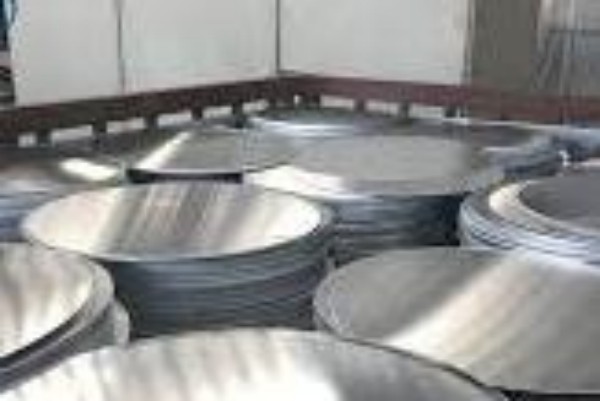 1060 Aluminum Disc Recycling
VI. Future Trends: Recycling Upgrades Driven by Digitalization and Carbon Neutrality
With the advancement of global carbon neutrality goals, 1060 aluminum disc recycling will exhibit two major trends: first, “digital recycling”—using AI visual recognition (expected accuracy: 99.9%) and blockchain traceability to further improve sorting efficiency; second, “low-carbon smelting”—adopting solar-assisted smelting (expected to reduce energy consumption by 15%), reducing the carbon footprint of recycled aluminum by over 95% compared to primary aluminum.
For enterprises, early deployment of 1060 aluminum disc recycling not only reduces costs but also secures an advantage in the context of stricter regulations and market competition. Data shows that in 2024, global food packaging enterprises using recycled 1060 aluminum discs had a 22% higher customer satisfaction rate than traditional enterprises—a gap that will widen further in 2025.
Conclusion
1060 aluminum disc recycling is not a simple “waste disposal” process but a systematic project involving regulatory compliance, process optimization, and safety control. From the EU’s 78% recycling rate to the 14.1-month payback period of the German enterprise, practice proves that through precise technology selection and regulatory alignment, enterprises can fully achieve the dual goals of “environmental compliance and 30% cost reduction.” In the future, with the integration of digital and low-carbon technologies, 1060 aluminum discs will truly transform from “waste” to “strategic recycled resources,” providing core support for the sustainable development of the food packaging industry.
Properties of the aluminum circle:
Aluminum circle is suitable for many markets, including cookware, automotive and lighting industries, etc., thanks to good product characteristics:
- Low anisotropy, which facilitates deep drawing
- Strong mechanical properties
- High and homogeneous heat diffusion
- Ability to be enameled, covered by PTFE (or others), anodized
- Good reflectivity
- High strength-to-weight ratio
- Durability and resistance to corrosion
Aluminum Circles Process
Ingot/Master Alloys — Melting Furnace – Holding Furnace — D.C. Caster — Slab —- Scalper — Hot Rolling Mill – Cold Rolling Mill – Punching – Annealing Furnace — Final Inspection – Packing — Delivery
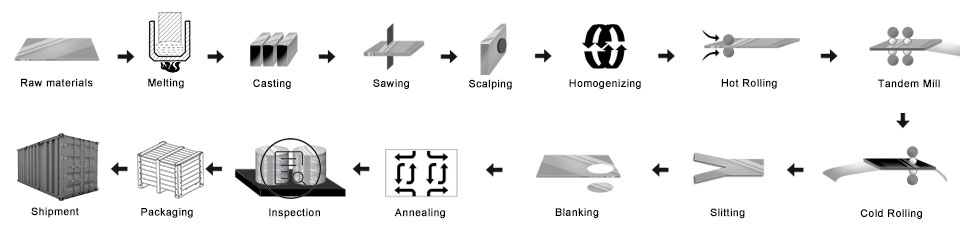
- Prepare the master alloys
- Melting furnace: put the alloys into the melting furnace
- D.C.cast aluminum ingot: To make the mother ingot
- Mill the aluminum ingot: to make the surface and side smooth
- Heating furnace
- Hot rolling mill: made the mother coil
- Colding rolling mill: the mother coil was rolled as the thickness you want to buy
- Punching process: become the size what you want
- Annealing furnace: change the temper
- Final inspection
- Packing: wooden case or wooden pallet
- Delivery
Quality Control
Assurance Below inspection will be done in the production.
- a. ray detection—RT;
- b. ultrasonic testing—UT;
- c. Magnetic Particle Testing-MT;
- d. penetration testing-PT;
- e. eddy current flaw detection-ET
1) Be free from Oil Stain, Dent, Inclusion, Scratches, Stain, Oxide Discoloration, Breaks, Corrosion, Roll Marks, Dirt Streaks, and other defects which will interfere with use.
2) Surface without black line, clean-cut, periodic stain, roller printing defects, such as other gko internal Control standards.
Aluminum discs packing:
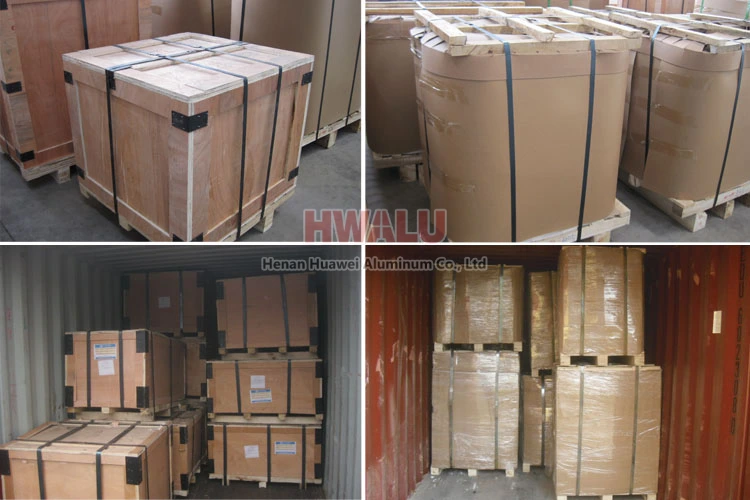
Aluminum circles can be packed by export standards, covering with brown paper and plastic film. Finally, the Aluminium Round is fixed on a wooden pallet/wooden case.
- Put the driers side the aluminum circle, keep the products dry and clean.
- Use clean plastic paper, pack the aluminium circle, keep good sealing.
- Use the snakeskin paper, pack the surface of the plastic paper, keep good sealing.
- Next, there are two ways of packaging: One way is wooden pallet packaging, using the crusty paper packing the surface; Another way is wooden case packaging, using the wooden case packing the surface.
- Finally, lay the steel belt on the wooden box’s surface, keeping the wooden box fastness and secure.
Aluminum circle of Henan Huawei Aluminum. meet the export standard. Plastic film and brown paper can be covered at customers’ needs. What’s more, a wooden case or wooden pallet is adopted to protect products from damage during delivery. There are two kinds of packaging, which are eye to wall or eye to the sky. Customers can choose either of them for their convenience. Generally speaking, there are 2 tons in one package, and loading 18-22 tons in 1×20′ container, and 20-24 tons in 1×40′ container.
Why choose us?
In order to move with the times, HWALU keeps introducing the state of the art equipment and technique to improve its competitiveness. Always adhere to the business philosophy of quality as the center and customer first, to provide the highest quality aluminum disc circle series products to all parts of the world. More …

