Impact van diktetolerantieafwijking van aluminiumschijven op stempelkwalificatiepercentage en controlestrategieën
Abstract
Als kernbasismateriaal voor gestempelde onderdelen in huishoudelijke apparaten, automotive, en elektronica-industrie,
aluminium schijvenDe afwijking van de diktetolerantie bepaalt rechtstreeks de uniformiteit van de spanningsverdeling, aanpassingsvermogen van de kloof, en uiteindelijke vormkwaliteit tijdens het stempelen. Gebaseerd op de plastische vervormingseigenschappen van aluminium-schijven-op-stempelen-kwalificatie-snelheid, dit artikel analyseert systematisch de afwijkingen in de diktetolerantie (bijv., ±0,02 mm, ±0,05 mm, ±0,10 mm) invloed hebben op belangrijke stempelprocessen, zoals blanking, diepe tekening, en buigen. Het kwantificeert de variatieregels van defectpercentages (bijv., kraken, rimpels, dimensionale overtolerantie) voor gestempelde onderdelen onder verschillende afwijkingsbereiken met behulp van experimentele gegevens. Gecombineerd met industriële praktijken, het stelt een systeem voor tolerantiecontrole voor het volledige proces voor “rollend precisiebeheer – online inspectie en screening – aanpassing van procesparameters”. Uit gevallen blijkt dat wanneer de diktetolerantie van aluminium schijven optimaliseert van ±0,08 mm naar ±0,03 mm, het kwalificatiepercentage van complexe diepgetrokken onderdelen kan stijgen 65% naar 94%, het bieden van technische ondersteuning bij het formuleren van tolerantienormen en het verbeteren van de kwaliteit bij de productie van aluminium schijfstansen.

Trefwoorden
Aluminium schijven; Dikte Tolerantie Afwijking; Stempelen vormen; Kwalificatiepercentage; Stressverdeling; Sterf kloof; Tolerantiecontrole
HW-A. Invoering
Aluminium schijven maken gebruik van voordelen zoals een lage dichtheid (2.7g/cm³), uitstekende plasticiteit (verlenging ≥15%, tot 30% voor 1060 puur aluminium), en goede stempelvormbaarheid. Ze worden veel gebruikt bij de productie van gestempelde onderdelen, zoals de binnenvoeringen van rijstkokers (3004 aluminium legering), koellichamen van auto's (1050 puur aluminium), en behuizingen voor elektronische componenten (5052 aluminium legering). Stempelvormen oefent druk uit op aluminium schijven via matrijzen om plastische vervorming te veroorzaken en de beoogde vorm te bereiken. De kwaliteit ervan is sterk afhankelijk van de maatconsistentie van aluminium schijven, vooral de diktetolerantie. Zelfs kleine dikteafwijkingen van aluminium schijven kunnen het vormingsproces beïnvloeden “stressversterkend effect”: bij dieptekening, afwijkingen verstoren het evenwicht tussen radiale trekspanning en omtreksdrukspanning, waardoor kreuken of barsten ontstaan; bij het buigen, ongelijkmatige dikte leidt tot afwijkingen in de buigradius en overmatige terugvering van het onderdeel.
In de huidige branche, De diktetolerantie van aluminium schijven volgt over het algemeen GB/T 3880.3-2012 Platen en strips van aluminium en aluminiumlegeringen voor algemeen industrieel gebruik – Deel 3: Dimensionale afwijkingen. Deze norm vereist een diktetolerantie van ±0,03~±0,10 mm voor aluminium schijven van stanskwaliteit (aangepast door diktespecificatie, bijv., ±0,05 mm voor schijven van 1,0 mm dik). Echter, sommige kleine en middelgrote ondernemingen gebruiken aluminiumschijven met buitensporige tolerantie om kosten te besparen, wat leidt tot een scherpe daling van de kwalificatiepercentages voor stempels. Industrieonderzoek toont aan dat wanneer de diktetolerantie toeneemt van ±0,03 mm tot ±0,08 mm, het defectpercentage van complexe gestempelde onderdelen neemt gemiddeld toe met 35%, waardoor directe grondstofverspilling en hogere productiekosten ontstaan. Daarom, het verduidelijken van de impactdrempels en mechanismen van de tolerantieafwijking van de aluminium schijfdikte op de stempelkwalificatiepercentages is de sleutel tot het oplossen van dit pijnpunt in de sector.
HW-B. Kernmechanismen van aluminium schijfdikte Tolerantieafwijking die de stempelvorming beïnvloedt
A. Ongebalanceerde spanningsverdeling tijdens plastische vervorming
De essentie van stempelvormen is de “uniforme plastische stroom” van aluminium schijven onder matrijsactie, en afwijkingen in de diktetolerantie verstoren dit evenwicht:
- Stressonbalans bij dieptrekken
Tijdens dieptrekken, aluminium schijven dragen beide radiale trekspanningen (σr) van de stoot en de matrijs, en omtreksdrukspanning (P) van de blanco houder. Wanneer aluminium schijven dikteafwijkingen hebben (bijv., lokale dikte 0,98 mm vs. 0.92mm voor een schijf van nominaal 1,0 mm), dikke gebieden hebben grotere dwarsdoorsnedegebieden, resulterend in een lagere σr onder dezelfde druk en een langzamere plastische stroming; dunne gebieden hebben kleinere doorsneden, wat leidt tot een hogere σr die gemakkelijk de vloeigrens van het materiaal overschrijdt (≈70 MPa voor 1060 puur aluminium), waardoor plaatselijke overstrekking en barsten ontstaan. In de tussentijd, omtreksdrukspanning (P) concentreert zich in dunne gebieden, triggeren “omtreksrimpels” (golvende defecten met golflengten van 5 ~ 10 mm), zoals weergegeven in figuur 1.
Experimentele gegevens laten zien: Wanneer dikteafwijking ≤±0,02 mm, de oneffenheid van σr- en σθ-verdeling ≤8%, en materiaalplasticiteit kan zichzelf aanpassen om defecten te voorkomen; wanneer de afwijking toeneemt tot ±0,05 mm, oneffenheden stijgen naar 18%~22%, het vergroten van het scheurrisico door 40%; wanneer afwijking > ± 0,08 mm, oneffenheden groter zijn 30%, waardoor zowel kreuken als barsten ontstaan.
- Terugveringsafwijking bij buigen
Bij buigvormen, dikte van aluminium schijf (T) heeft direct invloed op het buigmoment (M=σs×t³/12, waarbij σs = vloeigrens) en terugvering (ΔR= (σs×t)/(E×R), waarbij E = elastische modulus, R = buigradius). Dikteafwijkingen veroorzaken schommelingen in het buigmoment: dikke gebieden hebben een grotere M en een kleinere terugvering na het buigen (AR); dunne gebieden hebben kleinere M en grotere ΔR. Bijvoorbeeld, bij het buigen 1060 aluminium schijven op 90° met R=5mm: dikteafwijking ±0,03 mm resulteert in terugveringsafwijking ≤0,1 mm (voldoet aan de precisievereisten van klasse A in GB/T 15825.5-2008 Maattoleranties voor gestempelde onderdelen); de afwijking die zich uitbreidt tot ±0,06 mm leidt tot een terugveringsafwijking van 0,25 ~ 0,3 mm, overschrijding van de limiet van ±0,15 mm voor precisie van klasse A en veroorzaakt overtolerantie op maat.

B. Niet-overeenkomende matrijsafstand en dikteafwijking
Sterf kloof (Z) is een belangrijke stempelparameter, doorgaans ingesteld als “nominale dikte van de aluminium schijf (t0) + maximale materiaalverdikking (Δt, ~5%~8% van t0)”, d.w.z., Z = t0 + Δt. Diktetolerantieafwijking verbreekt deze matchingrelatie:
- Te kleine kloof (Positieve dikteafwijking)
Wanneer de werkelijke dikte van de aluminium schijf (T) > t0 + Δt, de matrijsopening Z < t. Dit veroorzaakt overmatige extrusiewrijving tussen de schijf en de matrijs tijdens het stempelen, leidt tot: ① “Krasdefecten” op het onderdeeloppervlak (diepte 0,01 ~ 0,03 mm), uiterlijk aantasten; ② Versnelde slijtage van de matrijsrand (30%~50% kortere levensduur); ③ Lokale stressconcentratie, veroorzaken “scheuren scheuren” (lengte 1 ~ 3 mm) bij de ingang van de dobbelsteen. Bijvoorbeeld, een fabrikant die 1,2 mm dik produceert 3004 gestempelde aluminium schijfonderdelen stellen de matrijsopening in op 1,28 mm. Toen de positieve dikteafwijking +0,07 mm bereikte (t=1,27 mm), het percentage krasdefecten steeg van 5% naar 32%.
- Te grote kloof (Negatieve dikteafwijking)
Wanneer t < t0 – Δt, de matrijsopening Z > t. Dit veroorzaakt: ① “Braamdefecten” tijdens het blanco maken (hoogte 0,05 ~ 0,15 mm), waarvoor extra ontbramen nodig is; ② Slechte controle van de materiaalstroom tijdens dieptrekken, het verhogen van het risico op kreukels langs de omtrek; ③ Slechte pasvorm van het onderdeel (fit) tijdens het buigen, leidt tot “kloof terugvering” (opening tussen onderdeel en matrijs >0,1 mm). Een fabriek voor elektronische componenten gebruikte een dikte van 0,8 mm 5052 aluminium schijven met een matrijsafstand van 0,85 mm. Toen de negatieve dikteafwijking werd bereikt -0.06mm (t=0,74 mm), het percentage braamdefecten steeg van 8% naar 45%, waardoor de kosten voor het achteraf ontbramen toenemen 20%.
C. Accumulatie van afwijkingen bij stempelen met meerdere processen
Complexe gestempelde onderdelen (bijv., diepe tekening + flenzen + ponsen) vereisen meerdere processen. Afwijkingen in de diktetolerantie stapelen zich op in alle processen, de kwalificatiepercentages verder terugdringen:
- 1st blankingproces: Dikteafwijkingen veroorzaken diameterschommelingen (±0,05 mm) van geblindeerde delen;
- 2en dieptrekproces: Gecombineerd met diameterschommelingen, dikteafwijking vergroot de afwijking van de tekencoëfficiënt (m=d/D, waarbij d = diameter na het tekenen, D = blanco diameter), waardoor het risico op scheuren toeneemt;
- 3derde flensproces: Afwijkingen vóór het proces veroorzaken flenzenhoogte (ontwerpwaarde 5 mm) ± 0,3 mm afwijken, het verhogen van het percentage overtoleranties van 10% naar 55%.
Experimenten tonen aan dat bij multi-processtempelen, elke ±0,01 mm uitbreiding van de diktetolerantieafwijking vermindert het uiteindelijke kwalificatiepercentage met gemiddeld 8% ~ 12% - aanzienlijk hoger dan de 3% ~ 5% reductie bij stempelen in één proces.
HW-C. Kwantitatieve impact van verschillende diktetolerantieafwijkingsbereiken op het stempelkwalificatiepercentage
Om de impactdrempels voor afwijkingen in de diktetolerantie te definiëren, In deze studie werden drie veel voorkomende typen aluminium schijven getest: 1060 puur aluminium (t0=1,0 mm, σs=70 MPa, E=70 GPa), 3004 aluminium legering (t0=1,2 mm, σs=150 MPa, E=72 GPa), En 5052 aluminium legering (t0=0,8 mm, σs=110 MPa, E=70 GPa)—met dezelfde stempelapparatuur (200T hydraulische pers) en sterft (tussenruimte ingesteld op t0+Δt). De wijzigingen in het kwalificatiepercentage onder verschillende afwijkingsbereiken zijn als volgt:
A. Kleine afwijkingsbereik (±0,01~±0,03 mm): Kwalificatiepercentage stabiel hierboven 95%
Dit assortiment voldoet aan de tolerantie-eisen voor uiterst nauwkeurige gestempelde onderdelen (bijv., precisiekoellichamen voor auto's, elektronische behuizingen). Alle drie de materialen handhaven hoge stempelkwalificatiepercentages:
- 1060 zuiver aluminium ondiepgetrokken onderdelen (trekcoëfficiënt m=0,65): 98%~99% kwalificatiepercentage, met slechts af en toe kleine krasjes (diepte <0,01 mm);
- 3004 diepgetrokken onderdelen van aluminiumlegering (m=0,55): 95%~97% kwalificatiepercentage, geen barsten/kreukels, maatafwijking ≤±0,1 mm;
- 5052 gebogen onderdelen van aluminiumlegering (R=3mm): 96%~98% kwalificatiepercentage, terugveringsafwijking ≤0,08 mm (voldoet aan graad A-precisie).
De reden: Binnen dit afwijkingsbereik, de ongelijkheid van de spanningsverdeling van aluminium schijven ≤10%, aanpassingsvermogen van de matrijsopening ≥95%, en materiaalplasticiteit kan de impact van afwijkingen elimineren “lokale stroomcompensatie”, wat resulteert in extreem lage defectpercentages.
B. Matig afwijkingsbereik (±0,03~±0,05 mm): Kwalificatiepercentage daalt naar 80% ~ 90%
Dit bereik overtreft de eersteklas tolerantievereisten van sommige industrienormen. Het kwalificatiepercentage neemt geleidelijk af naarmate de afwijking groter wordt, voornamelijk als gevolg van kleine kreukels en maatovertolerantie:
- 1060 puur aluminium: De kreuksnelheid van getrokken onderdelen stijgt 2% naar 8%, kraakpercentage van 0.5% naar 3%;
- 3004 aluminium legering: Diepgetrokken onderdelen zijn gevoeliger voor afwijkingen als gevolg van hogere sterkte; het kwalificatiepercentage daalt 95% naar 82%, met barsten geconcentreerd bij de punchfilet (R=2mm);
- 5052 aluminium legering: Het percentage overtolerantie voor terugvering van gebogen onderdelen stijgt 4% naar 15%, waarbij voor sommige onderdelen secundair rechttrekken vereist is.
In de industriële praktijk, dit assortiment is geschikt voor gestempelde onderdelen met lage precisie (bijv., gewone handgrepen voor keukengerei) maar vereist 10%~15% extra rechtmaakkosten, het verminderen van de economische efficiëntie.
C. Groot afwijkingsbereik (±0,05~±0,08 mm): Kwalificatiepercentage daalt naar 60% ~ 75%
Binnen dit bereik, De spanningsverdeling wordt groter dan de oneffenheden in de spanningsverdeling 25%, en de gaten komen ernstig niet overeen: het aantal defecten stijgt scherp:
- 1060 puur aluminium: De scheursnelheid van getrokken onderdelen bereikt 12% ~ 18%, kreukpercentage 20% ~ 25%; sommige onderdelen hebben een overmatige diktevermindering (lokale dikte <0,8 mm, minimale ontwerpdikte 0,85 mm);
- 3004 aluminium legering: Diepgetrokken delen vormen zich nauwelijks, waarbij de scheursnelheid groter is 30%; De slijtage van de matrijsrand versnelt, elke vervanging van de matrijs vereist 10,000 onderdelen (40% hogere kosten);
- 5052 aluminium legering: De braamsnelheid van gebogen onderdelen bereikt 35% ~ 45%, terugveringsovertolerantiepercentage 30%, met een minimum kwalificatiepercentage van 60%.
Een fabrikant van binnenvoeringen voor rijstkokers, ooit gebruikt 3004 aluminium schijven met ±0,07 mm afwijking. Dit verhoogde de scheursnelheid van de voering van 5% naar 28%, waardoor de maandelijkse verliezen overschreden worden 500,000 yuan - waardoor uiteindelijk een overstap naar gekwalificeerde aluminium schijven werd gedwongen.
D. Ernstige afwijkingsbereik (>±0,08 mm): Kwalificatiepercentage hieronder 60%, Verliezen van productiewaarde
Binnen dit bereik, aluminium schijven hebben een extreem slechte dikteconsistentie, wat leidt tot uitgebreide defecten tijdens het stempelen:
- Getekende onderdelen: Barstende snelheid >40%, kreukpercentage >35%, deelschrootpercentage overschreden 50%;
- Gebogen delen: Overtolerantiepercentage terugvering >50%, braamhoogte >0,1 mm (falende basismontagevereisten);
- Multi-process gestempelde onderdelen: De accumulatie van afwijkingen verlaagt het uiteindelijke kwalificatiepercentage hieronder 40%, met frequente productiestops vanwege matrijsaanpassingen (60% lagere efficiëntie).
In de industrie, aluminium schijven in dit assortiment zijn alleen geschikt voor eenvoudige onderdelen met lage precisie (bijv., decoratieve aluminium pakkingen) of moet opnieuw worden gewalst om de dikte aan te passen, wat resulteert in een slechte economische efficiëntie.
Tafel 1: Stempelkwalificatiepercentages van drie aluminium schijftypen onder verschillende diktetolerantieafwijkingen (t0=1,0 mm/1,2 mm/0,8 mm)
|
Dikte Tolerantie Afwijkingsbereik
|
1060 Zuiver aluminium (Ondiepe tekening, m=0,65)
|
3004 Aluminiumlegering (Dieptrekken, m=0,55)
|
5052 Aluminiumlegering (Buigen, R=3mm)
|
Belangrijkste defecttypen
|
|
±0,01~±0,03 mm
|
98%~99%
|
95%~97%
|
96%~98%
|
Kleine krasjes (<5%)
|
|
±0,03~±0,05 mm
|
90%~95%
|
82%~90%
|
85%~90%
|
Kleine kreukels, dimensionale overtolerantie (8%~15%)
|
|
±0,05~±0,08 mm
|
70%~80%
|
65%~75%
|
60%~70%
|
Kraken, ernstige rimpels, bramen (20%~45%)
|
|
>±0,08 mm
|
<60%
|
<55%
|
<40%
|
Uitgebreide gebreken, schroot tarief >50%
|

HW-D. Strategieën voor volledige procescontrole voor tolerantieafwijkingen in dikte van aluminium schijven
Om de afwijking van de diktetolerantie binnen een redelijk bereik te beheersen en de stempelkwalificatiepercentages te verbeteren, een gesloten regelsysteem moet drie schakels bestrijken: “stroomopwaarts rollen – tussentijdse inspectie – stroomafwaartse procesaanpassing”.
A. Stroomopwaarts rollen: Verbeter de nauwkeurigheid van de dikte van de aluminium schijf
De diktetolerantie van aluminium schijven hangt voornamelijk af van walsprocessen, die optimalisatie vereisen:
- Precisiecontrole met multi-hoge walsmolens
Gebruik 20-hoge Sendzimir-molens (3~5 keer nauwkeuriger dan traditionele 4-hoge molens) en coördineer drie parameters: rolkracht, snelheid, en spanning – om de afwijking van de walsdikte binnen ± 0,01 mm te controleren. Bijvoorbeeld, bij het rollen 1060 zuivere aluminium schijven, stel de rolkracht in op 500 ~ 600 kN, rolsnelheid tot 80 ~ 100 m/min, en spanning tot 20~30kN. Houd veranderingen in de rolafstand in realtime in de gaten (precisie ±0,005 mm) om dikteschommelingen te voorkomen.
- Optimaliseer de walstemperatuur en doorgangen
De plasticiteit van aluminium verbetert met de temperatuur, maar een te hoge temperatuur veroorzaakt een ongelijkmatige dikte. Controleer de walstemperatuur op 300 ~ 350 ℃ (1060 puur aluminium) en 350~400℃ (3004 aluminium legering). Wijs rollende passes redelijk toe: Bijvoorbeeld, rol 1,5 mm dikke aluminium strips in schijven van 1,0 mm 3 gaat voorbij (0.17~0,18 mm reductie per doorgang) om buitensporige single-pass-reductie te voorkomen (>0.2mm) waardoor dikteafwijkingen ontstaan.
- Gloeien om interne stress te elimineren
Gewalste aluminium schijven hebben de neiging om in dikte terug te veren als gevolg van interne spanning. Voer gloeien bij lage temperatuur uit: 150~200℃ gedurende 2~3 uur (1060 puur aluminium) en 200~250℃ gedurende 3~4 uur (3004 aluminium legering). Dit elimineert interne spanning en vermindert de dikteterugslag van ±0,02 mm naar ±0,005 mm.
B. Midstream-inspectie: Volledige screening van gekwalificeerde aluminium schijven
- Realtime inspectie met online laserdiktemeters
Installeer laserdiktemeters (precisie ±0,001 mm, inspectie snelheid 1000 schijven/u) op aluminium schijfblindlijnen. Meet de dikte op 3 punten (centrum, 1/2 radius, rand) voor elke schijf en verwerp automatisch de schijven met een te grote afwijking. Bijvoorbeeld, nadat een onderneming deze apparatuur had geïntroduceerd, het afkeuringspercentage van ongekwalificeerde aluminium schijven steeg van 5% naar 100%, het vermijden van later stempelafval.
- Offline bemonstering, herinspectie en statistische analyse
Steekproef 100 schijven per batch en meet de dikte op 5 punten met behulp van micrometers (precisie ±0,001 mm). Gebruik statistische procescontrole (SPC) om diktetolerantiecontrolediagrammen te genereren. Neem schijven alleen in productie als de procescapaciteitsindex Cp ≥1,33 is (wat aangeeft dat aan de tolerantievereisten wordt voldaan); als Cp <1.33, terugkoppelen naar stroomopwaartse walsprocessen voor aanpassingen.
C. Stroomafwaartse procesaanpassing: Pas de stempelparameters aan op basis van de werkelijke dikte
Wanneer aluminium schijven kleine afwijkingen vertonen (±0,01~±0,03 mm), pas de stempelparameters aan om de kwalificatiepercentages verder te verbeteren:
- Dynamische aanpassing van de matrijsafstand
Pas de matrijsopening Z = t aan + Δt (Δt=0,05~0,08 mm) gebaseerd op de werkelijke dikte van de aluminium schijf t. Bijvoorbeeld, als t=1,02 mm (positieve afwijking +0,02 mm), pas Z aan van 1,08 mm tot 1,10 mm; als t=0,98 mm (negatieve afwijking -0.02mm), pas Z aan tot 1,06 mm om mismatch tussen de openingen te voorkomen.
- Optimaliseer de kracht en tekencoëfficiënt van de blanco houder
Voor dunnere aluminium schijven, verminder de kracht van de planohouder op passende wijze (van 15kN tot 12kN) om de drukspanning in de omtrek te verminderen en scheuren te voorkomen; voor dikkere schijven, verhoog de tekencoëfficiënt enigszins (van 0.55 naar 0.58) om de radiale trekspanning te verminderen en kreuken te voorkomen.
- Pas de stempelsnelheid aan
Dunnere aluminium schijven hebben een snellere plasticstroom - verlagen de stempelsnelheid (van 30 slagen/min tot 20 slagen/min) om plaatselijke overstrekking te voorkomen; dikkere schijven hebben een langzamere stroom – verhoog de snelheid matig (van 20 slagen/min tot 25 slagen/min) om de productie-efficiëntie te verbeteren.
HW-E. Verificatie van ondernemingsapplicatiecases
Geval 1: Een fabrikant van autokoellichamen (1060 Zuiver aluminium, t0=0,8 mm)
- Probleem: Oorspronkelijk gebruikte aluminium schijven met ±0,06 mm diktetolerantie. Het stempelkwalificatiepercentage van koellichamen was slechts 72%, met belangrijkste gebreken, waaronder scheuren (15%), rimpels (10%), en bramen (3). Maandelijkse schrootkosten bereikt 300,000 yuan.
- Verbetermaatregelen: ① Stroomopwaarts: Schakel over naar 20-hoogwalsen om de tolerantie binnen ±0,02 mm te controleren; ② Middenstroom: Installeer online laserdiktemeters voor volledige inspectie; ③ Stroomafwaarts: Pas de matrijsopening aan (van 0,86 mm tot 0,82 ~ 0,84 mm) en blanco houderkracht (van 12kN tot 10~11kN).
- Resultaten: Het kwalificatiepercentage voor stempelen steeg naar 97%, Het kraakpercentage is gedaald naar 2%, rimpelsnelheid naar 1%. Maandelijkse kostenbesparingen bereikt 250,000 yuan, met een investeringsterugverdientijd van slechts 2 maanden.
Geval 2: Een rijstkoker-binnenvoering Enterprise (3004 Aluminiumlegering, t0=1,2 mm)
- Probleem: Gebruikte aluminium schijven met ±0,07 mm diktetolerantie. Het dieptrekkwalificatiepercentage van binnenvoeringen was 65%, kraaksnelheid 28%, en alleen de levensduur van de matrijs 10,000 onderdelen.
- Verbetermaatregelen: ① Optimaliseer rollende passen (van 2 naar 4) om de tolerantie te verminderen tot ±0,03 mm; ② Verhoog de gloeitemperatuur van 220℃ naar 240℃ om interne spanning te elimineren; ③ Pas de tekencoëfficiënt aan (van 0.52 naar 0.55) en stempelsnelheid (van 15 slagen/min tot 12 slagen/min).
- Resultaten: Het kwalificatiepercentage steeg naar 94%, Het kraakpercentage is gedaald naar 5%, en de levensduur van de matrijs wordt verlengd 30,000 onderdelen. Jaarlijkse kostenbesparing bereikt 6 miljoen yuan.

HW-F. Conclusies en vooruitzichten
A. Kernconclusies
De tolerantieafwijking van de aluminium schijfdikte heeft duidelijke impactdrempels voor de stempelkwalificatiepercentages: ① Kleine afwijkingen (±0,01~±0,03 mm) geschikt voor zeer nauwkeurige gestempelde onderdelen, met kwalificatiepercentages ≥95%; ② Matige afwijkingen (±0,03~±0,05 mm) geschikt voor onderdelen met lage precisie, met kwalificatiepercentages 80% ~ 90%; ③ Grote afwijkingen (>±0,05 mm) leiden tot een scherpe daling van de kwalificatiepercentages en verliezen economische waarde. Deze effecten vinden voornamelijk plaats via drie mechanismen: onevenwichtige spanningsverdeling, niet-overeenkomende matrijsopeningen, en accumulatie van afwijkingen.
B. Toekomstperspectief
- Intelligente inspectie: Ontwikkel een geïntegreerde AI-visie + laserdiktemeetsystemen om real-time correlatie vroegtijdige waarschuwing tussen dikteafwijkingen en stempeldefecten te realiseren, en vooraf de kwalificatiepercentages voorspellen;
- Adaptieve stempelprocessen: Gebruik PLC-systemen om de matrijsopeningen automatisch aan te passen, kracht van de blanco houder, en snelheid gebaseerd op de werkelijke dikte van de aluminium schijf, bereiken “één parameter per schijf” precisie aanpassing;
- Nieuwe materiaalaanpassing: Bestudeer de correlatie tussen dikteafwijkingen en stempelprestaties voor schijven van zeer sterke aluminiumlegeringen (bijv., 6061) om toepassingsscenario's van aluminium schijven uit te breiden.
Volledige procesdiktetolerantiecontrole verbetert effectief de stempelkwalificatiegraad van aluminium schijven, verlaagt de productiekosten, en biedt technische garanties voor de hoogwaardige ontwikkeling van de aluminiumverwerkings- en stempelindustrie.
Eigenschappen van de aluminium cirkel:
Aluminium cirkel is geschikt voor vele markten, inclusief kookgerei, auto- en verlichtingsindustrie, enz., dankzij goede producteigenschappen:
- Lage anisotropie, wat het dieptrekken vergemakkelijkt
- Sterke mechanische eigenschappen
- Hoge en homogene warmteverspreiding
- Mogelijkheid om te emailleren, bedekt met PTFE (of anderen), geanodiseerd
- Goede reflectiviteit
- Hoge sterkte-gewichtsverhouding
- Duurzaamheid en weerstand tegen corrosie
Aluminium cirkels proces
Ingots/Master-legeringen — Smeltoven – Houdoven — DC. Caster — Plaat —- Scalper — Warmwalserij – Koudwalserij – Ponsen – Gloeioven — Eindinspectie – verpakking — Levering
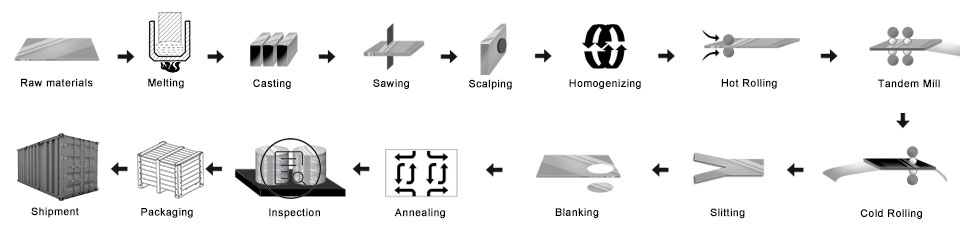
- Bereid de masterlegeringen voor
- Smeltoven: plaats de legeringen in de smeltoven
- D.C. gegoten aluminium staaf: Om de moederbaar te maken
- Frees de aluminium staaf: om het oppervlak en de zijkant glad te maken
- Verwarming oven
- Warmwalserij: de moederspoel gemaakt
- Koudewalserij: de moederspoel werd gerold in de dikte die u wilt kopen
- Ponsen proces: word de maat die je wilt
- Gloeioven: verander het humeur
- Eind inspectie
- Inpakken: houten kist of houten pallet
- Levering
Kwaliteitscontrole
Zekerheid Onderstaande inspectie zal tijdens de productie worden uitgevoerd.
- A. straal detectie—RT;
- B. ultrasoon testen—UT;
- C. Magnetische deeltjestesten-MT;
- D. penetratietesten-PT;
- e. wervelstroomfoutdetectie-ET
1) Wees vrij van olievlekken, Deuk, Inclusie, Krassen, Vlek, Oxideverkleuring, Pauzes, Corrosie, Rolmarkeringen, Vuil strepen, en andere gebreken die het gebruik hinderen.
2) Oppervlak zonder zwarte lijn, zuiver gesneden, periodieke vlek, defecten bij het afdrukken van rollen, zoals andere interne controlenormen van de gko.
Aluminium schijven verpakking:
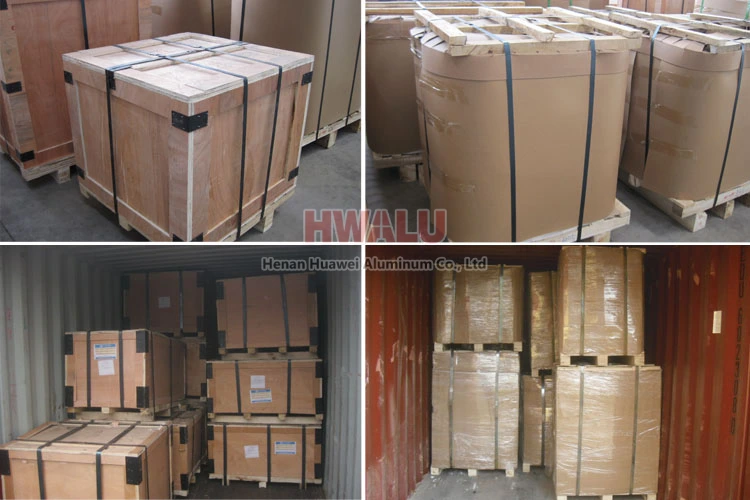
Aluminiumcirkels kunnen volgens exportnormen worden verpakt, bedekken met bruin papier en plastic folie. Eindelijk, de Aluminium Round wordt op een houten pallet/houten kist bevestigd.
- Plaats de drogers naast de aluminium cirkel, houd de producten droog en schoon.
- Gebruik schoon plastic papier, pak de aluminium cirkel in, goede afdichting behouden.
- Gebruik het slangenleerpapier, pak het oppervlak van het plastic papier in, goede afdichting behouden.
- Volgende, Er zijn twee manieren van verpakken: Eén manier is het verpakken van houten pallets, gebruik het knapperige papier dat het oppervlak bedekt; Een andere manier is het verpakken van houten kistjes, met behulp van de houten kist die het oppervlak inpakt.
- Eindelijk, leg de stalen riem op het oppervlak van de houten kist, het houden van de houten kistvastheid en veiligheid.
Aluminium cirkel van Henan Huawei Aluminium. voldoen aan de exportnorm. Plastic folie en bruin papier kunnen naar wens van de klant worden afgedekt. Bovendien, Er wordt een houten kist of houten pallet gebruikt om producten tijdens de levering tegen schade te beschermen. Er zijn twee soorten verpakkingen, die oog in oog staan met de muur of oog naar de lucht. Klanten kunnen voor hun gemak een van beide kiezen. In het algemeen, er zijn 2 ton in één pakket, en laden 18-22 ton in 1×20′ container, En 20-24 ton in 1×40′ container.
Waarom voor ons kiezen?
Om met de tijd mee te gaan, HWALU blijft de modernste apparatuur en techniek introduceren om zijn concurrentiepositie te verbeteren. Houd u altijd eerst aan de bedrijfsfilosofie van kwaliteit als centrum en klant, om producten uit de aluminium schijfcirkelserie van de hoogste kwaliteit aan alle delen van de wereld te leveren. Meer …

