How to Evaluate Whether an Aluminum Circle Supplier Is Reliable: Key Quality Indicators You Must Examine
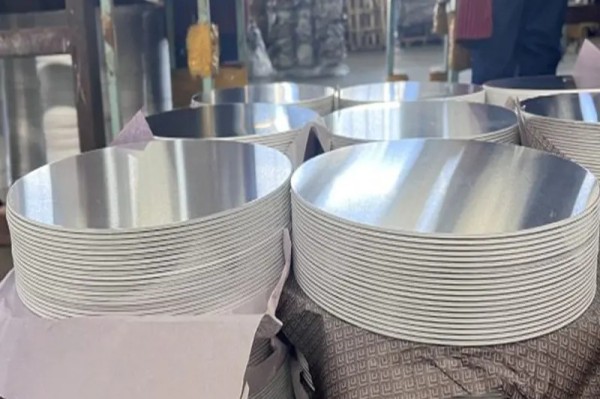
Choosing a reliable aluminum circle supplier is crucial for manufacturers in cookware, lighting, automotive parts, pressure vessels, and spinning or deep-drawing industries. Aluminum circles must meet strict requirements for mechanical properties, surface quality, consistency, and processing stability. A wrong supplier can lead to cracking during deep drawing, uneven thickness, surface defects, delivery delays, and long-term production losses.
This article provides a professional, highly practical checklist of indicators that buyers should examine before approving a supplier.
1. Raw Material Quality and Alloy Consistency
High-quality aluminum circles depend on the purity, alloying, and stability of the input coil. A reliable aluminum circle supplier must demonstrate:
- Precise alloy composition (e.g., 1050, 1060, 1100, 3003)
- Control of Fe, Si, Cu, Mn within tolerance ranges
- Stable mechanical properties across batches
- Surface cleanliness and low-oil residue
Certificates such as mill test reports (MTRs) or material inspection reports should be available for every batch.
2. Production Process: Casting, Rolling, and Annealing Capability
The production route determines whether the circles perform well during deep drawing or spinning.
Key indicators include:
- Whether the base material is hot-rolled or cast-rolled
- Precision of cold rolling thickness control
- Uniform annealing (O-temper, H12, H14)
- Ability to achieve stable elongation and hardness
- Pinhole and crack-resistant structure
A reliable aluminum circle supplier will be transparent about their process flow and equipment configuration (continuous annealing furnace, leveling lines, CNC blanking presses, etc.).
3. Surface Quality Standards
Surface condition directly affects cookware aesthetics, anodizing response, and spinning stability.
Critical surface indicators:
- No black spots, corrosion marks, or water stains
- No roller indentation or scratch lines
- Uniform grain texture after annealing
- Consistent brightness or matte finish depending on specification
- Low edge burrs after blanking
Most high-end customers require surface inspection reports and allow only a minimal defect proportion.

4. Dimensional Accuracy and Thickness Tolerances
Dimensional control affects yield during stamping and spinning.
Key metrics to review:
- Thickness tolerance (±0.02–0.05 mm depending on gauge)
- Diameter accuracy and circularity
- Flatness and warpage control
- Weight stability between pieces
- Thickness uniformity across the coil width
A reliable aluminum circle supplier typically operates laser or vision-based diameter inspection for consistency.
5. Mechanical Properties and Deep-Drawing Performance
Cookware, pressure pots, and lampshades demand excellent formability.
Indicators include:
- Elongation rate
- Yield strength/ultimate tensile strength
- r-value and earing rate
- Grain size uniformity
- Burst resistance during deep drawing
Suppliers should provide actual mechanical testing records instead of generic data sheets.
6. Quality Control System and Certifications
A trustworthy supplier maintains strict internal QC procedures and internationally recognized certifications.
Important certificates include:
- ISO 9001 (quality management)
- ISO 14001 (environmental control)
- ISO 45001 (workplace safety)
- Material traceability and batch coding
- Third-party tests (SGS, BV, TUV)
These certifications help distinguish a reliable aluminum circle supplier from low-cost converters without real quality systems.

7. Production Capacity, Equipment Level, and Delivery Stability
Long-term partnership requires stable output and predictable lead time.
Evaluate:
- Number of rolling mills and blanking machines
- Monthly aluminum circle capacity
- Furnace homogeneity and output stability
- Inventory of alloy coils
- On-time delivery rate
Suppliers with weak capacity often cause production interruptions for buyers.
8. Packaging, Logistics, and Export Experience
Export-grade aluminum circles require strict packaging to avoid scratches, oxidation, and deformation.
Check whether the supplier uses:
- Moisture-proof paper
- Fumigation-free wooden pallets
- Corner protection
- Vacuum packaging (if needed)
Experience in international logistics reduces the risk of damage and customs delays.
9. Technical Support and After-Sales Service
A professional supplier can assist customers with tooling design, forming tests, and troubleshooting.
Good suppliers provide:
- Deep drawing test samples
- Trial orders and process optimization
- Rapid response to complaints
- Failure analysis if cracks or warpage occur
Reliable technical support is a major sign of a reliable aluminum circle supplier.

Conclusion
Evaluating an aluminum circle manufacturer requires a comprehensive review of raw materials, process control, mechanical performance, surface quality, dimensional accuracy, certifications, production capacity, packaging, and technical support. Companies that meet these indicators consistently can be considered a reliable aluminum circle supplier, capable of delivering stable quality for cookware, lighting, and industrial applications.
Properties of the aluminum circle:
Aluminum circle is suitable for many markets, including cookware, automotive and lighting industries, etc., thanks to good product characteristics:
- Low anisotropy, which facilitates deep drawing
- Strong mechanical properties
- High and homogeneous heat diffusion
- Ability to be enameled, covered by PTFE (or others), anodized
- Good reflectivity
- High strength-to-weight ratio
- Durability and resistance to corrosion
Aluminum Circles Process
Ingot/Master Alloys — Melting Furnace – Holding Furnace — D.C. Caster — Slab —- Scalper — Hot Rolling Mill – Cold Rolling Mill – Punching – Annealing Furnace — Final Inspection – Packing — Delivery
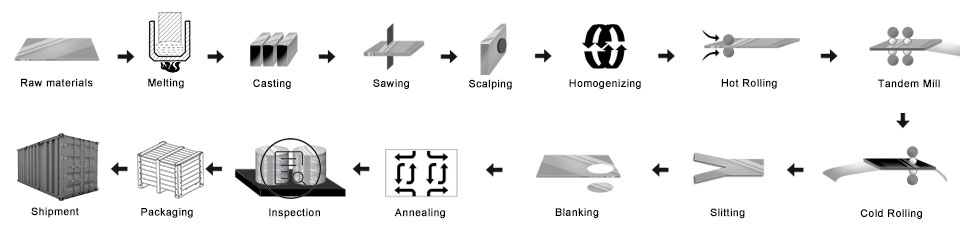
- Prepare the master alloys
- Melting furnace: put the alloys into the melting furnace
- D.C.cast aluminum ingot: To make the mother ingot
- Mill the aluminum ingot: to make the surface and side smooth
- Heating furnace
- Hot rolling mill: made the mother coil
- Colding rolling mill: the mother coil was rolled as the thickness you want to buy
- Punching process: become the size what you want
- Annealing furnace: change the temper
- Final inspection
- Packing: wooden case or wooden pallet
- Delivery
Quality Control
Assurance Below inspection will be done in the production.
- a. ray detection—RT;
- b. ultrasonic testing—UT;
- c. Magnetic Particle Testing-MT;
- d. penetration testing-PT;
- e. eddy current flaw detection-ET
1) Be free from Oil Stain, Dent, Inclusion, Scratches, Stain, Oxide Discoloration, Breaks, Corrosion, Roll Marks, Dirt Streaks, and other defects which will interfere with use.
2) Surface without black line, clean-cut, periodic stain, roller printing defects, such as other gko internal Control standards.
Aluminum discs packing:
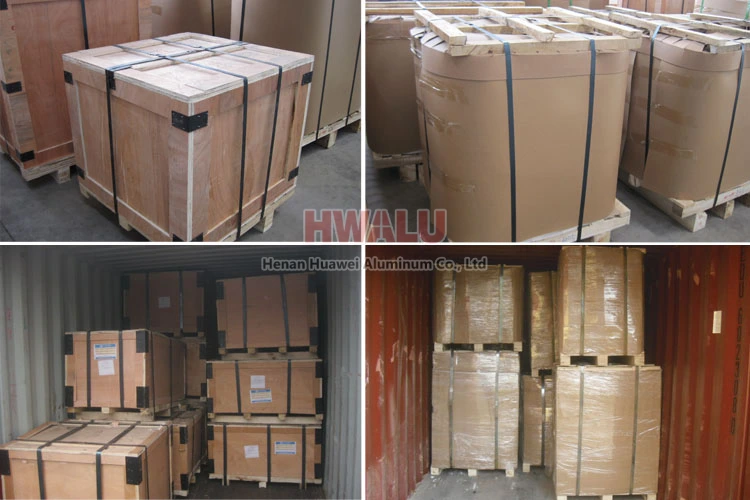
Aluminum circles can be packed by export standards, covering with brown paper and plastic film. Finally, the Aluminium Round is fixed on a wooden pallet/wooden case.
- Put the driers side the aluminum circle, keep the products dry and clean.
- Use clean plastic paper, pack the aluminium circle, keep good sealing.
- Use the snakeskin paper, pack the surface of the plastic paper, keep good sealing.
- Next, there are two ways of packaging: One way is wooden pallet packaging, using the crusty paper packing the surface; Another way is wooden case packaging, using the wooden case packing the surface.
- Finally, lay the steel belt on the wooden box’s surface, keeping the wooden box fastness and secure.
Aluminum circle of Henan Huawei Aluminum. meet the export standard. Plastic film and brown paper can be covered at customers’ needs. What’s more, a wooden case or wooden pallet is adopted to protect products from damage during delivery. There are two kinds of packaging, which are eye to wall or eye to the sky. Customers can choose either of them for their convenience. Generally speaking, there are 2 tons in one package, and loading 18-22 tons in 1×20′ container, and 20-24 tons in 1×40′ container.
Why choose us?
In order to move with the times, HWALU keeps introducing the state of the art equipment and technique to improve its competitiveness. Always adhere to the business philosophy of quality as the center and customer first, to provide the highest quality aluminum disc circle series products to all parts of the world. More …

