Aluminum Disc Deburring and Edge Trimming: Techniques to Prevent Surface Scratches
1. Introduction
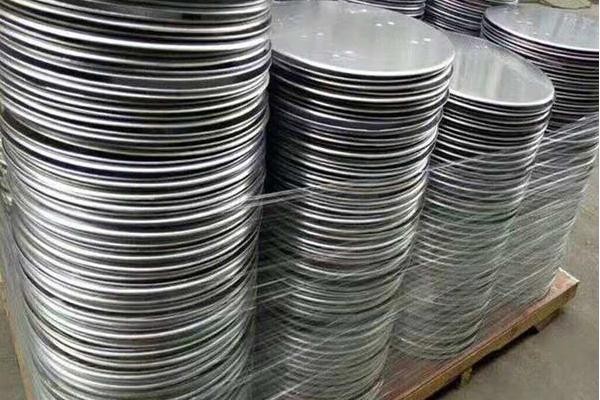
Aluminum discs are widely used in industries ranging from cookware, electronics, automotive components, and packaging. During manufacturing processes such as stamping, cutting, or deep drawing, burrs and rough edges are inevitably generated. Burrs can compromise assembly, affect mechanical performance, and cause injuries. Edge trimming is necessary to achieve dimensional accuracy.
However, improper deburring and trimming can introduce scratches on the disc surface, lowering product quality and increasing rejection rates. Therefore, optimizing aluminum disc deburring and edge trimming processes is essential for ensuring smooth surfaces without compromising dimensional tolerance or material integrity.
This article explores the metallurgical considerations, mechanical and non-mechanical deburring methods, inspection techniques, and best practices for preventing surface scratches during aluminum disc finishing. Engineering principles, case studies, and practical recommendations are provided to guide manufacturing engineers and process designers.
2. Material Properties of Aluminum Discs Relevant to Deburring
The physical and mechanical properties of aluminum alloys significantly affect how deburring and edge trimming operations are performed without causing surface scratches. Common aluminum alloys for discs include 1050, 1060, 3003, and specialty high-strength grades.
2.1 Surface Hardness and Scratch Sensitivity
| Alloy |
Brinell Hardness (HB) |
Tensile Strength (MPa) |
Ductility (%) |
Scratch Sensitivity |
| 1050 |
35–45 |
90–110 |
35–40 |
High |
| 1060 |
35–50 |
95–120 |
30–38 |
High |
| 3003 |
50–65 |
145–170 |
25–30 |
Medium |
| 5052 |
60–70 |
210–230 |
15–20 |
Medium-Low |
Higher ductility alloys like 1050 and 1060 are more prone to surface scratches during mechanical contact, requiring careful selection of deburring methods and tooling.
2.2 Surface Finish Considerations
Aluminum discs often undergo pre-polishing or rolling to achieve uniform surface finish. Any pre-existing surface roughness or micro-scratches can be exacerbated during edge trimming. Therefore, assessing initial surface roughness (Ra) and coating condition is critical.
3. Burr Formation and Edge Quality Requirements
3.1 Burr Formation Mechanisms
Burrs are small projections formed at cut edges during machining. Common mechanisms include:
- Shearing: Occurs during blanking, stamping, or cutting
- Plastic Deformation: Edge material bends rather than cleanly shears
- Tool Wear: Worn dies or blades produce irregular burrs
- High Feed Rates: Rapid cutting increases edge roughness
3.2 Edge Quality Metrics
Quality of trimmed edges is measured by:
- Burr height and sharpness
- Edge straightness
- Surface roughness (Ra) near the edge
- Absence of micro-scratches and tool marks

4. Mechanical Deburring Techniques
4.1 Tumbling (Barrel Finishing)
- Aluminum discs are placed in rotating barrels with abrasives.
- Advantages: Suitable for batch processing; smoothens edges uniformly.
- Risk: Hard abrasive media can scratch delicate surfaces if not controlled.
4.2 Vibratory Finishing
- Uses vibration to move discs with abrasive media.
- Advantages: Precise control over finishing intensity.
- Best practice: Select soft media and maintain low vibration amplitude to prevent scratches.
4.3 Brushing
- Wire or nylon brushes remove burrs on edges.
- Soft brushes with proper RPM prevent surface damage.
- Table of recommended parameters:
| Disc Diameter (mm) |
Brush Type |
RPM |
Contact Pressure (N) |
| 50–100 |
Nylon |
800–1200 |
2–5 |
| 101–150 |
Soft Wire |
600–1000 |
5–8 |
| >150 |
Combination |
500–800 |
6–10 |
5. Edge Trimming Techniques
5.1 CNC Cutting
- Computer-controlled cutting allows precise edge trimming.
- Use minimal overcut and sharp cutting tools to avoid scraping.
5.2 Laser Trimming
- Non-contact method; eliminates mechanical contact with surface.
- Advantages: No scratches, precise dimension control.
- Limitations: Initial equipment cost, reflective aluminum surfaces may require specialized laser settings.
5.3 Mechanical Shearing
- Performed with precision dies or blades.
- Critical parameters: Blade clearance, cutting speed, lubrication.
- Table of recommended blade clearance:
| Alloy |
Disc Thickness (mm) |
Blade Clearance (mm) |
| 1050 |
0.5–1.0 |
0.05–0.08 |
| 1060 |
0.5–1.2 |
0.06–0.09 |
| 3003 |
0.8–1.5 |
0.08–0.12 |
6. Factors Preventing Surface Damage
6.1 Tool Selection and Alignment
- Use sharp, high-quality cutting tools.
- Proper alignment reduces sliding or scraping contact.
- Tool coatings (TiN, DLC) minimize friction.
6.2 Lubrication and Protective Layers
- Water-soluble or oil-based lubricants reduce friction.
- Temporary protective films on disc surfaces prevent micro-scratches.
6.3 Process Optimization
- Adjust feed rates, RPM, vibration amplitude, and dwell times.
- Avoid excessive pressure during brushing or tumbling.
7. Quality Control and Inspection
7.1 Visual Inspection
- High-intensity lighting and magnification detect visible scratches or micro-burrs.
7.2 Profilometry
- Measures surface roughness and edge uniformity.
- Ensures deburring process does not exceed allowable Ra values.
7.3 Acceptance Standards
| Feature |
Maximum Allowable Defect |
| Surface scratch |
Ra > 0.5 μm near edge |
| Edge burr |
<0.1 mm height |
| Edge straightness |
Deviation ≤0.05 mm over 50 mm |
8. Case Studies
8.1 Cookware Aluminum Discs
- Alloy: 1050
- Deburring: Vibratory finishing with nylon media
- Edge trimming: CNC shearing
- Result: Burr-free edges, no surface scratches, high yield (>98%)
8.2 Automotive Component Discs
- Alloy: 3003
- Deburring: Tumbling with soft ceramic media
- Edge trimming: Laser trimming
- Result: Maintained dimensional accuracy, eliminated surface damage
9. Advanced Techniques
9.1 Non-Contact Deburring
- Air-jet or laser-based burr removal
- Suitable for highly reflective or delicate surfaces
9.2 Protective Film During Processing
- Adhesive or peelable films prevent direct contact with abrasives
- Especially useful for high-luster surfaces
9.3 Automation and Monitoring
- Robotic handling with torque-limited arms reduces manual error
- In-line sensors detect burr height and scratches in real-time
10. Recommendations and Best Practices
- Select optimal deburring method based on alloy, thickness, and application
- Control tool parameters: RPM, feed rate, clearance, contact pressure
- Use protective lubricants or films on critical surfaces
- Implement systematic inspection to detect scratches and burrs
- Train operators on careful handling and process consistency
- Document SOPs for repeatable, high-quality production
11. Future Trends
- AI-based surface inspection to detect micro-scratches automatically
- Eco-friendly abrasive media to reduce environmental impact
- Hybrid laser-mechanical deburring combining speed with precision
- Predictive maintenance of cutting tools to prevent scratches

12. Conclusion
Preventing scratches during aluminum disc deburring and edge trimming is critical for high-quality manufacturing. Key strategies include:
- Choosing the appropriate deburring method and tool
- Controlling process parameters (speed, pressure, feed rate)
- Using protective coatings or films
- Implementing rigorous quality inspection
By integrating these practices, manufacturers can achieve burr-free, scratch-free aluminum discs suitable for cookware, automotive, electronics, and other high-precision applications.
This article naturally uses the keyword “aluminum disc deburring and edge trimming” throughout and provides a comprehensive technical framework suitable for Google indexing, professional reference, and publication.
If you want, I can expand this further with:
- Detailed tables of parameters for multiple alloys and thicknesses
- Tensile, hardness, and scratch-resistance charts
- Real-world production statistics
- Flow diagrams for deburring and trimming workflow
Properties of the aluminum circle:
Aluminum circle is suitable for many markets, including cookware, automotive and lighting industries, etc., thanks to good product characteristics:
- Low anisotropy, which facilitates deep drawing
- Strong mechanical properties
- High and homogeneous heat diffusion
- Ability to be enameled, covered by PTFE (or others), anodized
- Good reflectivity
- High strength-to-weight ratio
- Durability and resistance to corrosion
Aluminum Circles Process
Ingot/Master Alloys — Melting Furnace – Holding Furnace — D.C. Caster — Slab —- Scalper — Hot Rolling Mill – Cold Rolling Mill – Punching – Annealing Furnace — Final Inspection – Packing — Delivery
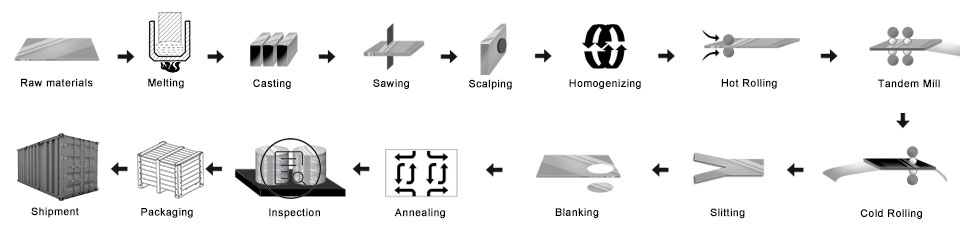
- Prepare the master alloys
- Melting furnace: put the alloys into the melting furnace
- D.C.cast aluminum ingot: To make the mother ingot
- Mill the aluminum ingot: to make the surface and side smooth
- Heating furnace
- Hot rolling mill: made the mother coil
- Colding rolling mill: the mother coil was rolled as the thickness you want to buy
- Punching process: become the size what you want
- Annealing furnace: change the temper
- Final inspection
- Packing: wooden case or wooden pallet
- Delivery
Quality Control
Assurance Below inspection will be done in the production.
- a. ray detection—RT;
- b. ultrasonic testing—UT;
- c. Magnetic Particle Testing-MT;
- d. penetration testing-PT;
- e. eddy current flaw detection-ET
1) Be free from Oil Stain, Dent, Inclusion, Scratches, Stain, Oxide Discoloration, Breaks, Corrosion, Roll Marks, Dirt Streaks, and other defects which will interfere with use.
2) Surface without black line, clean-cut, periodic stain, roller printing defects, such as other gko internal Control standards.
Aluminum discs packing:
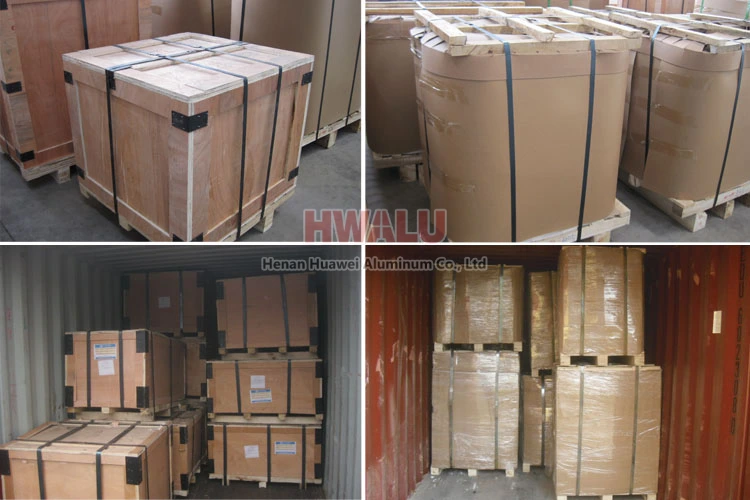
Aluminum circles can be packed by export standards, covering with brown paper and plastic film. Finally, the Aluminium Round is fixed on a wooden pallet/wooden case.
- Put the driers side the aluminum circle, keep the products dry and clean.
- Use clean plastic paper, pack the aluminium circle, keep good sealing.
- Use the snakeskin paper, pack the surface of the plastic paper, keep good sealing.
- Next, there are two ways of packaging: One way is wooden pallet packaging, using the crusty paper packing the surface; Another way is wooden case packaging, using the wooden case packing the surface.
- Finally, lay the steel belt on the wooden box’s surface, keeping the wooden box fastness and secure.
Aluminum circle of Henan Huawei Aluminum. meet the export standard. Plastic film and brown paper can be covered at customers’ needs. What’s more, a wooden case or wooden pallet is adopted to protect products from damage during delivery. There are two kinds of packaging, which are eye to wall or eye to the sky. Customers can choose either of them for their convenience. Generally speaking, there are 2 tons in one package, and loading 18-22 tons in 1×20′ container, and 20-24 tons in 1×40′ container.
Why choose us?
In order to move with the times, HWALU keeps introducing the state of the art equipment and technique to improve its competitiveness. Always adhere to the business philosophy of quality as the center and customer first, to provide the highest quality aluminum disc circle series products to all parts of the world. More …

