8011 Aluminum Circles: Composition, Properties, and Limitations
8011 aluminum circles are deep-processed products of the 8xxx aluminum–iron–silicon alloy series. Owing to their good formability, low production cost, and high safety level, they have become core raw materials in industries such as food packaging, daily chemical products, and pharmaceuticals.
This article analyzes 8011 aluminum circles from six dimensions—composition, processing, properties, applications, limitations, and material selection—to provide a technical reference for industrial applications.
I. Chemical Composition of 8011 Aluminum Circles
8011 aluminum circles belong to the 8xxx aluminum–iron–silicon ternary alloy system. They can be mass-produced without complex heat treatment processes. Their chemical composition strictly follows GB/T 3880 standards, as shown below.
| Element Category |
Element |
Content Range |
Functional Role |
| Matrix element |
Aluminum (Al) |
Balance (≥98.5%) |
Ensures plasticity, thermal and electrical conductivity, and provides a lightweight foundation |
| Primary alloying element |
Iron (Fe) |
0.7%–1.3% |
Refines grain structure, improves hardness and tensile strength, enhances rolling stability |
| Primary alloying element |
Silicon (Si) |
0.5%–0.9% |
Works synergistically with iron to reduce deformation resistance and improve stamping and bending formability |
| Impurity elements |
Cu, Mn, Zn, etc. |
≤0.1% per element, total ≤0.5% |
Controlled to prevent property fluctuations and ensure batch-to-batch consistency |
 8011 aluminum circles
II. Key Processing Considerations for 8011 Aluminum Circles
The quality of 8011 aluminum circles depends on strict full-process control. Key production stages and critical parameters are summarized below.
| Process Stage |
Key Parameters |
Processing Objective |
| Melting and casting |
Melting temperature 720–760°C, semi-continuous casting |
Refining and impurity removal to obtain ingots with uniform grain structure |
| Hot and cold rolling |
Hot rolling 400–500°C, annealing 320–360°C |
Reduce thickness to target gauge, eliminate work hardening, restore ductility |
| Blanking and forming |
Blanking speed 100–300 strokes/min, flatness ≤0.1 mm |
Ensure burr-free edges and dimensional accuracy of finished circles |
III. Core Properties of 8011 Aluminum Circles
The simplified alloy composition combined with standardized processing control gives 8011 aluminum circles a set of balanced performance characteristics, as outlined below.
| Property Category |
Typical Values |
Application Significance |
| Formability |
Elongation ≥30% |
Suitable for multiple forming processes with high yield rates |
| Physical properties |
Density 2.7 g/cm³, thermal conductivity ≥200 W/(m·K) |
Lightweight design and efficient heat transfer |
| Mechanical properties |
Tensile strength 70–110 MPa at room temperature; 120–150 MPa after cold work |
Meets strength requirements for non-load-bearing structures |
| Safety and economy |
Non-toxic, odorless, compliant with food-contact standards |
Suitable for consumer-related applications with low production cost |
 A large number of aluminum discs
IV. Typical Application Scenarios of 8011 Aluminum Circles
Based on their performance advantages, 8011 aluminum circles are widely used in various consumer-oriented industries. Typical applications and matching logic are shown below.
| Application Sector |
Typical Products |
Suitability Rationale |
| Food packaging |
Aluminum foil containers, can lids |
Safe, recyclable, and cost-effective for mass production |
| Daily chemical and pharmaceutical |
Cosmetic caps, pharmaceutical aluminum closures |
High stamping precision, compliant with medical safety standards |
| Cookware and electronics |
Non-stick cookware bases, small heat sinks |
Lightweight with excellent thermal conductivity |
V. Limitations of 8011 Aluminum Circles
Due to inherent characteristics of the alloy system, the application range of 8011 aluminum circles has clear boundaries:
- Limited strength ceiling: Tensile strength of only 70–110 MPa makes it unsuitable for heavy-load applications such as automotive chassis or aerospace structures.
- Moderate corrosion resistance: Prone to oxidation in humid or acidic/alkaline environments; outdoor applications require additional surface treatments such as anodizing.
- Poor high-temperature performance: Mechanical properties degrade significantly at temperatures above 150°C, limiting use in high-temperature environments.
- Thickness limitation: Primarily suitable for thin-wall products (≤3 mm); thicker sections are prone to internal porosity and structural defects.
From a mechanical standpoint, its moderate hardness and tensile strength satisfy packaging and cookware requirements. After cold work strengthening, tensile strength can reach 120–150 MPa, enabling use in lightweight applications with slightly higher strength demands.
 Aluminum circular sheet
VI. Economic Characteristics and Safety Performance
From a raw material perspective, iron and silicon are abundant and low-cost alloying elements. From a manufacturing standpoint, the absence of complex heat treatment significantly reduces processing costs, resulting in a strong cost-performance advantage.
In addition, 8011 aluminum circles are non-toxic and odorless, complying with GB 4806.1-2016 food-contact material safety standards. This ensures safe use in food packaging, cookware, and other applications involving direct human contact, which is a key reason for their widespread adoption in daily chemical and pharmaceutical industries.
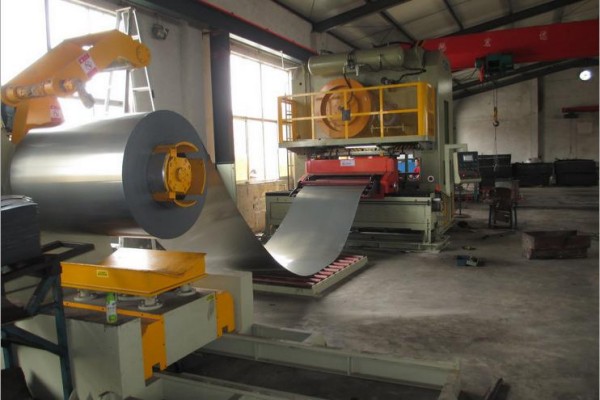 Aluminum sheet factory
VII. Summary and Material Selection Recommendations
In practical material selection, requirements should be matched precisely to application conditions:
- Preferred choice: Thin-wall products (≤3 mm) produced in large volumes, cost-sensitive applications, and room-temperature dry environments requiring food-grade safety—such as food packaging and cosmetic closures—where 8011 aluminum circles are an optimal solution.
- Alternative options:
- Heavy-load applications: 2A11 or 6061 aluminum alloys
- Corrosion-resistant requirements: 3003 series aluminum
- High-temperature service conditions: specialized heat-resistant aluminum alloys
With future optimization of alloy composition and advances in surface modification technologies, the inherent limitations of 8011 aluminum circles may be further mitigated, allowing expansion into more specialized lightweight and high-safety application fields

