


3003 Aluminum Disc Circles Overview 3003 aluminum alloy is an aluminum-manganese alloy. The main alloying element is manganese. It is the most widely used anti-rust aluminum. The strength of this alloy is not high, but it is higher than general industrial pure aluminum. It cannot be strengthened by heat treatment. Generally, cold working methods are used. To improve its mechanical properties. It has high plastic ...

Aluminum Circle Supplier for Central America: Focus on Guatemala Market Aluminum circle supplier Central America Guatemala market has become an increasingly important topic within the global aluminum processing supply chain. As Guatemala and the broader Central American region continue to advance in manufacturing and industrial development, aluminum circles—serving as a fundamental raw material—are experiencing ...

Why are 1060 and 3003 alloys often used in aluminum discs for kitchenware? What are the differences in material properties between different parts? HW-A. Introduction: The Core Role of Aluminum Discs for Cookware aluminum disc alloys for cookware for cookware serve as the core base material for stamping-formed cookware (woks, stockpots, frying pans, etc.). Their alloy selection directly determines the thermal c ...

Aluminum Disc Edge Quality Control in Modern Manufacturing Introduction Effective aluminum disc edge quality control is fundamental to ensuring the performance, forming stability, and end-use safety of cookware, lighting components, and pressure-bearing industrial parts. As production speeds increase and thickness tolerances tighten, manufacturers must adopt a systematic approach to edge inspection, trimming, a ...
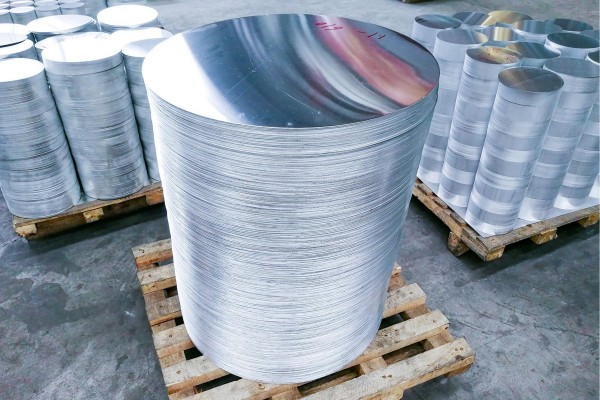
1060 Aluminum Discs for Household Products – A Material Optimized for Spinning and Stamping Aluminum has become one of the most widely used metal materials in modern manufacturing due to its excellent formability, corrosion resistance, and lightweight characteristics. Within the aluminum family, 1060 aluminum—a high-purity alloy containing more than 99.6% aluminum—plays a crucial role in applications that requir ...
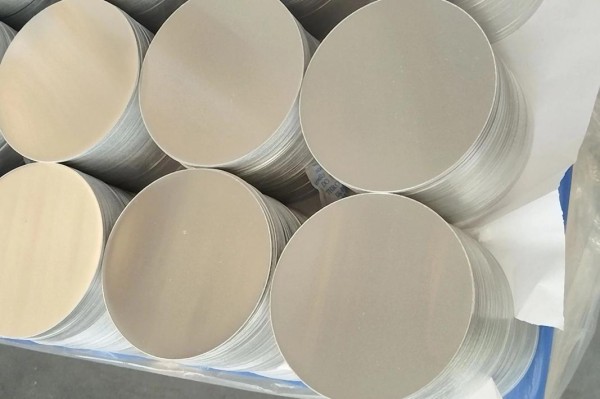
Understanding Temper Selection for Cookware Manufacturing: How O, H12, and H14 Aluminum Circle Tempers Influence Performance and the Role of Annealing 1. Introduction The global cookware industry increasingly relies on aluminum circles as a core forming material due to their excellent thermal conductivity, moderate strength, formability, and low density. As cookware shifts toward more energy-efficient, lightwei ...

H14 Hot-Rolled Aluminum Circle: Comprehensive Technical Analysis and Industrial Application Guide 1. Technical Definition and Process Characteristics of H14 Hot-Rolled Aluminum Circle H14 hot-rolled aluminum circle is a type of aluminum circular sheet manufactured through a hot-rolling process and subjected to specific processing to achieve the H14 temper. "H14" indicates a half-hard temper achieved through wor ...
Product name: aluminum circle plate Export to UK ITEM SIZE (MM) ALLOY / TEMPER 1 110mm(diameter) x 1.35 mm(thickness) 1050 O 2 240mm(diameter) x 1.45 mm(thickness) 1050 O
Common Problems in Aluminum Disc Manufacturing I. Stamping Process: The "High-Risk Zone" for Quality Issues This is the critical stage where the basic shape of the disc is formed, and most defects originate here. Burrs and Collapsed Edges: The most common issues. Improper die clearance, worn cutting edges, or excessive stamping speed can result in sharp burrs or edge collapse. This not only poses safety ri ...
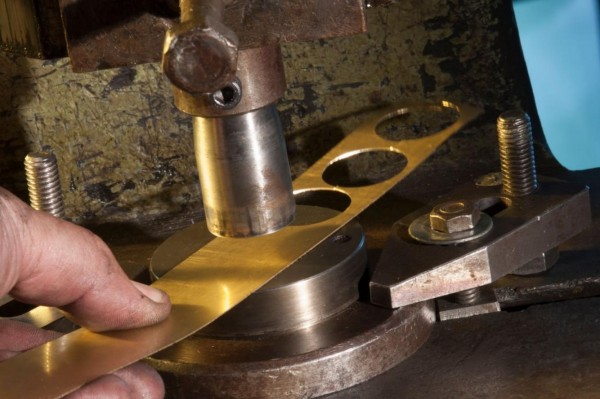
Prevention and Control Strategies for Excessively High Earing Rate in Aluminum Circle Drawing Process In the drawing process of aluminum circles (such as in cookware forming, can manufacturing, electronic component stamping and other scenarios), an excessively high earing rate is a typical quality issue. Earing refers to the ear-shaped protrusions formed at the mouth of the hollow cup after drawing, which esse ...
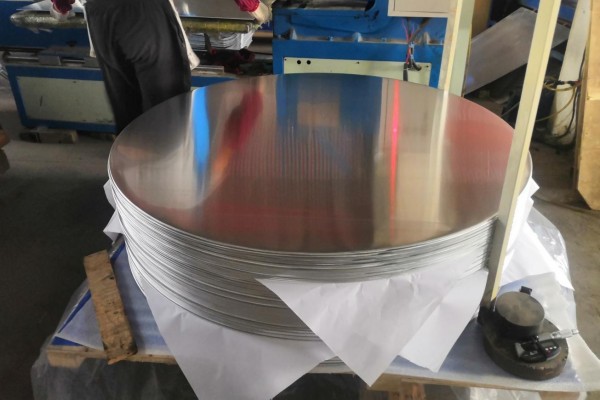
Classification of Aluminum Discs and Their Engineering Applications Aluminum discs (also known as aluminum circles) are one of the most fundamental semi-finished materials in aluminum fabrication. They serve as the primary raw material for a wide range of aluminum products, including cookware, industrial containers, mechanical components, automotive parts, and aerospace structures. Due to the diversity of dow ...

Quality Aluminum Stamping Parts: From 1000 to 8000 Series Alloys In the quality control system of Aluminum Stamping Parts, molds, equipment and processes are only "explicit factors". What truly determines the consistency, yield and long-term reliability of finished products is the systematic matching degree of the aluminum alloy material itself. Differences in chemical composition, grain structure, processing ...